
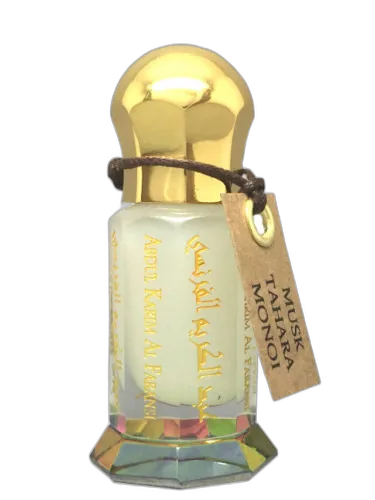

Musk Tahara Monoi Abdul Karim Al Faransi
At a glance
Is Musk Tahara Monoi Abdul Karim Al Faransi worth trying?
Musk Tahara Monoi by Abdul Karim Al Faransi is a Aromatic fragrance for women and men.
- Best match
- Evening wear in Any
- Performance feel
- Good longevity with Moderate sillage
- Signature profile
- musky, floral, vanilla with White Musk, Exotic floral notes, Tahitian Vanilla
The first impression
Musk Tahara Monoi by Abdul Karim Al Faransi is a Aromatic fragrance for women and men. Musk Tahara Monoi was launched in 2015. The nose behind this fragrance is Anthony Abdul Karim Marmin. Top notes are White Musk and Exotic floral notes; middle notes are Tahitian Vanilla and White Lotus; base note is White Musk.
What shapes the scent
The perfumer behind it

Anthony Abdul Karim Marmin
Anthony Abdul Karim Marmin is a perfumer closely associated with the house of Abdul Karim Al Faransi, where he has created a wide range of fragrances. His style spans bold, resinous compositions like Amber 4000 and Amber Afghani, as well as more complex, evocative scents such as Al Quds and Amazonia. Known for blending traditional Middle Eastern ingredients with modern accords, his work often features rich amber, oud, and spice notes.
Notes pyramid
Top Notes
First impression · 15-30 min
 White Musk
Exotic floral notes
White Musk
Exotic floral notes
Heart Notes
Core character · 2-4 hours
Tahitian Vanilla
White Lotus
Base Notes
Lasting impression · 4+ hours
White Musk
The mood it creates
The Lover Archetype: Portrait of Musk Tahara Monoi Abdul Karim Al Faransi
Essence
To wear Musk Tahara Monoi Abdul Karim Al Faransi is to embrace a paradox-a scent that is at once sacred and sensual, earthy and ethereal. The person who chooses this fragrance is not merely selecting a perfume; they are curating an aura. They are drawn to the interplay of musk’s animalic depth and Monoi’s tropical purity, a duality that mirrors their own nature. This individual is most closely aligned with the Sage archetype-the seeker of wisdom, the quiet observer, the one who understands that truth is layered and often contradictory.
Their presence is understated yet magnetic, like the lingering trace of incense in an ancient library. They do not demand attention, but they command it effortlessly. Their mind is a labyrinth of ideas, philosophies, and half-formed theories, always probing, always questioning. They are not content with superficial answers; they crave depth, nuance, and the kind of knowledge that can only be earned through patience and reflection.
Shadow
Yet, no archetype is without its shadow. The Sage’s greatest strength-their intellect-can also be their downfall. Their relentless pursuit of knowledge can become a form of escapism, a way to avoid the messy, emotional realities of life. They may pride themselves on their objectivity, but this can harden into emotional detachment, leaving others feeling unseen, unheard.
There is also the risk of intellectual arrogance. They may dismiss those who do not share their depth of thought, mistaking simplicity for stupidity. Their love of nuance can become a kind of elitism, a quiet condescension toward those who prefer certainty over ambiguity. At their worst, they retreat into their own mind, becoming a solitary figure in a tower of their own making-wise, yes, but also lonely.
The person who wears Musk Tahara Monoi is neither purely the enlightened Sage nor the aloof intellectual. They are both, and neither. They understand that wisdom is not a destination but a journey, one that requires humility as much as insight. Their fragrance-warm yet elusive, profound yet sensual-captures this duality perfectly.
They are the kind of person who can sit in silence for hours, lost in thought, yet whose presence lingers long after they have left the room. They do not seek to be understood, only to understand. And in that pursuit, they find their greatest freedom-and their deepest challenge.
Conclusion
Their tastes are deliberate, almost ritualistic. They prefer the weight of a well-bound book over the flicker of a screen, the slow burn of aged whiskey over the immediacy of a cocktail. Their home is a sanctuary-minimal yet warm, filled with objects that carry meaning: a hand-carved wooden bowl, a faded Persian rug, a collection of rare incense. They do not follow trends; they cultivate an aesthetic that is timeless, a reflection of their belief that beauty should endure.
Philosophy is not an abstract exercise for them-it is a way of life. They might be drawn to Stoicism for its discipline, to Sufism for its poetry, or to Nietzsche himself for his unflinching honesty. They believe that wisdom is not found in certainty but in the willingness to question everything, including oneself. Their values are rooted in authenticity, intellectual freedom, and a quiet reverence for the mysteries of existence.
In relationships, they are selective but deeply loyal. They do not suffer fools gladly, yet they have an almost infinite capacity for those who seek understanding. Their love is not possessive; it is a space where the other is free to grow, to falter, to evolve. They are the confidant who listens more than they speak, the lover who knows that silence can be more intimate than words.
If you like this, try these
Fragrances with a comparable profile - shared accords, notes, and character.
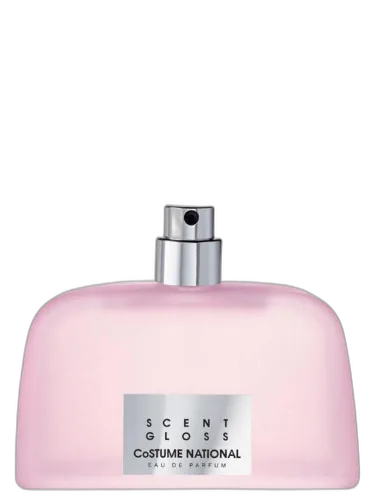
CoSTUME NATIONAL
Scent Gloss Costume National
Shared base notes: white musk
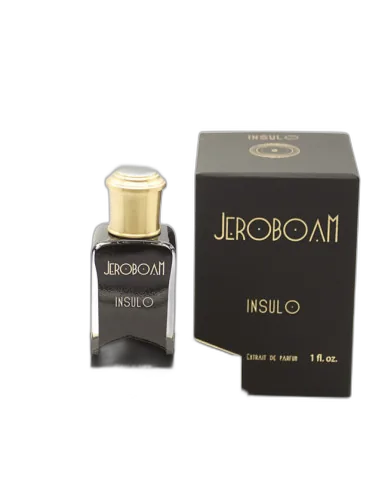
Jeroboam
Insulo Jeroboam
Shared base notes: white musk
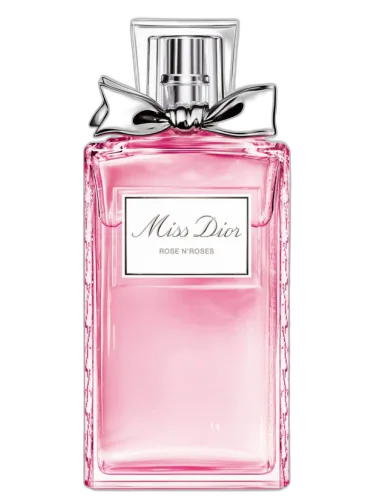
Dior
Miss Dior Rose N'roses Dior
Shared base notes: white musk
Dior
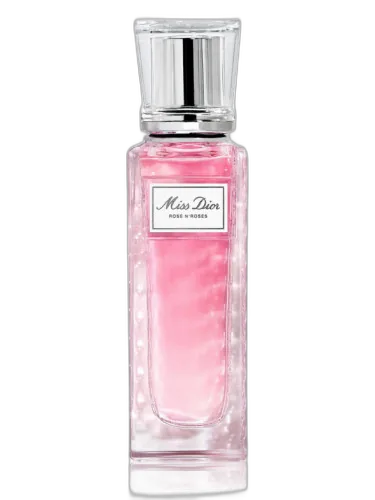
Miss Dior Rose N'roses Roller Pearl Dior
Shared base notes: white musk
Mauboussin
Une Histoire De Femme Sensuelle Mauboussin
Shared base notes: white musk