


Roots Abdul Karim Al Faransi
At a glance
Is Roots Abdul Karim Al Faransi worth trying?
Roots by Abdul Karim Al Faransi is a Woody Aromatic fragrance for women and men.
- Best match
- Evening wear in Fall
- Performance feel
- Very Good longevity with Strong sillage
- Signature profile
- amber, musky, oud with Vetyver, Amber, White Musk
The first impression
Roots by Abdul Karim Al Faransi is a Woody Aromatic fragrance for women and men. Roots was launched in 2014. The nose behind this fragrance is Anthony Abdul Karim Marmin. Top note is Vetyver; middle notes are Amber and White Musk; base note is White Oud.
What shapes the scent
The perfumer behind it

Anthony Abdul Karim Marmin
Anthony Abdul Karim Marmin is a perfumer closely associated with the house of Abdul Karim Al Faransi, where he has created a wide range of fragrances. His style spans bold, resinous compositions like Amber 4000 and Amber Afghani, as well as more complex, evocative scents such as Al Quds and Amazonia. Known for blending traditional Middle Eastern ingredients with modern accords, his work often features rich amber, oud, and spice notes.
Notes pyramid
Top Notes
First impression · 15-30 min
 Vetyver
Heart Notes
Core character · 2-4 hours
 Amber
White Musk
Amber
White Musk
Base Notes
Lasting impression · 4+ hours
 White Oud
The mood it creates
The Wanderer Archetype: Portrait of Roots Abdul Karim Al Faransi
Essence
This person is defined by the Explorer archetype, a seeker of the unknown, driven by curiosity and a hunger for authenticity. Like Odysseus or Ibn Battuta, they are drawn to the uncharted-whether in geography, thought, or sensation. The fragrance they favor, Roots Abdul Karim Al Faransi, is a testament to this: a blend of oud, spices, and smoky resins, evoking ancient trade routes and the mingling of cultures. It is not a scent for those who crave comfort in the familiar; it is for those who find beauty in the raw, the untamed, the unresolved.
Style & Aesthetic
Their style is an eclectic tapestry-part nomad, part scholar. They favor well-worn leather jackets, linen shirts that breathe like desert winds, and jewelry with a history: signet rings, prayer beads, or a pendant from some distant bazaar. Their home is a curated chaos-books stacked beside incense burners, maps pinned to walls, a record player spinning vinyl from Istanbul or Marrakech.
They are drawn to contrast: bitter coffee with honeyed pastries, the austerity of minimalist design against the opulence of Persian rugs. Music is not mere background noise but a ritual-qawwali hymns, Tuareg blues, or the deep hum of a cello. They do not follow trends; they excavate them, seeking what lies beneath the surface.
Philosophy & Values
To them, life is a pilgrimage, not a destination. They reject dogma but revere wisdom, collecting philosophies like spices-a pinch of Sufi poetry, a dash of Stoicism, a lingering taste of Zen. They believe in sovereignty of the self, the idea that one must wander-physically or intellectually-to truly know oneself.
Yet this is not mere hedonism. Their quest is for meaning, not just novelty. They despise the commodification of culture, the way the modern world flattens uniqueness into Instagram aesthetics. They seek depth, even if it means discomfort.
Relationships
They are magnetic but elusive. Friends are drawn to their stories, their ability to make the ordinary feel exotic. Yet intimacy is a challenge-they fear stagnation, the slow death of routine. Their love affairs are intense but transient, like a fire that burns bright but refuses to be contained.
They are most at ease with fellow wanderers-those who understand that love does not always mean permanence, that some souls are meant to pass through, not stay. Their shadow here is restlessness, an inability to commit, mistaking movement for growth.
Shadow
Every archetype has its dark twin. For the Explorer, it is the Wanderer who never arrives. Their hunger for the new can become a refusal to endure the mundane, the necessary. They may romanticize suffering, believing that only the road-worn soul is authentic, dismissing those who find joy in simplicity as naïve.
There is also the danger of cultural appropriation, not out of malice but carelessness-wearing symbols like costumes, collecting experiences like trophies. They must guard against becoming a tourist of the soul, skimming surfaces without ever diving deep.
Conclusion
The true Explorer does not flee but integrates. They learn that roots are not chains but anchors, allowing them to journey without losing themselves. They begin to see that wisdom is not just in the seeking but in the returning-bringing back treasures to share, not hoard.
Roots Abdul Karim Al Faransi is their olfactory compass: a reminder that even the wildest spirits carry the scent of home within them.
If you like this, try these
Fragrances with a comparable profile - shared accords, notes, and character.
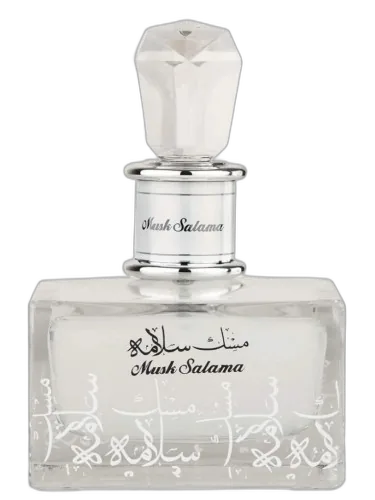
Lattafa Perfumes
Musk Salama Lattafa Perfumes
Shared heart notes: amber, white musk

Koesio
Srx Koesio
Shared heart notes: amber, white musk
DS&Durga
Vetyver Ds&durga
Shared top notes: vetyver
Les Nez
Turtle Vetiver Les Nez
Shared top notes: vetyver

Christèle Jacquemin
Memory Lane Christèle Jacquemin
Shared base notes: white oud