
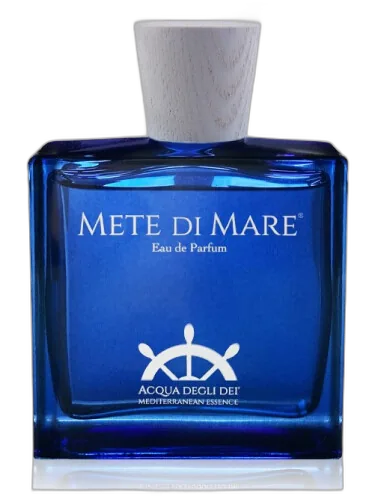
Mete Di Mare Acqua Degli Dei
At a glance
Is Mete Di Mare Acqua Degli Dei worth trying?
Mete di Mare by Acqua degli Dei is a fragrance for women and men.
- Best match
- Casual wear in Summer
- Performance feel
- Good longevity with Moderate sillage
- Signature profile
- floral, citrus, aromatic with Iodine, Mandarin Orange, Pink Pepper
The first impression
Mete di Mare by Acqua degli Dei is a fragrance for women and men. This is a new fragrance. Mete di Mare was launched in 2023. Top notes are Iodine, Mandarin Orange, Pink Pepper, Orange, Anise and Basil; middle notes are Sand Lily, Sea Notes and Lavender; base notes are Patchouli, Ambergris, Vetiver, Cedar and Musk.
What shapes the scent
The perfumer behind it

Acqua degli Dei
Acqua degli Dei creates Mediterranean-inspired fragrances with a breezy, sunlit character. Their scents often highlight aquatic notes, citrus, and aromatic herbs for a refreshing effect. The compositions evoke coastal landscapes with a touch of timeless charm. The brand balances lightness with subtle depth for easy wearability.
Notes pyramid
Top Notes
First impression · 15-30 min
 Iodine
 Mandarin Orange
 Pink Pepper
 Orange
 Anise
Anise
 Basil
Basil
Heart Notes
Core character · 2-4 hours
 Sand Lily
 Sea Notes
 Lavender
Base Notes
Lasting impression · 4+ hours
 Patchouli
 Ambergris
 Vetiver
 Cedar
Cedar
 Musk
Musk
The mood it creates
The Lover Archetype: Portrait of Mete Di Mare Acqua Degli Dei
Essence
To wear Mete Di Mare Acqua Degli Dei is to carry the scent of the ocean’s first light-a fragrance of salt-kissed skin, sun-warmed driftwood, and the distant promise of uncharted shores. This person does not merely enjoy perfume; they embody an essence, a mythic resonance that speaks of longing, sensuality, and the eternal dance between freedom and belonging.
At their core, they are The Seafarer, a modern incarnation of the eternal wanderer, but one who seeks not just movement-but meaning. This archetype is a fusion of The Explorer and The Lover, driven by an insatiable curiosity for beauty in all its forms. They are drawn to the liminal spaces-where land meets sea, where passion meets intellect, where solitude meets connection.
The Seafarer does not conquer the world; they commune with it. Their journey is not about escape, but about immersion. They are the ones who stand at the edge of cliffs, not to leap, but to breathe in the vastness and feel the wind rewrite their thoughts.
Shadow
Yet, for all their depth, they are haunted by an unnameable hunger. The same tides that bring them clarity can also pull them into isolation. Their greatest flaw is their reluctance to anchor-not out of fear of commitment, but out of fear that stillness might dull the sharp, beautiful edge of their longing.
They can be elusive, even to those who love them most. Just when someone believes they have grasped them, they slip away-not out of malice, but because the horizon always whispers their name. This restlessness can leave a trail of half-finished projects, half-spoken truths, and lovers who still wake at night wondering if they were ever truly known.
Conclusion
Their tastes are refined but never rigid. They prefer raw linen over stiff tailoring, weathered leather over polished veneers. Their home is a sanctuary of driftwood sculptures, well-thumbed books of poetry, and the faint, persistent scent of salt air even when far from the coast. They drink black coffee in the morning and amber whiskey at night, each sip a ritual, never rushed.
Music is essential-not as background noise, but as a companion. They favor melancholic cello suites, the raw ache of blues, or the hypnotic pulse of electronic waves that mimic the sea’s rhythm. They do not dance for an audience; they move for the sheer pleasure of feeling alive.
Philosophically, they reject dogma but embrace wonder. They are neither optimist nor pessimist, but a sensualist of experience. They believe in the sacredness of fleeting moments-the way sunlight fractures on water, the weight of a lover’s hand on their shoulder, the taste of citrus and salt on their lips.
If you like this, try these
Fragrances with a comparable profile - shared accords, notes, and character.

Contes de Parfums
Positano (carlos Benaim) Contes De Parfums
Shared heart notes: lavender, sea notes

Blu Atlas
Bountiful Blu Atlas
Shared top notes: pink pepper
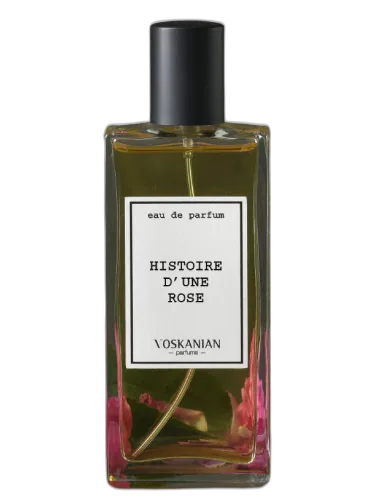
Voskanian Parfums
Histoire D'une Rose Voskanian Parfums
Shared heart notes: lavender
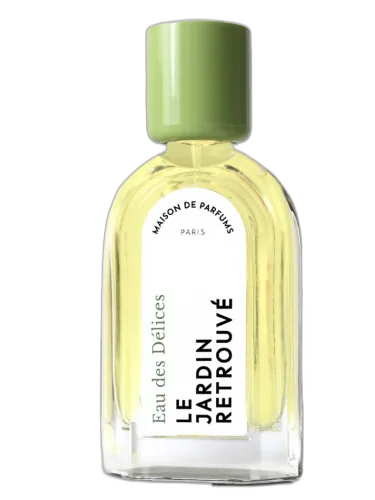
Le Jardin Retrouve
Eau Des Délices Le Jardin Retrouve
Shared top notes: orange

Eudora
Eudora H Energy Eudora
Shared heart notes: lavender, sea notes