
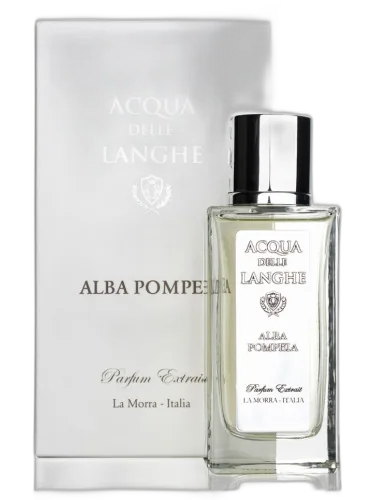

Alba Pompeia Acqua Delle Langhe
At a glance
Is Alba Pompeia Acqua Delle Langhe worth trying?
Alba Pompeia by Acqua Delle Langhe is a Floral fragrance for women.
- Best match
- Casual wear in Spring
- Performance feel
- Moderate longevity with Moderate sillage
- Signature profile
- aromatic, fresh spicy, rose with Rose, Lemon, Bergamot
The first impression
Alba Pompeia by Acqua Delle Langhe is a Floral fragrance for women. Alba Pompeia was launched in 2012. Top notes are Rose, Lemon, Bergamot and Neroli; middle notes are Broom, Geranium, Jasmine, Olive Blossom and Rosemary; base notes are Sea water, Cedar and Musk.
What shapes the scent
The perfumer behind it

Unknown Perfumer
Notes pyramid
Top Notes
First impression · 15-30 min
 Rose
Rose
 Lemon
Lemon
 Bergamot
 Neroli
Heart Notes
Core character · 2-4 hours
 Broom
Broom
 Geranium
 Jasmine
Olive Blossom
Jasmine
Olive Blossom
 Rosemary
Base Notes
Lasting impression · 4+ hours
Sea water
 Cedar
Cedar
 Musk
Musk
The mood it creates
The Alchemist Archetype: Portrait of Alba Pompeia Acqua Delle Langhe
Essence
This person is defined by the Sage archetype, the seeker of truth who finds wisdom not in grandiosity but in the quiet, the subtle, and the enduring. They are drawn to Alba Pompeia Acqua Delle Langhe because it embodies an unpretentious elegance-a fragrance that whispers rather than shouts, evoking sunlit hills, wild herbs, and the slow passage of time. Like the Sage, they value knowledge, but not the kind that is loudly proclaimed; theirs is the wisdom of observation, of patience, of understanding that the most profound truths are often the simplest.
Style & Aesthetic
Their aesthetic is one of refined minimalism. They prefer natural fabrics-linen, wool, raw silk-in muted earth tones, with occasional accents of deep green or burnt umber. Their home is uncluttered but warm, filled with well-worn books, handcrafted ceramics, and perhaps a single striking painting that carries decades of contemplation. They disdain trends, opting instead for objects and garments that age gracefully, acquiring character rather than fading into obsolescence.
In food and drink, they favor rustic authenticity-homemade bread, aged cheeses, bitter greens, and wine that tastes of the soil it grew in. They are not a gourmand but a connoisseur of essence, someone who savors the difference between a wild thyme from the mountains and one from the coast.
They thrive in quiet routines-morning walks, evening tea, the ritual of preparing a meal with care. They might live in the countryside or in a city neighborhood that still feels like a village, someplace where time moves a little slower. Their work, if they are fortunate, aligns with their values: perhaps a writer, a gardener, a restorer of old things, a teacher who speaks softly but leaves a lasting impression.
But if they are not careful, their love of solitude can curdle into isolation. The Sage risks becoming the hermit, mistaking loneliness for independence. They must remember that wisdom, to be truly alive, must sometimes step into the fray, into the noise, into the beautiful chaos of human connection.
Philosophy & Values
They believe that meaning is found in the overlooked, in the spaces between words, in the scent of rain on dry earth. They are not religious in a conventional sense, but they have a sacred relationship with nature, seeing in its rhythms a kind of silent intelligence. Their morality is not rigid but fluid, shaped by experience rather than dogma. They distrust loud ideologies, preferring instead the slow accumulation of insight.
Yet this very detachment can become their shadow. Their love of contemplation may slip into passivity, their reverence for simplicity into a fear of messiness. They might avoid conflict or emotional intensity, rationalizing their withdrawal as wisdom when, in truth, it is sometimes cowardice in philosopher’s robes.
Relationships
They are excellent listeners, the kind of person others instinctively confide in, sensing their lack of judgment. Their friendships are few but profound, built over years of shared silence as much as conversation. Romantic partners are drawn to their calm, their depth-but may eventually chafe at their emotional reserve.
Here, the Sage’s shadow emerges again: their tendency to analyze rather than feel, to retreat into thought when faced with raw emotion. They may rationalize their detachment as wisdom, but those who love them sometimes long for them to step out of their mind and into their heart.
Conclusion
They are a person of quiet intensity, someone who finds the extraordinary in the ordinary. Their strength is their depth, their ability to see what others miss. Their weakness is their reluctance to dirty their hands with life’s inevitable disorder. Yet if they can embrace both-the clarity of thought and the messiness of feeling-they become not just a seeker of wisdom, but a true embodiment of it.
Alba Pompeia Acqua Delle Langhe is their scent because it, too, is unassuming yet unforgettable-a fragrance that does not demand attention but lingers, like a truth softly spoken, long after others have faded away.
If you like this, try these
Fragrances with a comparable profile - shared accords, notes, and character.
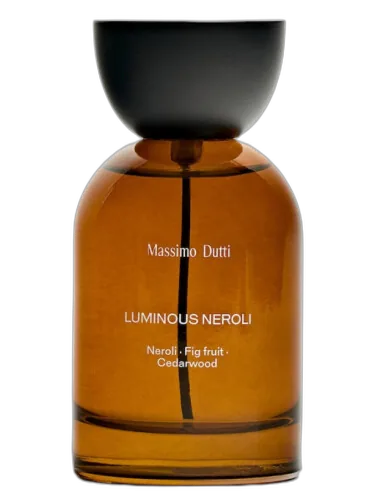
Massimo Dutti
Luminous Neroli Massimo Dutti
Shared top notes: bergamot, lemon, neroli

Masterpiece
Shadow Of Your Smile Masterpiece
Shared top notes: bergamot, lemon
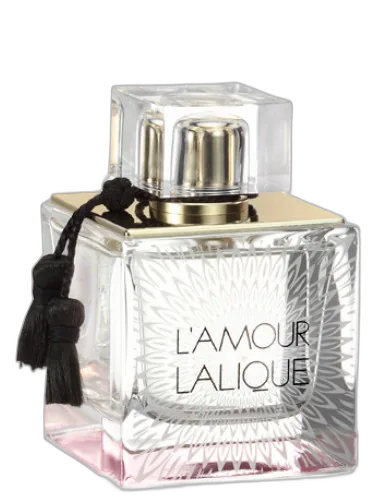
Lalique
L'amour Lalique
Shared top notes: bergamot, neroli, rose
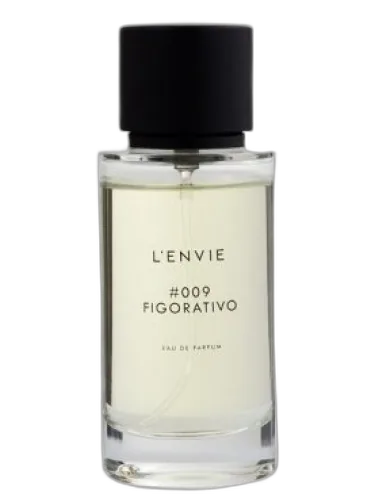
L’envie Parfums
#009 Figorativo L’envie Parfums
Shared top notes: bergamot, lemon
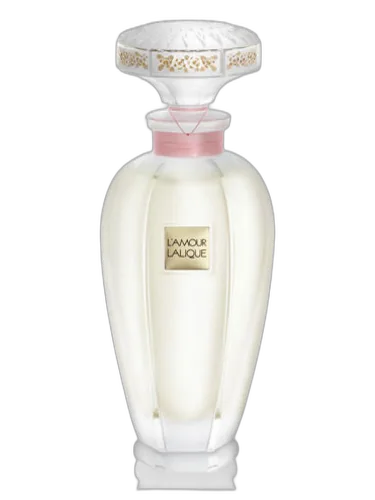
Lalique
L'amour Crystal Extrait De Parfum Lalique
Shared top notes: bergamot, neroli, rose