
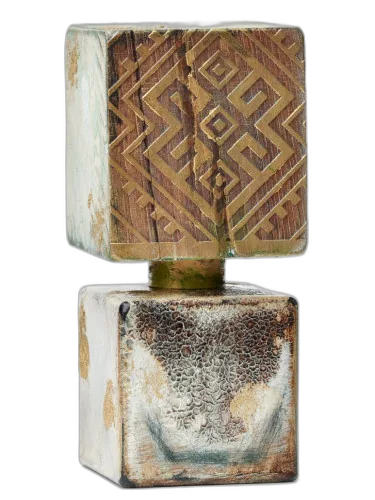
Saints Tears - Extrait Of Forgiveness Adi Ale Van
Fragrance Story
Saints Tears - Extrait of Forgiveness by Adi Ale Van is a fragrance for women and men. This is a new fragrance. Saints Tears - Extrait of Forgiveness was launched in 2022. Saints Tears - Extrait of Forgiveness was created by Camille Chemardin and Elia Chiche. Top notes are elemi and Incense; middle notes are Myrrh and Labdanum; base notes are Oakmoss, Woody Notes, Atlas Cedar and Virginian Cedar.
Composition Profile
About the Perfumer

Camille Chemardin
Camille Chemardin is a versatile perfumer with a portfolio spanning multiple niche brands. She has created fragrances such as Saints Tears by Adi Ale Van, Mary Jane by BORNTOSTANDOUT®, and Porthole by Loumari. Her work often explores complex and evocative themes, blending unexpected accords.
Fragrance Notes
Top Notes
First impression · 15-30 min
 elemi
elemi
 Incense
Heart Notes
Core character · 2-4 hours
 Myrrh
Myrrh
 Labdanum
Base Notes
Lasting impression · 4+ hours
 Oakmoss
 Woody Notes
 Atlas Cedar
Virginian Cedar
Atlas Cedar
Virginian Cedar
Saints Tears - Extrait Of Forgiveness Adi Ale Van by Adi Ale Van offers a distinctive olfactory experience that stands out from other fragrances in its category.
Crafted with the finest ingredients and a blend of traditional and modern perfumery techniques, this fragrance represents the pinnacle of the perfumer's art.
Saints Tears - Extrait Of Forgiveness Adi Ale Van embodies the distinctive style of Adi Ale Van while adding a unique chapter to their fragrance portfolio.
Character Profile
The Alchemist Archetype: Portrait of Saints Tears - Extrait Of Forgiveness Adi Ale Van
Essence
To wear Saints Tears - Extrait Of Forgiveness Adi Ale Van is to carry the weight of absolution in every breath. This fragrance-mournful yet sweet, austere yet tender-speaks of a soul who has wandered the liminal spaces between suffering and transcendence. The person who chooses it is not merely drawn to scent, but to the alchemy of emotion it represents: the distillation of grief into something sacred, the slow transformation of pain into wisdom.
This individual is most closely aligned with the Wounded Healer, an archetype rooted in Chiron’s myth-the centaur who could heal others but never himself. Their life is a testament to the paradox of carrying wounds while offering solace to those still bleeding. They do not flinch from sorrow; instead, they study it, refine it, and offer it back to the world as a balm. Their presence is both a sanctuary and a mirror, forcing others to confront their own unhealed fractures.
Shadow
Their tastes are deliberate, drawn to the melancholic beauty of decaying manuscripts, the quietude of empty cathedrals, the faint sweetness of dried vanilla pods left too long in the sun. They prefer textures that whisper rather than shout-aged leather, linen worn soft by time, silver tarnished just enough to reveal its history. Their home is a curated reliquary: dried flowers pressed between pages of Rilke, candles burned down to their last hour, a single vial of ink left uncapped as if waiting for a confession.
Philosophy, for them, is not an abstract exercise but a lived discipline. They believe in the necessity of suffering, not as a punishment, but as the forge of the soul. Their values are anchored in radical empathy-not the kind that offers empty comfort, but the kind that sits with another in the dark and says, I know. They despise platitudes, preferring silence to hollow reassurance.
Relationships are their greatest trial and their most profound redemption. They attract those who are broken, and though they have a gift for mending others, they often forget to tend to their own fractures. Their love is fierce but laced with sorrow, as if they already foresee the inevitable wounds of attachment. They do not love lightly; when they give themselves, it is with the full knowledge of impermanence.
Yet, their greatest strength is also their undoing. Their familiarity with sorrow can become a prison, a lens through which they see all of life. They risk romanticizing suffering, mistaking endurance for virtue. There is a quiet pride in their scars, a reluctance to fully heal-for if they did, who would they be? Without their wounds, would they still have purpose?
They may grow resentful of those they heal, secretly envying the naivety of those who have not yet known true despair. At times, they withdraw into isolation, convinced no one could possibly understand them. Their empathy, if unchecked, can turn into a form of self-annihilation-they give until there is nothing left, then resent the emptiness.
Conclusion
Their strength lies in their ability to transmute pain into meaning. They do not shy away from darkness; they learn its contours, its whispers, its lessons. This grants them an uncanny depth of perception-they see what others hide, not out of voyeurism, but because they recognize the shape of unspoken grief. They are the ones who speak the truth others avoid, who offer not solutions but presence.
Their intuition is their compass, guiding them toward those in need, even when they themselves are weary. They have a quiet magnetism, not the kind that demands attention, but the kind that draws the lost and the searching. Their words, when they choose to speak, carry the weight of lived experience.
Similar Fragrances
Fragrances with a comparable profile - shared accords, notes, and character.

Faberlic
Alternative Faberlic
Shared accords: amber, aromatic, balsamic

Adi Ale Van
My Judgement Day - Elixirul Vecerniei Adi Ale Van
Shared accords: amber, aromatic, balsamic

432 Wild Botanic Perfumes
Melinka 432 Wild Botanic Perfumes
Shared accords: amber, aromatic, balsamic

Alkemia Perfumes
Magus Alkemia Perfumes
Shared accords: amber, aromatic, balsamic

YanFroloff
Chypre 2010 Yanfroloff
Shared accords: amber, aromatic, balsamic