
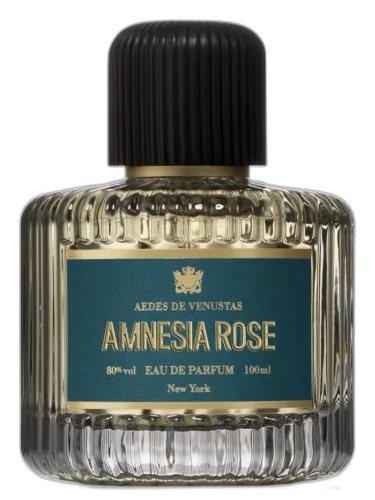

Amnesia Rose Aedes De Venustas
At a glance
Is Amnesia Rose Aedes De Venustas worth trying?
Amnesia Rose by Aedes de Venustas is a Oriental Floral fragrance for women and men.
- Best match
- Evening wear in Fall
- Performance feel
- Very Good longevity with Strong sillage
- Signature profile
- rose, woody, amber with Moroccan Rose, Bulgarian Rose, Patchouli
The first impression
Amnesia Rose by Aedes de Venustas is a Oriental Floral fragrance for women and men. This is a new fragrance. Amnesia Rose was launched in 2023. The nose behind this fragrance is Luca Maffei.
What shapes the scent
The perfumer behind it

Luca Maffei
Luca Maffei is an Italian perfumer known for his work with Acca Kappa, creating scents like Black Pepper & Sandalwood and Tilia Cordata. He also composed Amnesia Rose for Aedes de Venustas and Ambre Gris for Alyssa Ashley. Maffei's style often blends natural ingredients with modern sophistication. His portfolio includes a range of floral, woody, and aromatic compositions.
Notes pyramid
All Notes
Complete scent profile
 Moroccan Rose
Bulgarian Rose
Moroccan Rose
Bulgarian Rose
 Patchouli
 Incense
 Saffron
 Pink Pepper
 Labdanum
 Clearwood
 Cypriol Oil or Nagarmotha
 Benzoin
 Bushman Candle
 Agarwood (Oud)
The mood it creates
The Lover Archetype: Portrait of Amnesia Rose Aedes De Venustas
Essence
This person is defined by the Romantic archetype, though not in the trivial sense of mere sentimentality. Their Romanticism is a deep, almost mythic pursuit of beauty, passion, and ephemeral moments-an intoxication with the sublime. Like the fragrance itself-a rose veiled in smoke, citrus, and something faintly narcotic-they are drawn to the tension between memory and oblivion, between the delicate and the intoxicating.
They do not seek love in the conventional sense, but rather the experience of love-the way light falls on an old letter, the scent of rain on warm stone, the fleeting glance of a stranger that lingers too long. Their soul thrums with an aesthetic sensitivity that borders on the mystical, making them both enchanting and elusive.
Style & Aesthetic
Their life is a carefully curated dream, not out of vanity, but necessity. They cannot abide ugliness-not in surroundings, not in thought, not in people. Their home is a sanctuary of muted tones, antique textiles, and objects that whisper of forgotten stories. They prefer worn leather books to new ones, aged wine to the crispness of youth, and music that carries the weight of time-Chopin, Satie, or the slow burn of jazz.
They are not materialistic in the crass sense, but they are sensualists. Texture, scent, taste-these are their sacred languages. They might spend an hour selecting the perfect teacup, not for its cost, but for the way the porcelain feels against their lips.
Their philosophy is one of aesthetic transcendence: beauty is not merely pleasing, it is redemptive. They believe that to surround oneself with the sublime is to resist the banality of existence. This is both their salvation and their potential undoing.
Relationships
They love deeply, but never simply. Their relationships are layered with symbolism-a shared glance over a candlelit dinner means more to them than any declaration. They are drawn to people who carry an air of mystery, who seem to hold some unspoken sorrow or secret.
Yet, their Romantic nature makes them prone to idealization. They may fall in love with the idea of a person rather than the reality, leading to disillusionment. Their shadow emerges here: a tendency to withdraw when reality fails to match their vision. They may leave lovers bewildered, wondering why the passion faded so suddenly-when in truth, it was never about the lover, but about the feeling the lover inspired.
They are not cruel, merely transient. Their heart is a museum of beautiful ghosts.
Shadow
The Romantic’s greatest danger is decadence-not in the moralistic sense, but in the slow surrender to nostalgia, to the point where the past becomes more real than the present. They may retreat into memory, preferring the company of old letters and half-remembered dreams to the living world.
At their worst, they become esthetes of sorrow, cultivating their melancholy like a rare flower. They may indulge in self-destructive beauty-staying up too late with wine and poetry, chasing emotions that leave them hollow by morning. Their pursuit of the sublime can tip into escapism, making them seem aloof or even self-absorbed.
Yet, this shadow is also their depth. Without it, they would be mere aesthetes, not Romantics. Their sadness is the price of their sensitivity.
Conclusion
They are both present and absent, engaged yet detached. They live in the world, but not entirely of it. Their love of beauty is not passive-it is an act of defiance against the mundane.
They will always be slightly out of reach, like the scent of Amnesia Rose itself-there, then gone, leaving only the faintest trace of something unforgettable.
If you like this, try these
Fragrances with a comparable profile - shared accords, notes, and character.
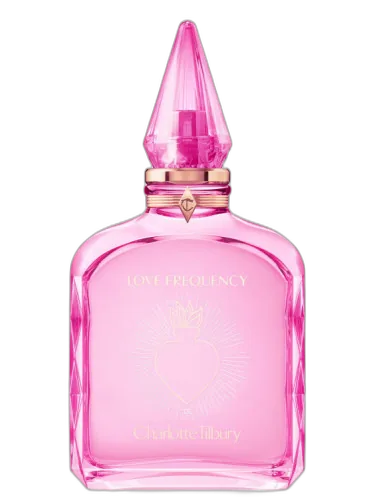
Charlotte Tilbury
Love Frequency Charlotte Tilbury
Shared top notes: pink pepper
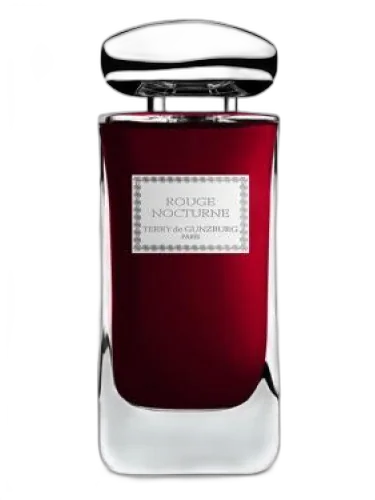
Terry de Gunzburg
Rouge Nocturne Terry De Gunzburg
Shared top notes: patchouli
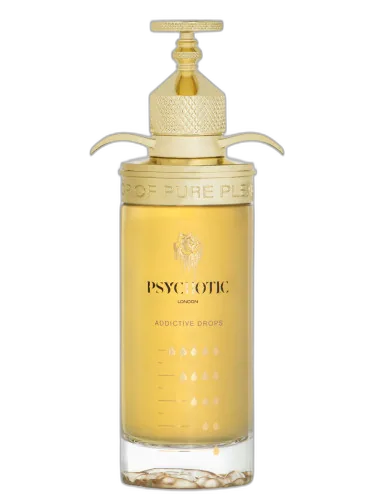
Psychotic London
Addictive Drops Psychotic London
Shared top notes: cypriol oil or nagarmotha, incense
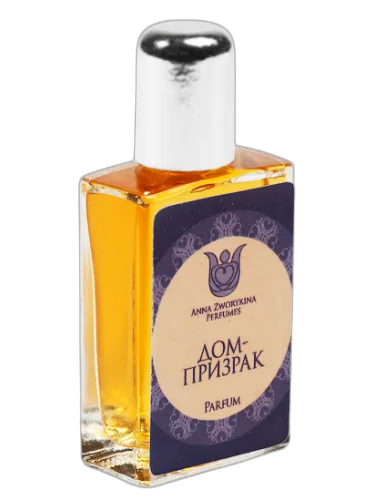
Anna Zworykina Perfumes
A Ghost House Anna Zworykina Perfumes
Shared top notes: agarwood (oud), incense, labdanum
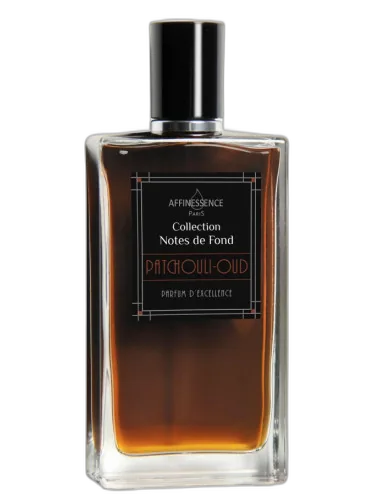
Affinessence
Patchouli Oud Affinessence
Shared top notes: incense, labdanum, patchouli