
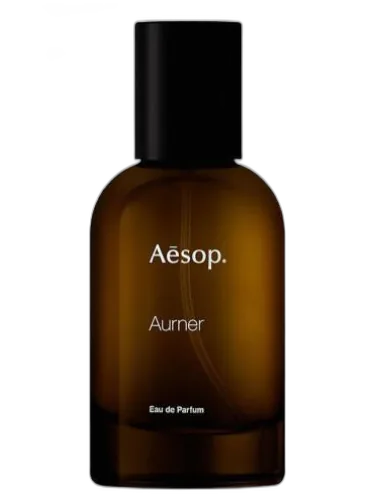

Aurner Aesop
At a glance
Is Aurner Aesop worth trying?
Aurner by Aesop is a Floral fragrance for women and men.
- Best match
- Casual wear in Spring
- Performance feel
- Good longevity with Moderate sillage
- Signature profile
- woody, warm spicy, aromatic with Cardamom, Pink Pepper, Citrus
The first impression
Aurner by Aesop is a Floral fragrance for women and men. This is a new fragrance. Aurner was launched in 2025. The nose behind this fragrance is Celine Barel. Top notes are Cardamom, Pink Pepper and Citrus; middle notes are Magnolia Leaf, Geranium and Chamomile; base notes are Sandalwood, Cardamom, Cypriol and Cedar.
What shapes the scent
The perfumer behind it

Celine Barel
Celine Barel is a French perfumer known for her work with brands like 4711, Abercrombie & Fitch, and Aesop. Her creations include the vibrant 4711 Remix Electric Night and the fresh Tacit for Aesop. She has also crafted scents for Andrea Maack, Avon, and Blumarine, showcasing a versatile style that spans from crisp colognes to bold florals.
Notes pyramid
Top Notes
First impression · 15-30 min
 Cardamom
 Pink Pepper
 Citrus
Heart Notes
Core character · 2-4 hours
 Magnolia Leaf
 Geranium
 Chamomile
Base Notes
Lasting impression · 4+ hours
 Sandalwood
Cardamom
Cypriol
Sandalwood
Cardamom
Cypriol
 Cedar
Cedar
The mood it creates
The Sage Archetype: Portrait of Aurner Aesop
Essence
To wear Aesop’s fragrances-particularly those like Hwyl or Tacit-is to embrace a philosophy as much as a scent. The person who favors these blends is not one for ostentation; they seek depth, subtlety, and a quiet kind of wisdom. Their presence is not loud, but it lingers.
This individual is most closely aligned with the Sage archetype-the seeker of truth, the quiet observer, the one who values knowledge not for its own sake, but for the clarity it brings. The Sage does not rush to conclusions; they weigh, consider, and refine. Their mind is a crucible where raw experience is distilled into understanding.
Yet, like all archetypes, the Sage has a shadow. The pursuit of wisdom can become an endless deferral of action, a retreat into the mind where life is analyzed but not fully lived. The Sage risks becoming the Hermit, isolated in their own intellect, mistaking detachment for enlightenment.
Style & Aesthetic
Their style is deliberate-uncluttered, textured, tactile. They favor natural materials: linen, wool, unpolished wood. Their wardrobe is a study in restraint, each piece chosen for its integrity rather than its trendiness. They may wear a well-worn leather watch strap, a Japanese ceramic mug, or a single piece of handcrafted jewelry-objects that carry the weight of time and craftsmanship.
Their home is no different: warm neutrals, organic shapes, books arranged not by color but by subject. They appreciate the Japanese concept of wabi-sabi-the beauty in imperfection-and may have a shelf of well-thumbed philosophy books next to a single, carefully chosen vase.
They move through the world with intentionality. Their mornings are unhurried-black coffee, a book, perhaps a long walk. They prefer quiet cafés to crowded bars, forests to shopping malls. They may work in a creative or intellectual field-writing, design, academia-or they may simply bring a contemplative approach to whatever they do.
But their shadow lurks here too: they can become too rigid in their routines, mistaking control for wisdom. Their aversion to chaos may make them resistant to spontaneity, and they may judge those who live more impulsively.
Philosophy & Values
They believe in substance over spectacle. Small talk exhausts them; they prefer conversations that meander into the abstract, the existential, the quietly profound. They are drawn to thinkers like Camus, Rilke, or Lao Tzu-those who embrace ambiguity rather than dogma.
Their values are rooted in authenticity and self-awareness. They distrust blind optimism but are not cynics; they see the world as it is, yet still find pockets of meaning. They may meditate, journal, or practice some form of mindful ritual-not as a trend, but as a way to stay grounded in an increasingly noisy world.
Relationships
In love and friendship, they are slow to trust but deeply loyal. They do not collect acquaintances; their circle is small, curated. They listen more than they speak, and when they do speak, their words carry weight.
Yet their shadow emerges here: they can be emotionally reserved, mistaking introspection for intimacy. They may struggle with vulnerability, preferring the safety of their own mind to the messy reality of human connection. Their partners or friends may sometimes feel like they are being studied rather than embraced.
Conclusion
The Aesop enthusiast is a study in contrasts: deeply thoughtful yet sometimes distant, wise yet occasionally paralyzed by their own intellect. They are drawn to fragrances that evoke earth, wood, and spice-scents that feel lived-in, complex, evolving over time, much like their own inner world.
To know them is to appreciate the beauty of a mind that refuses to take things at face value. But to truly reach them, one must remind them that wisdom is not just in the thinking-it is also in the living.
If you like this, try these
Fragrances with a comparable profile - shared accords, notes, and character.

Arabiyat
Hamdan The Brave Arabiyat
Shared top notes: cardamom, citrus
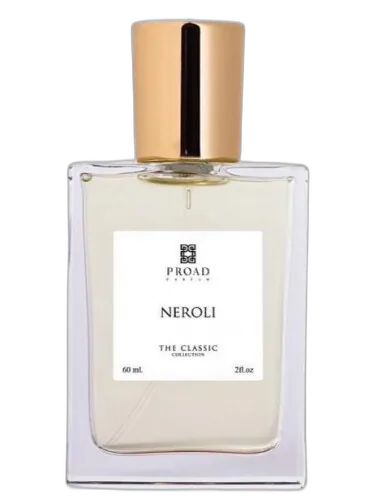
Proad
Neroli 2024 Proad
Shared top notes: cardamom, pink pepper
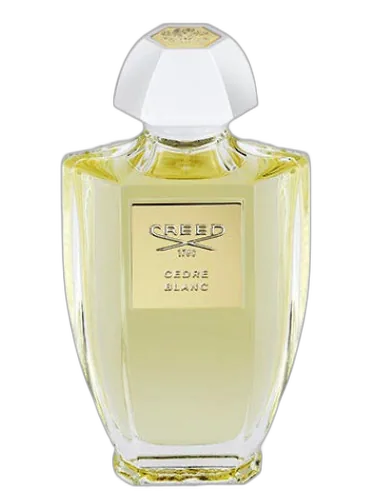
Creed
Cedre Blanc Creed
Shared top notes: cardamom

Jequiti
Aire Movimento Jequiti
Shared top notes: cardamom
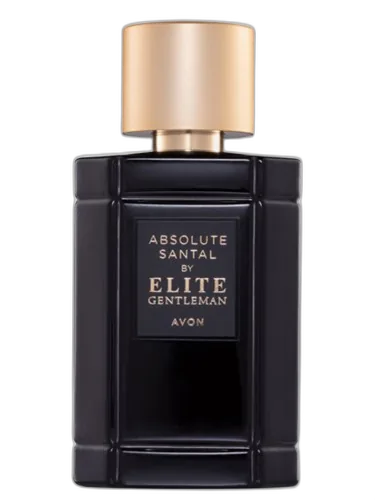
Avon
Absolute Santal By Elite Gentleman Avon
Shared top notes: cardamom, pink pepper