


Rozu Aesop
At a glance
Is Rozu Aesop worth trying?
Rozu by Aesop is a Floral Green fragrance for women and men.
- Best match
- Casual wear in Spring
- Performance feel
- Good longevity with Moderate sillage
- Signature profile
- woody, aromatic, rose with Rose, Shiso, Pink Pepper
The first impression
Rozu by Aesop is a Floral Green fragrance for women and men. Rozu was launched in 2020. The nose behind this fragrance is Barnabe Fillion. Top notes are Rose, Shiso, Pink Pepper, Bitter Orange and Bergamot; middle notes are Rose, Guaiac Wood, Jasmine and Ylang-Ylang; base notes are Sandalowood, Vetiver, Patchouli, Myrrh and Musk.
What shapes the scent
The perfumer behind it

Barnabe Fillion
Barnabe Fillion is a French perfumer who trained at Givaudan and now works closely with Aesop, where he has become a defining creative force. His style is known for blending raw, mineral-like accords with earthy and aromatic notes, often evoking landscapes and natural textures. He created several of Aesop’s most distinctive fragrances, including the green, citrusy Erémia, the smoky, woody Karst, and the dark, resinous Miraceti.
Notes pyramid
Top Notes
First impression · 15-30 min
 Rose
Rose
 Shiso
Shiso
 Pink Pepper
 Bitter Orange
 Bergamot
Heart Notes
Core character · 2-4 hours
Rose
 Guaiac Wood
 Jasmine
 Ylang-Ylang
Base Notes
Lasting impression · 4+ hours
 Sandalowood
 Vetiver
 Patchouli
 Myrrh
Myrrh
 Musk
Musk
The mood it creates
The Sage Archetype: Portrait of Rozu Aesop
Essence
A person who cherishes Rozu by Aesop is drawn to fragrances that are intricate yet restrained-scents that whisper rather than shout. Like the perfume itself, which blends rose, shiso, and woody vetiver into something both delicate and profound, this individual embodies a quiet intensity. They are not one for ostentation, yet their presence lingers in the mind like the subtle trail of a well-chosen fragrance.
At their core, they are the Sage-Jung’s archetype of wisdom, introspection, and the pursuit of truth. The Sage does not seek to dominate but to understand, to distill the world into meaning rather than impose meaning upon it. They are the observer, the thinker, the one who values depth over spectacle.
Style & Aesthetic
Their tastes are refined but never showy. They prefer materials that age with dignity-soft linen, well-worn leather, unpolished wood. Their wardrobe leans toward muted tones: deep greens, warm taupes, the occasional touch of burgundy. They appreciate craftsmanship over trends, choosing objects that tell a story rather than flaunt status.
Books line their shelves, not as decoration but as companions. Their reading spans philosophy, poetry, and obscure essays-works that demand reflection rather than passive consumption. Music, too, is an intimate affair: perhaps the melancholic chords of Erik Satie, the textured soundscapes of Brian Eno, or the quiet defiance of Nina Simone.
Their days are structured but not rigid. Mornings begin with ritual: black coffee, a few pages of reading, perhaps a walk through quiet streets. They work in a field that rewards depth-writing, research, design, or academia-where their analytical nature thrives. Yet they guard against burnout, knowing that even the most disciplined mind needs stillness.
They are drawn to places of quiet beauty-a dimly lit library, a secluded garden, an empty museum gallery. Travel, when they do it, is purposeful: a retreat in the mountains, a stay in a centuries-old European city where history seeps from the stones.
Philosophy & Values
They believe in the slow accumulation of wisdom, not the sudden epiphany. For them, truth is not a destination but a path-one walked with patience and doubt in equal measure. They distrust dogma, preferring questions to answers. Their morality is not rigid but fluid, shaped by experience rather than doctrine.
Yet this very fluidity can become a flaw. The Sage’s shadow emerges when their love of contemplation turns into paralysis. They may overanalyze decisions, mistaking hesitation for wisdom. Their reluctance to commit-whether to a person, a belief, or a course of action-can leave them stranded in perpetual deliberation.
Relationships
They are not a social butterfly, but neither are they a recluse. Their friendships are few but deep, built on mutual respect and intellectual exchange. They listen more than they speak, and when they do speak, their words carry weight. Romantic partners are drawn to their quiet magnetism, though some may grow frustrated by their emotional reserve.
Their greatest struggle in love is vulnerability. The Sage prizes self-sufficiency, sometimes to the point of isolation. They fear appearing foolish or exposed, so they retreat into rationality, dissecting emotions rather than surrendering to them. This can make intimacy difficult-they must learn that wisdom is not only found in the mind but also in the heart.
Shadow
For all their wisdom, the Sage is not immune to folly. Their greatest weakness is detachment-the belief that understanding alone is enough. They may intellectualize pain rather than feel it, or withdraw from action under the guise of needing "more time to think." Life, however, does not always wait for perfect clarity.
At their worst, they become the Hermit, so consumed by their inner world that they neglect the messy, vital act of living. The antidote lies in balance-in remembering that wisdom must sometimes yield to instinct, that thought must sometimes give way to action.
Conclusion
Rozu is not a fragrance for those who seek to be noticed. It is for those who wish to be remembered. Like the person who wears it, it is layered, evolving, and deeply personal. The Sage within them is both their strength and their trial-their gift for seeing deeply can become a reluctance to act boldly.
Yet when they embrace both thought and feeling, when they step out of the safety of contemplation and into the uncertain world, they become something rare: a thinker who lives, not just a living thing that thinks.
If you like this, try these
Fragrances with a comparable profile - shared accords, notes, and character.

Natura
Luna Confiante Natura
Shared top notes: bergamot, pink pepper

Marcelle Dormoy
Gemma Veneris Marcelle Dormoy
Shared top notes: bergamot

DiVina Terra
07 Intesa Divina Terra
Shared top notes: bergamot, rose

Ghalati
Sublime Wood Ghalati
Shared top notes: bergamot, pink pepper
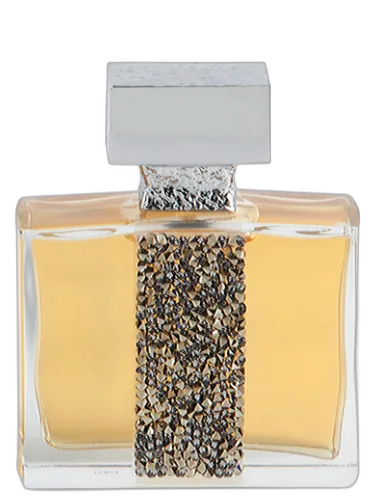
M. Micallef
M. Micallef M. Micallef
Shared top notes: bergamot