


Virēre Aesop
Fragrance Story
Virēre by Aesop is a Woody Aromatic fragrance for women and men. This is a new fragrance. Virēre was launched in 2024. The nose behind this fragrance is Barnabe Fillion. Top notes are Petitgrain, Bergamot and Galbanum; middle notes are Green Tea, Resin and Pink Pepper; base notes are Mate, Hay and Cedar.
Composition Profile
About the Perfumer

Barnabe Fillion
Barnabe Fillion is a French perfumer who trained at Givaudan and now works closely with Aesop, where he has become a defining creative force. His style is known for blending raw, mineral-like accords with earthy and aromatic notes, often evoking landscapes and natural textures. He created several of Aesop’s most distinctive fragrances, including the green, citrusy Erémia, the smoky, woody Karst, and the dark, resinous Miraceti.
Fragrance Notes
Top Notes
First impression · 15-30 min
 Petitgrain
 Bergamot
 Galbanum
Heart Notes
Core character · 2-4 hours
 Green Tea
Resin
Green Tea
Resin
 Pink Pepper
Base Notes
Lasting impression · 4+ hours
 Mate
Mate
 Hay
Hay
 Cedar
Cedar
Virēre Aesop by Aesop offers a distinctive olfactory experience that stands out from other fragrances in its category.
Crafted with the finest ingredients and a blend of traditional and modern perfumery techniques, this fragrance represents the pinnacle of the perfumer's art.
Virēre Aesop embodies the distinctive style of Aesop while adding a unique chapter to their fragrance portfolio.
Character Profile
The Sage Archetype: Portrait of Virēre Aesop
Essence
To love Virēre by Aesop is to embrace a fragrance that is at once verdant and austere-green, herbaceous, slightly medicinal, yet deeply grounding. The person who chooses this scent is not one for ostentation; they seek refinement in restraint, wisdom in subtlety. Their soul resonates with the Sage archetype, the seeker of knowledge, the quiet observer who finds meaning in the interplay of nature and intellect.
They are drawn to the scent’s botanical sharpness, its suggestion of crushed leaves and damp earth, as if it were distilled from the essence of an ancient forest. This preference reveals a mind that values clarity, authenticity, and a certain philosophical detachment. They are not easily swayed by trends; instead, they cultivate a personal aesthetic that is deliberate, almost monastic in its simplicity.
Style & Aesthetic
Their surroundings reflect their inner world-minimal yet textured, functional yet poetic. Their home is a sanctuary of muted tones, organic materials, and carefully chosen objects: a well-worn leather-bound book, a single piece of driftwood on a shelf, linen curtains that filter the light just so. They prefer craftsmanship over mass production, silence over noise, depth over spectacle.
In matters of taste, they are discerning but not elitist. They might savor a perfectly brewed cup of black tea, appreciate the slow unfurling of a Japanese incense stick, or lose themselves in the pages of a philosophical treatise. Music for them is often instrumental-ambient soundscapes or classical compositions that evoke vast, open spaces.
Philosophically, they are drawn to Stoicism, Zen Buddhism, or existentialism-systems of thought that prize self-awareness, acceptance of impermanence, and the discipline of the mind. They believe in the power of quiet contemplation, in the idea that truth is found not in shouting but in listening-to nature, to the self, to the unspoken currents of life.
Relationships
They are not a social butterfly, nor do they wish to be. Their relationships are few but profound, built on mutual respect and intellectual kinship. They attract those who appreciate their depth, their ability to listen without judgment, their willingness to engage in conversations that stray beyond the superficial.
Yet, their very strength-their self-sufficiency-can become a barrier. They may struggle with vulnerability, retreating into their inner world when emotions run high. Their partners or close friends might sometimes feel shut out, as if there is always a part of them that remains just out of reach.
Shadow
The Sage’s greatest gift is their clarity of thought, but this can become their curse. In their pursuit of wisdom, they may distance themselves from the messiness of human emotion, rationalizing feelings rather than fully experiencing them. Their detachment, while often a strength, can harden into aloofness, leaving others to wonder if they are truly present or merely observing life from a safe remove.
They might also fall into the trap of over-intellectualizing, mistaking knowledge for wisdom. There is a difference between understanding love in theory and surrendering to it in practice-a lesson they may need to learn through lived experience rather than contemplation alone.
Conclusion
The lover of Virēre is a seeker, a thinker, a curator of the subtle and the profound. Their life is a testament to the beauty of restraint, the power of the examined existence. But like all archetypes, they must integrate their shadow-learning that wisdom without warmth is incomplete, that knowledge without connection is hollow.
When they strike this balance, they become not just an observer of life but a true participant-one who sees deeply, feels fully, and, in doing so, touches something eternal.
Similar Fragrances
Fragrances with a comparable profile - shared accords, notes, and character.

Brunello Cucinelli
Vie Eteree Brunello Cucinelli
Shared accords: aromatic, citrus, fresh

L'Occitane en Provence
The Vert & Bigarade L'occitane En Provence
Shared accords: aromatic, citrus, fresh

Diptyque
L'eau Des Hesperides Diptyque
Shared accords: aromatic, citrus, fresh
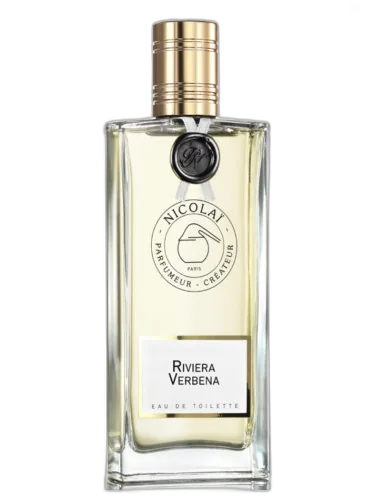
Nicolai Parfumeur Createur
Riviera Verbena Nicolai Parfumeur Createur
Shared accords: aromatic, citrus, fresh

Nicolai Parfumeur Createur
Week-end A Deauville Nicolai Parfumeur Createur
Shared accords: aromatic, citrus, fresh