


Citrus Ester Aether
At a glance
Is Citrus Ester Aether worth trying?
Citrus Ester by Aether is a Citrus Aromatic fragrance for women and men.
- Best match
- Casual wear in Summer
- Performance feel
- Moderate longevity with Moderate sillage
- Signature profile
- citrus, aromatic, fresh spicy with Grapefruit, Methyl Pamplemousse, Rhubarb
The first impression
Citrus Ester by Aether is a Citrus Aromatic fragrance for women and men. Citrus Ester was launched in 2016. Citrus Ester was created by Amélie Bourgeois and Anne-Sophie Behaghel.
What shapes the scent
The perfumer behind it

Amelie Bourgeois
Amelie Bourgeois is a French perfumer known for her work with the niche houses Aether and Alexandre.J. Her style blends experimental, synthetic accords with natural elements, often exploring contrasts like citrus and musk or rose and alkanes. She created the Aether Oxyde and Carboneum compositions, as well as Alexandre.J’s Mandarine Sultane and Passion Bliss.
Notes pyramid
All Notes
Complete scent profile
 Grapefruit
 Methyl Pamplemousse
 Rhubarb
The mood it creates
The Lover Archetype: Portrait of Citrus Ester Aether
Essence
This person is most closely defined by the Explorer archetype-a restless soul driven by curiosity, novelty, and the pursuit of transcendence. Citrus Ester Aether, with its bright, effervescent top notes and elusive, almost mystical dry-down, mirrors their essence: a being who thrives on the tension between the tangible and the ephemeral. The Explorer is not content with the mundane; they crave expansion, whether through travel, ideas, or sensory experiences. Their fragrance, both uplifting and enigmatic, is their olfactory manifesto-a declaration that life should be vibrant, unbounded, and always just beyond full comprehension.
Shadow
Yet the Explorer’s brilliance casts a shadow. Their relentless pursuit of the new can become avoidance-of commitment, of depth, of the hard work required to truly master anything. They may flit from passion to passion, never allowing roots to form, mistaking motion for progress. Their relationships suffer; lovers and friends may feel like waystations rather than destinations.
There is also a subtle arrogance in their detachment, a belief that their refusal to settle makes them superior to those who find meaning in stability. They may dismiss tradition as stagnation, missing the wisdom embedded in rituals they deem too ordinary. At their worst, they become the Wanderer-not the enlightened seeker, but the restless ghost, always moving but never arriving.
Conclusion
Their tastes are eclectic yet refined, favoring the unconventional-art that disturbs as much as it delights, music that blends the structured and the chaotic, literature that bends reality. They may collect rare books, obscure vinyl records, or handmade ceramics from distant lands, each object a fragment of a larger, ever-unfolding journey. Their style is effortless but intentional: linen shirts that whisper of Mediterranean summers, a single silver ring worn as a talisman, boots scuffed from wandering.
Philosophically, they reject dogma. They believe truth is not fixed but discovered anew in each moment, each conversation, each inhale of crisp citrus dissolving into something stranger. Their values orbit around freedom-not as reckless abandon, but as the right to evolve without constraint. Relationships are deep but transient; they love fiercely but often from a distance, their heart a nomad’s tent rather than a permanent home. They are drawn to those who challenge them, who mirror their hunger for the unknown.
Their lifestyle is fluid-perhaps a digital nomad, an artist between projects, a scholar of esoteric subjects. Routine is their nemesis; they thrive in the liminal, the in-between. Mornings might find them writing in a sunlit café, afternoons lost in a foreign city’s backstreets, evenings debating philosophy with strangers who become temporary kindred spirits.
If you like this, try these
Fragrances with a comparable profile - shared accords, notes, and character.

The Naxos Apothecary
Sangri The Naxos Apothecary
Shared top notes: grapefruit, rhubarb

Parfums 137
Spearmint Parfums 137
Shared top notes: grapefruit
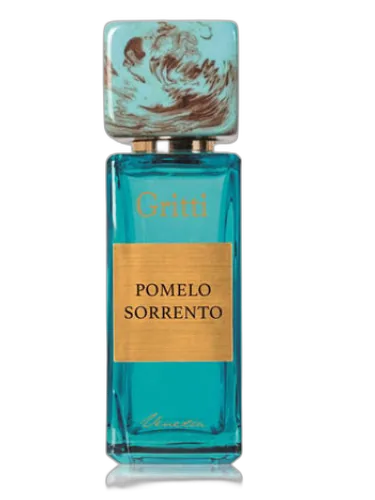
Gritti
Pomelo Sorrento Gritti
Shared top notes: grapefruit

Comptoir Sud Pacifique
Rouge Litchi Comptoir Sud Pacifique
Shared top notes: grapefruit, rhubarb

BORNTOSTANDOUT®
Mary Jane Borntostandout®
Shared top notes: grapefruit, rhubarb