
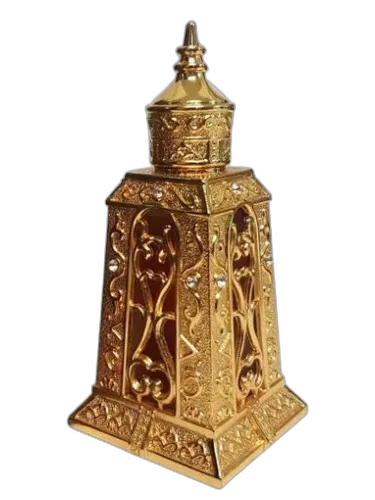

Khulasat Al Oudh Oil Al Haramain Perfumes
At a glance
Is Khulasat Al Oudh Oil Al Haramain Perfumes worth trying?
Khulasat Al Oudh Oil by Al Haramain Perfumes is a Oriental fragrance for women and men.
- Best match
- Evening wear in Winter
- Performance feel
- Excellent longevity with Strong sillage
- Signature profile
- leather, musky, animalic with Herbal Notes, Sweet Notes, Rose
The first impression
Khulasat Al Oudh Oil by Al Haramain Perfumes is a Oriental fragrance for women and men. Khulasat Al Oudh Oil was launched in 2015. Top notes are Herbal Notes, Sweet Notes and Rose; middle notes are Leather, Herbal Notes, Woodsy Notes, Citruses and Smoke; base notes are Balsamic Notes, Musk, Labdanum and Amber.
What shapes the scent
The perfumer behind it

Notes pyramid
Top Notes
First impression · 15-30 min
 Herbal Notes
Sweet Notes
Herbal Notes
Sweet Notes
 Rose
Rose
Heart Notes
Core character · 2-4 hours
 Leather
Herbal Notes
Woodsy Notes
Leather
Herbal Notes
Woodsy Notes
 Citruses
 Smoke
Smoke
Base Notes
Lasting impression · 4+ hours
 Balsamic Notes
 Musk
Musk
 Labdanum
 Amber
Amber
The mood it creates
The Lover Archetype: Portrait of Khulasat Al Oudh Oil Al Haramain Perfumes
Essence
The one who chooses Khulasat Al Oudh is not merely drawn to fragrance-they are called by it. This is not a scent for the casual or the indifferent; it is dense, sacred, and enveloping, like the whisper of an ancient temple. The wearer is most closely aligned with the Mystic, an archetype that seeks the profound, the symbolic, and the transcendent. They are not content with surfaces; they crave the hidden meanings beneath the veil of the ordinary.
The Mystic moves through life as if in a waking dream, attuned to the unseen currents of emotion and spirit. They are both sensual and introspective, drawn to beauty but also to the shadows where truth often resides. Their love for oud-resinous, dark, and intoxicating-mirrors their own nature: complex, layered, and unafraid of depth.
Style & Aesthetic
They dress with intention, favoring fabrics that age beautifully-linen, wool, raw silk. Their wardrobe is not trendy, but neither is it antiquated; it exists outside of time. Jewelry, if worn at all, is likely heirloom or handcrafted, carrying a story.
Their presence is magnetic but not loud. They do not demand attention, yet when they enter a room, something shifts. People lean in when they speak, not because they are charismatic in the traditional sense, but because they seem to speak from a place of knowing.
Philosophy & Values
For the Mystic, existence is not a series of events but a tapestry of symbols. They are the kind of person who lingers in old bookshops, runs their fingers over hand-carved wood, and pauses to watch the way light filters through incense smoke. Their tastes are refined but never ostentatious; they prefer the weight of history in an object, the whisper of tradition in a ritual.
They may be drawn to philosophy, esoteric traditions, or the arts-not as a hobby, but as a way of life. Their home is likely filled with textures that invite touch: worn leather, heavy velvet, polished stone. They drink tea slowly, savoring the heat and the bitterness, as if each sip contains a meditation.
Their philosophy is one of depth over breadth. They distrust the modern obsession with speed and efficiency, seeing it as a kind of spiritual poverty. Instead, they cultivate patience, believing that meaning must be unearthed, not seized. They are not necessarily religious in a conventional sense, but they are deeply spiritual, sensing the sacred in the mundane.
Relationships
The Mystic does not form bonds lightly. Their relationships are intense, often marked by a quiet, almost reverent intimacy. They do not seek many companions, but the few they choose are held close, like rare manuscripts. They listen more than they speak, and when they do speak, their words carry weight.
Yet, this depth can also be a burden. They may struggle with those who cannot meet them in their inner world, growing impatient with small talk or superficial connections. Their shadow emerges here: a tendency toward isolation, a retreat into their own mind when the outer world feels too shallow. They may also idealize love, expecting a partner to be both human and mythic-a contradiction that can lead to disillusionment.
Shadow
The Mystic’s greatest strength is also their greatest peril. Their love of depth can become a refusal of lightness, a disdain for the simple joys that require no interpretation. They may grow cynical, seeing the world as a place that has forgotten how to feel, how to truly be.
Worse, their introspection can curdle into self-absorption. They may mistake their own melancholy for wisdom, their solitude for superiority. The scent of oud, so rich and heavy, can become oppressive if one never steps into the open air.
Conclusion
Khulasat Al Oudh is not worn-it is inhabited. The Mystic who chooses it does so because it mirrors their soul: dark, warm, and unfathomable. They are the keepers of secrets, the ones who walk between worlds.
But even mystics must return to earth. The challenge for them is to balance their love of the unseen with the necessity of the present-to let the scent of oud lift them, but not carry them away entirely. In this balance, they find not just wisdom, but wholeness.
If you like this, try these
Fragrances with a comparable profile - shared accords, notes, and character.

Montale
Oud Fool Roses Montale
Shared top notes: rose
Naseem
Wild Obsession Naseem
Shared heart notes: leather
Lotus Cosmetics London
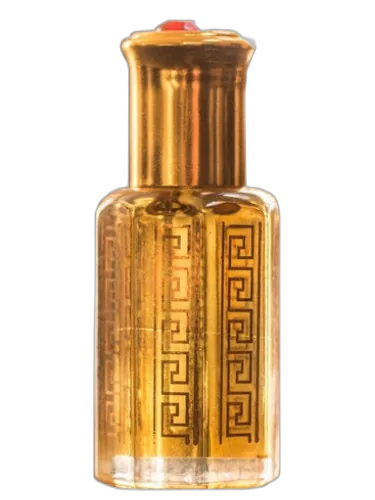
Sultan Lotus Cosmetics London
Shared top notes: herbal notes, rose
Aulentissima
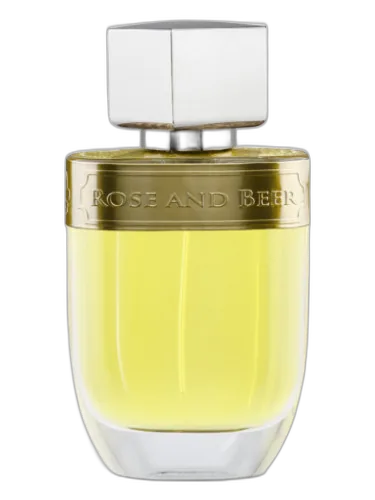
Rose And Beer Aulentissima
Shared top notes: rose
Electimuss
Vici Leather Electimuss
Shared heart notes: leather