
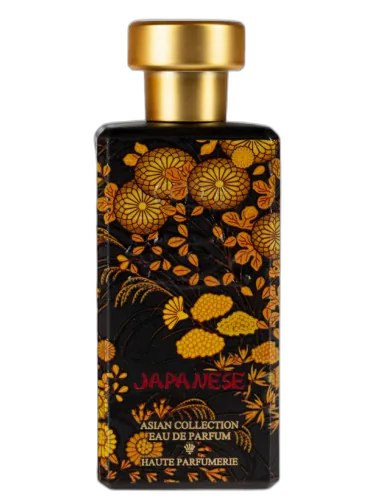

Japanese Al-jazeera Perfumes
At a glance
Is Japanese Al-jazeera Perfumes worth trying?
Japanese by Al-Jazeera Perfumes is a Oriental Woody fragrance for women and men.
- Best match
- Evening wear in Fall
- Performance feel
- Very Good longevity with Strong sillage
- Signature profile
- amber, woody, warm spicy with Pink Pepper, Bergamot, Jasmine
The first impression
Japanese by Al-Jazeera Perfumes is a Oriental Woody fragrance for women and men. This is a new fragrance. Japanese was launched in 2023. The nose behind this fragrance is Sophie Labbé. Top notes are Pink Pepper and Bergamot; middle notes are Jasmine and Benzoin; base notes are Ambrox Super, Patchouli, Ambergris and Sandalwood.
What shapes the scent
The perfumer behind it

Sophie Labbé
Sophie Labbé has created fragrances for a diverse array of brands, including Estée Lauder, Blumarine, and Fiorucci. Her portfolio includes Pure White Linen and Bellissima Acqua Di Primavera. She is known for her versatility across both classic and contemporary styles.
Notes pyramid
Top Notes
First impression · 15-30 min
 Pink Pepper
 Bergamot
Heart Notes
Core character · 2-4 hours
 Jasmine
 Benzoin
Base Notes
Lasting impression · 4+ hours
 Ambrox Super
 Patchouli
 Ambergris
 Sandalwood
The mood it creates
The Wanderer Archetype: Portrait of Japanese Al-jazeera Perfumes
Essence
This person is an embodiment of the Explorer, an archetype that thrives on discovery, novelty, and the pursuit of the unknown. The Japanese Al-jazeera fragrance-a blend of exotic spices, delicate florals, and smoky woods-mirrors their restless spirit. It is neither wholly Eastern nor Western, neither overtly bold nor timidly subtle. Like the scent, they exist in the liminal spaces, always seeking, never fully settling.
Style & Aesthetic
Their aesthetic is eclectic yet deliberate. They might pair a vintage kimono with minimalist Scandinavian jewelry, or a tailored blazer with handcrafted Middle Eastern sandals. Their home is a curated museum of travels: a Moroccan rug here, a Danish mid-century chair there, a Japanese tea set resting on a Brutalist concrete shelf.
In music, they oscillate between the meditative drones of traditional gagaku and the pulsating rhythms of electronic avant-garde. Their bookshelf holds Mishima alongside Nietzsche, Kawabata beside Borges. They do not consume culture passively; they dissect it, absorb it, and discard what does not resonate.
They thrive in cities where cultures collide-Tokyo, Istanbul, Berlin. Routine is their enemy; even their daily rituals are designed to feel spontaneous. They might practice yoga at dawn only to spend the evening in a dimly lit jazz bar, sipping single-malt whisky.
Professionally, they are often freelancers, artists, or entrepreneurs-anything that allows movement. A 9-to-5 job feels like a cage, though they sometimes envy those who find comfort in structure. Their work is their passion, but they struggle with discipline, swinging between bursts of genius and periods of restless inertia.
Philosophy & Values
To them, life is an endless journey, not a destination. They reject dogma and rigid structures, preferring the fluidity of experience over fixed ideologies. Their philosophy is one of aesthetic curiosity-they believe beauty is found in the unexpected, the unconventional, the fleeting. Tradition is not dismissed but reinterpreted; they might admire the discipline of Zen Buddhism while simultaneously indulging in the hedonism of modern Tokyo nightlife.
Their values are shaped by autonomy and authenticity. They despise pretense, yet they are not immune to the occasional affectation-after all, even the most genuine wanderer must sometimes wear a mask to navigate unfamiliar terrain. They prize intelligence but distrust pure intellectualism; wisdom, to them, is found in the senses as much as in the mind.
Relationships
They are magnetic but elusive, drawing people in with their depth and mystery, yet frustrating them with their reluctance to commit. Their relationships are intense but often short-lived-not out of cruelty, but because they fear stagnation. They love passionately but guard their independence fiercely.
Friends admire their ability to see the world differently, but some grow weary of their inconsistency. Romantic partners may feel like temporary passengers on a journey that has no final stop. Their shadow emerges here: a tendency toward emotional detachment, rationalizing their avoidance of deep bonds as a form of freedom rather than fear.
Shadow
Their greatest strength-their insatiable curiosity-is also their flaw. In their quest for the next experience, they risk becoming a collector of moments rather than a cultivator of depth. They may mistake novelty for growth, movement for progress.
At their worst, they grow disillusioned, cynical of those who find contentment in simplicity. They may indulge in escapism-excessive travel, fleeting romances, or even substance use-to avoid confronting the void that no new experience can fill.
Conclusion
The Japanese Al-jazeera perfume wearer is neither entirely of the East nor the West, neither wholly grounded nor entirely untethered. They are the modern nomad, intoxicated by the world’s beauty yet haunted by its impermanence. Their life is a work of art-fragmented, evolving, never complete.
And perhaps that is enough.
If you like this, try these
Fragrances with a comparable profile - shared accords, notes, and character.

Van Cleef & Arpels
Precious Oud Van Cleef & Arpels
Shared top notes: bergamot, pink pepper

Bottega Veneta
Bottega Veneta Bottega Veneta
Shared top notes: bergamot, pink pepper

Yves Rocher
So Elixir Eau De Toilette Yves Rocher
Shared top notes: bergamot, pink pepper

Adolfo Dominguez
Private Collection Mahonia Adolfo Dominguez
Shared top notes: bergamot, pink pepper

Agent Provocateur
Lace Noir Agent Provocateur
Shared top notes: bergamot, pink pepper