
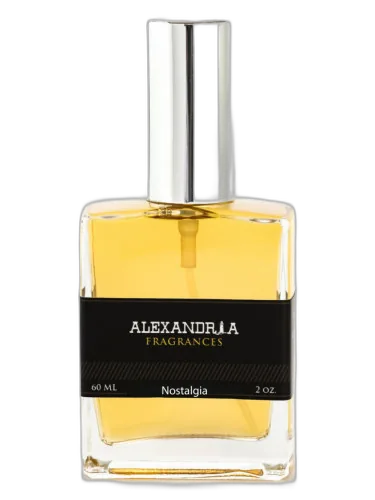

Nostalgia Alexandria Fragrances
At a glance
Is Nostalgia Alexandria Fragrances worth trying?
Nostalgia by Alexandria Fragrances is a fragrance for women and men.
- Best match
- Evening wear in Fall
- Performance feel
- Excellent longevity with Strong sillage
- Signature profile
- rose, vanilla, oud with Turkish Rose, Bulgarian Rose, Laotian Oud
The first impression
Nostalgia by Alexandria Fragrances is a fragrance for women and men. Nostalgia was launched in 2017. The nose behind this fragrance is Hany Hafez.
What shapes the scent
The perfumer behind it

Hany Hafez
Hany Hafez is a perfumer who has contributed extensively to Alexandria Fragrances, with a portfolio spanning over a dozen scents such as 1981x, 50 Shades Of Gray, and African Magic. His work often blends rich, exotic accords with contemporary freshness. Hafez is recognized for creating accessible yet complex fragrances that appeal to a wide audience.
Notes pyramid
All Notes
Complete scent profile
 Turkish Rose
Bulgarian Rose
Turkish Rose
Bulgarian Rose
 Laotian Oud
 Vanilla
 Benzoin
 Violet
The mood it creates
The Lover Archetype: Portrait of Nostalgia Alexandria Fragrances
Essence
The person who cherishes Nostalgia by Alexandria Fragrances is most closely aligned with the Sage-a seeker of truth, wisdom, and timeless beauty. The Sage thrives on introspection, drawn to the past not as mere sentimentality, but as a wellspring of meaning. They are the philosopher who pores over old books, the artist who revives forgotten aesthetics, the wanderer who finds solace in the echoes of history. Their love for this fragrance-a blend of aged woods, amber, and whispers of spice-reflects a mind that dwells in the interstices of memory and intellect.
Yet, like all archetypes, the Sage has a shadow. Their reverence for the past can harden into dogmatism, their wisdom into condescension. They may grow so enamored with reflection that they neglect action, or so attached to bygone ideals that they resist the present.
Style & Aesthetic
Their tastes are deliberate, almost curatorial. They favor the patina of well-worn leather, the weight of a first-edition novel, the muted glow of candlelight over the sterile glare of LEDs. Their wardrobe leans toward timelessness-tailored wool, linen that softens with age, perhaps a vintage watch whose ticking is a metronome to their thoughts. They are drawn to music that carries history within its notes: jazz that smolders like embers, classical compositions that unfold like ancient arguments, folk melodies that hum with ancestral voices.
Their home is a sanctuary of quiet reflection-a library with a single reading chair, a writing desk where ink stains the wood, a record player that spins vinyl like an incantation. They may keep a journal, not for daily minutiae, but for thoughts that unfold like slow-burning incense. They travel not for spectacle, but for resonance: a forgotten chapel, a café where poets once argued, a forest where the trees seem to murmur secrets.
Professionally, they gravitate toward roles that honor legacy-archivists, professors, conservators, writers. Even in modern careers, they infuse their work with a sense of lineage, seeing themselves as stewards of something larger. Yet they may struggle in fast-paced environments, their deliberate nature mistaken for indecision.
Philosophy & Values
For them, nostalgia is not mere escapism-it is a dialogue with time. They believe that wisdom is cumulative, that the past holds fragments of truth waiting to be reassembled. Their values are rooted in continuity: tradition is not blind adherence, but a selective preservation of what endures. They distrust fads, preferring depth over novelty. Yet this can make them resistant to change, mistaking their preferences for universal truths.
They value solitude, but not isolation. Their relationships are few but profound, built on shared intellectual or artistic kinship. They are the confidant who listens with the patience of a historian, the friend who gifts not trinkets but rare books or handwritten letters. Yet their standards can be exacting-they may dismiss those who lack their depth, forgetting that not all souls are forged in contemplation.
Conclusion
Their greatest strength is their ability to see beyond the ephemeral. Where others chase trends, they seek essence. Their discernment allows them to recognize quality-whether in art, ideas, or people. They are loyal, not out of obligation, but because they understand that meaningful connections are rare and worth preserving.
If you like this, try these
Fragrances with a comparable profile - shared accords, notes, and character.
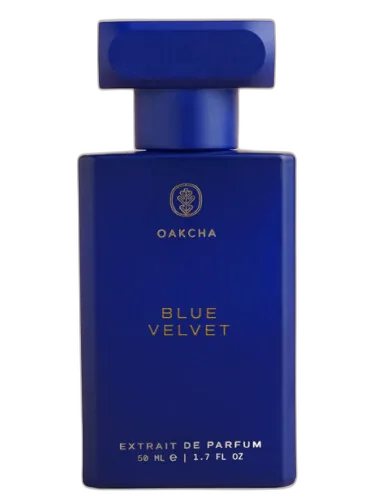
Oakcha
Blue Velvet Oakcha
Shared top notes: violet
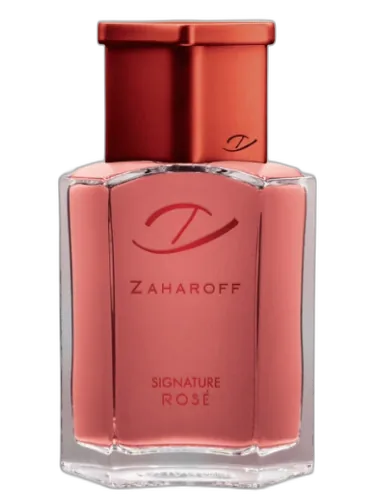
Zaharoff
Signature Rosé Zaharoff
Shared top notes: bulgarian rose, turkish rose

BORNTOSTANDOUT®
Nsfw Borntostandout®
Shared top notes: bulgarian rose, turkish rose
Aqualis
Triptych Aqualis
Shared top notes: laotian oud
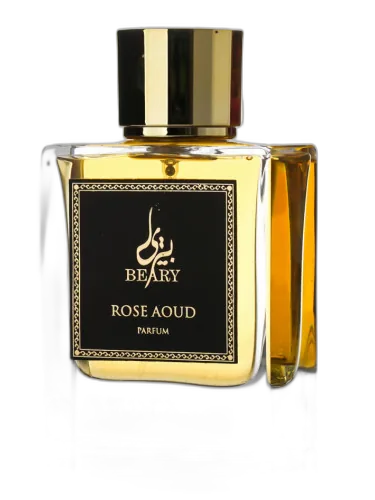
Beary
Rose Aoud Beary
Shared top notes: bulgarian rose, turkish rose