


Earth Alive With Gods Alkemia Perfumes
At a glance
Is Earth Alive With Gods Alkemia Perfumes worth trying?
Earth Alive with Gods by Alkemia Perfumes is a fragrance for women and men.
- Best match
- Casual wear in Spring
- Performance feel
- Good longevity with Moderate sillage
- Signature profile
- aquatic, ozonic, green with Melon, Rain Notes, Green Grass
The first impression
Earth Alive with Gods by Alkemia Perfumes is a fragrance for women and men. Earth Alive with Gods was launched in 2019. The nose behind this fragrance is Sharra Lamoureaux.
What shapes the scent
The perfumer behind it

Sharra Lamoureaux
Sharra Lamoureaux is a perfumer whose work appears under Alkemia Perfumes, with a portfolio that includes evocative names like 1891, A Darkness Burning, and Absinthe And Laudanum In The Afternoon. Their fragrances often explore historical, literary, and darkly romantic themes. Lamoureaux's style is known for its narrative depth and use of unusual, atmospheric accords.
Notes pyramid
All Notes
Complete scent profile
 Melon
Melon
 Rain Notes
 Green Grass
Hinoki
Green Grass
Hinoki
 Hay
Hay
 Amyris
 White Flowers
The mood it creates
The Lover Archetype: Portrait of Earth Alive With Gods Alkemia Perfumes
Essence
To wear Earth Alive With Gods is to embrace a scent that is both primal and sacred-a fusion of damp soil, crushed leaves, and the faintest whisper of incense. The person who chooses this fragrance is drawn to the liminal spaces where nature and divinity intertwine. They are the Lover Archetype, not in the trivial sense of romantic pursuit, but in the deeper, more universal sense-one who seeks communion with the world through sensation, beauty, and devotion.
Their soul is a tapestry of contradictions: grounded yet mystical, sensual yet ascetic. They do not merely walk through life; they experience it with an intensity that borders on the religious. The scent they wear is not an accessory but an extension of their essence-an olfactory hymn to the sacredness of existence.
Style & Aesthetic
Their tastes are elemental, drawn to raw textures and organic forms. They prefer unpolished wood over sleek metal, rough linen over synthetic sheen. Their home is a sanctuary of found objects-dried flowers, river stones, hand-carved figurines-each carrying a story. They wear clothing that flows, drapes, and breathes, favoring deep greens, earthy browns, and the occasional flash of saffron or ochre, as if their wardrobe were an extension of the forest floor.
Music for them is not mere entertainment but a form of prayer-chanting, tribal drums, the hum of a Tibetan singing bowl. They read poetry more than prose, favoring Rilke, Rumi, and Mary Oliver, whose words echo their own longing for transcendence through the tangible.
Their days are structured around rituals-morning tea sipped in silence, barefoot walks through dew-laden grass, the lighting of candles at dusk. They may practice yoga, not as exercise but as embodied meditation. They grow herbs, not just for cooking but for the act of tending to life.
They are drawn to travel, but not to cities. They seek places where the veil between worlds feels thin-ancient forests, desert canyons, mist-covered mountains. They do not go to "see sights" but to listen-to the whispers of the land, the voices of ancestors carried on the wind.
Philosophy & Values
Their philosophy is one of sacred materialism-they do not reject the physical world for the spiritual but seek the divine within it. They believe in the holiness of touch, the wisdom of the body, the revelation found in a handful of soil. To them, every stone, every gust of wind, every drop of rain is alive with meaning.
Yet this reverence is not passive. They are activists of the soul, fighting for the preservation of wild places, the dignity of all living things. Their environmentalism is not political posturing but a spiritual imperative. They do not "save the earth"; they remember that they are part of it.
Relationships
They love deeply but selectively, forming bonds that are fierce and enduring. Their relationships are not casual; they are covenants. Friends are chosen for their ability to see beyond surfaces, to engage in conversations that spiral into the metaphysical. Romantic partners must understand that love, to them, is a form of worship-an exchange of souls as much as bodies.
Yet this intensity can be overwhelming. Not everyone can bear the weight of their devotion, and they have known the sting of abandonment by those who mistook their depth for neediness. They do not love lightly, and so they do not recover lightly.
Shadow
The Lover’s greatest strength-their capacity for deep connection-is also their greatest peril. When unbalanced, their passion can curdle into obsession. They may cling too tightly to lovers, ideals, or even their own spiritual identity, mistaking surrender for control.
Their disdain for the mundane can make them impatient with those who do not share their fervor, leading to isolation. At their worst, they may slip into melancholia, mourning a world they perceive as too shallow for their depth. They must learn that wisdom lies not only in ecstasy but in the quiet acceptance of ordinary moments.
Conclusion
To live fully, they must temper their fire with stillness, their idealism with pragmatism. The true mystic does not flee the world but finds the sacred in the commonplace. The scent they wear-Earth Alive With Gods-is a reminder: divinity is not elsewhere. It is here, in the soil beneath their feet, in the breath they take, in the love they give and receive.
They are not meant to be saints or hermits but bridges-between earth and spirit, passion and peace. In embracing both their light and shadow, they become whole. And in their wholeness, they awaken the same possibility in others.
If you like this, try these
Fragrances with a comparable profile - shared accords, notes, and character.

GL
Gl Embaixador Paraiso Particular Gl
Shared top notes: melon

Eris Parfums
Delta Of Venus Eris Parfums
Shared accords: aromatic, fresh, fresh spicy
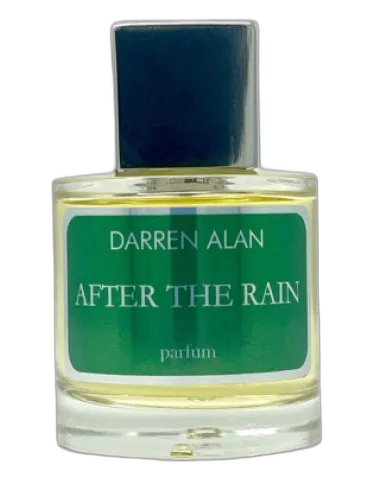
Darren Alan Perfumes
After The Rain Darren Alan Perfumes
Shared accords: aromatic, fresh, fresh spicy

ASMR Fragrances
Grass Tickles Asmr Fragrances
Shared accords: aquatic, aromatic, fresh

Svensk Parfym
Prakt Svensk Parfym
Shared top notes: rain notes