


Persephone Alkemia Perfumes
At a glance
Is Persephone Alkemia Perfumes worth trying?
Persephone by Alkemia Perfumes is a fragrance for women.
- Best match
- Evening wear in Fall
- Performance feel
- Good longevity with Moderate sillage
- Signature profile
- woody, amber, wine with Pomegranate, Red Wine, Amber
The first impression
Persephone by Alkemia Perfumes is a fragrance for women. The nose behind this fragrance is Sharra Lamoureaux.
What shapes the scent
The perfumer behind it

Sharra Lamoureaux
Sharra Lamoureaux is a perfumer whose work appears under Alkemia Perfumes, with a portfolio that includes evocative names like 1891, A Darkness Burning, and Absinthe And Laudanum In The Afternoon. Their fragrances often explore historical, literary, and darkly romantic themes. Lamoureaux's style is known for its narrative depth and use of unusual, atmospheric accords.
Notes pyramid
All Notes
Complete scent profile
 Pomegranate
 Red Wine
 Amber
Amber
The mood it creates
The Persephone Archetype: Portrait of Persephone Alkemia Perfumes
Essence
To wear Persephone by Alkemia Perfumes is to embody the duality of the maiden and the queen of the underworld-a fragrance that balances the sweetness of pomegranate with the dark earthiness of narcissus and black amber. The person who chooses this scent is not merely drawn to its beauty but resonates with its mythic tension: the pull between innocence and wisdom, surrender and sovereignty.
At their core, they are most closely aligned with the Persephone archetype-a figure who moves between worlds, neither fully of the light nor the dark, but enriched by both. Like the goddess herself, they are drawn to transformation, to the hidden truths beneath surfaces. They do not fear the abyss; they descend into it willingly, knowing that wisdom often lies in shadow.
This archetype is not passive, despite Persephone’s mythic abduction. They choose their descents, their explorations of the unconscious, the taboo, the poetic. They are not content with superficial pleasures, nor do they reject them entirely. Instead, they seek the meaning beneath the sensual, the philosophy beneath the aesthetic.
Style & Aesthetic
Their tastes are layered, much like the perfume they favor. They may be drawn to literature that explores liminal spaces-works like The Bell Jar or The Secret History, where beauty and decay intertwine. In music, they might prefer haunting melodies, the kind that linger in the mind like a half-remembered dream-artists like Chelsea Wolfe or Nick Cave, whose lyrics flirt with darkness without succumbing to despair.
Their personal style reflects this duality. They may favor flowing fabrics in deep jewel tones, or structured black garments that hint at restraint. There is always an element of deliberate contrast-something soft against something sharp, like lace paired with leather. They do not dress for trends but for symbolism, for the silent language of texture and color.
Philosophically, they are drawn to existential questions. They do not shy away from the idea that life is both beautiful and tragic, that love and loss are intertwined. They may find solace in Nietzsche’s concept of amor fati-the love of fate-or in Jung’s belief that one must integrate the shadow to become whole. Their spirituality, if they have one, is not dogmatic but experiential, rooted in personal revelation rather than doctrine.
Relationships
In love and friendship, they are magnetic but elusive. They crave deep connection but fear being consumed by it. They may oscillate between moments of intense vulnerability and sudden retreats into solitude. Their partners often find themselves drawn into their inner world, a place of poetic intensity, but may also feel the sting of their occasional emotional distance.
They are not cruel in their withdrawals-only self-protective. Like Persephone, they know the cost of being claimed by another. Yet when they love, they do so fiercely, with a loyalty that borders on devotion. Their relationships are rarely casual; they seek bonds that mirror their own complexity.
Shadow
Their greatest strength-their ability to move between worlds-is also their greatest peril. At times, they may become lost in their own depths, struggling to reconcile their light and shadow selves. They might withdraw too far, becoming isolated in their introspection. Or, conversely, they may indulge too deeply in the sensual, using pleasure as a distraction from existential unease.
There is also the risk of becoming too enamored with their own mystique. The Persephone archetype can slip into self-mythologizing, crafting an identity so poetic that it becomes a cage. They must guard against the temptation to romanticize melancholy, to mistake suffering for wisdom.
Conclusion
To thrive, they must learn to embody their duality rather than be torn by it. The Persephone who returns from the underworld is not the same as the one who descended-she is wiser, more complete. Likewise, this person must embrace both their lightness and their darkness without letting either define them entirely.
They are not merely a wanderer between worlds-they are the bridge. And in that balance, they find their true power.
If you like this, try these
Fragrances with a comparable profile - shared accords, notes, and character.
Scent by Alexis
Eve's Revenge Scent By Alexis
Shared top notes: amber, pomegranate
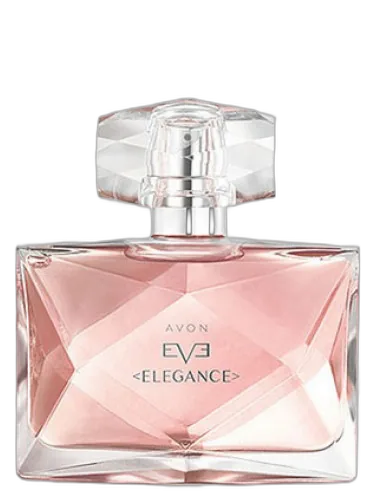
Avon
Eve Elegance Avon
Shared top notes: pomegranate

Laura Biagiotti
Uva Dulcis Laura Biagiotti
Shared top notes: pomegranate, red wine
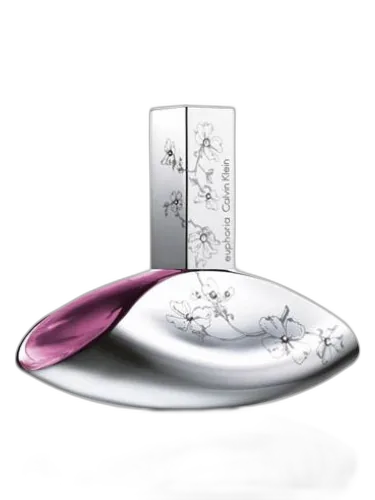
Calvin Klein
Euphoria Crystalline Calvin Klein
Shared top notes: amber, pomegranate
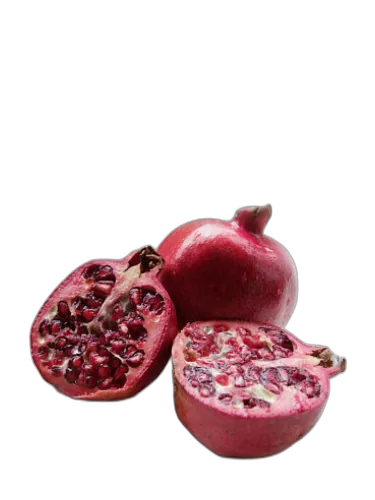
Bud Parfums
Rouge Pomegranate Bud Parfums
Shared top notes: pomegranate