

Nuit De Reve Amado
At a glance
Is Nuit De Reve Amado worth trying?
Nuit de Reve by Amado is a Oriental Floral fragrance for women and men.
- Best match
- Evening, Special Occasion wear in Spring, Fall
- Performance feel
- Very Good longevity with Strong sillage
- Signature profile
- warm spicy, woody, amber with Saffron, Bergamot, Cardamom
The first impression
Nuit de Reve by Amado is a Oriental Floral fragrance for women and men. Nuit de Reve was launched in 2020. The nose behind this fragrance is Christian Provenzano. Top notes are Saffron, Bergamot, Cardamom and Cedar Needles; middle notes are Rose, Neroli, Geranium and Hedione; base notes are Patchouli, Cypriol Oil or Nagarmotha, Amber, Incense, Sandalwood, Musk, Vanilla and Oakmoss.
What shapes the scent
The perfumer behind it

Christian Provenzano
Christian Provenzano is a perfumer who has contributed to several Agent Provocateur fragrances, including the original Agent Provocateur, Maitresse, and Ménage À Trois. He also created Ambra Guaiac for Alysonoldoini and Diamond Dust Edition for Agent Provocateur. His work often features bold, sensual accords.
Notes pyramid
Top Notes
First impression · 15-30 min
 Saffron
 Bergamot
 Cardamom
 Cedar Needles
Heart Notes
Core character · 2-4 hours
 Rose
Rose
 Neroli
 Geranium
 Hedione
Base Notes
Lasting impression · 4+ hours
 Patchouli
 Cypriol Oil or Nagarmotha
 Amber
Amber
 Incense
 Sandalwood
 Musk
Musk
 Vanilla
 Oakmoss
The mood it creates
The Lover Archetype: Portrait of Nuit De Reve Amado
Essence
This person is most closely aligned with The Mystic-a seeker of hidden truths, a wanderer in the liminal spaces between reality and reverie. The Mystic does not merely experience life; they dissolve into it, searching for meaning in the unseen, the ephemeral, the poetic. Nuit De Rêve Amado, with its intoxicating blend of vanilla, amber, and floral whispers, is the scent of twilight musings, of secrets half-revealed. It is not a fragrance for those who walk in broad daylight but for those who linger in the gloaming, where dreams and reality blur.
Style & Aesthetic
Their world is one of curated beauty-not ostentatious, but deliberate. They favor textures that invite touch: worn velvet, aged leather, silk that whispers against the skin. Their home is a sanctuary of dim lighting, shelves lined with well-thumbed books of poetry and philosophy, perhaps a record player spinning something melancholic yet rich-Debussy, or the deep hum of Leonard Cohen.
They are drawn to art that suggests rather than declares, to films where meaning lingers in the silence between words. Their taste in literature leans toward the symbolic-Borges, Pessoa, the surrealists-anything that unravels the ordinary to reveal the uncanny beneath.
In conversation, they speak in metaphors, their voice often trailing off as if they are listening to another, unseen dialogue. They are not interested in debates of fact, only in the resonance of ideas.
Philosophy & Values
For them, truth is not found in logic but in sensation, in the way a scent can evoke a memory that never was, in the way music can make the heart ache for a place it has never been. They value depth over clarity, mystery over certainty. Their spirituality-if they claim one-is not dogmatic but experiential, a private communion with the ineffable.
Relationships are both their sanctuary and their torment. They crave connection but often feel unseen, as if others cannot perceive the layers beneath their surface. They love intensely but sometimes love the idea of love more than the reality of another person. Their romantic partners are often artists, poets, or fellow wanderers-people who understand that love is not just an emotion but a myth to be lived.
Shadow
Yet, the Mystic’s depth can become their prison. Their aversion to the mundane can make them disdainful of practicalities, leaving their life untethered, chaotic. They may romanticize suffering, believing that melancholy is the price of wisdom, and thus linger too long in sadness rather than seeking resolution.
Their relationships suffer when they retreat into their inner world, leaving partners feeling like ghosts in their own love story. They may also struggle with commitment, not out of fear but because they are always half-dreaming of another life, another possibility.
At their worst, they can become lost in abstraction, mistaking obscurity for profundity. They may disdain those who live simply, forgetting that wisdom can also be found in the ordinary.
Conclusion
They possess an extraordinary capacity for empathy, an almost psychic sensitivity to the unspoken emotions of others. Their intuition is their compass, guiding them toward hidden truths. They are the confidant, the one who listens not to respond but to understand.
Creativity flows through them like a subterranean river-sometimes in bursts of inspiration, sometimes in slow, persistent trickles. They may write, paint, or compose, not for fame but because they must, because creation is their way of deciphering the world.
If you like this, try these
Fragrances with a comparable profile - shared accords, notes, and character.
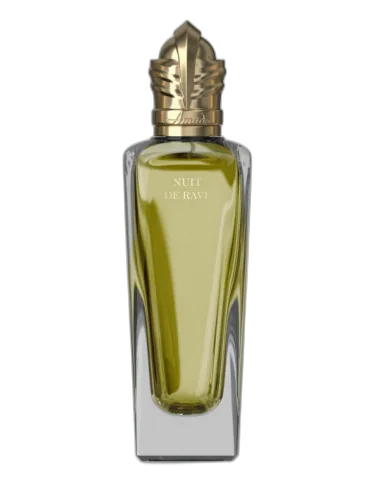
Amado
Nuit De Rave Amado
Shared top notes: bergamot, cardamom, saffron

Edgardio Chilini
Skin Scent Woman Edgardio Chilini
Shared top notes: bergamot, cardamom

Amouage
Lyric Woman Amouage
Shared top notes: bergamot, cardamom

Fragrance Du Bois
Oud Noir Intense Fragrance Du Bois
Shared top notes: bergamot, cardamom

Jusbox
Live 'n' Loud Jusbox
Shared top notes: bergamot, cardamom