
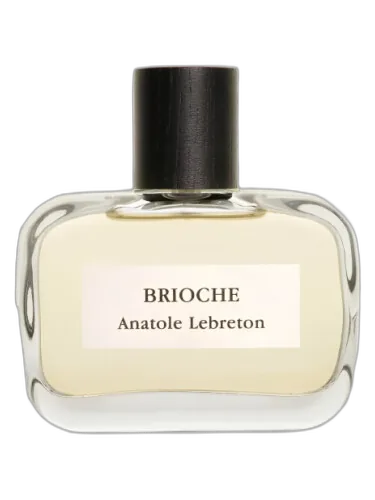

Brioche Anatole Lebreton
At a glance
Is Brioche Anatole Lebreton worth trying?
Brioche by Anatole Lebreton is a fragrance for women and men.
- Best match
- Casual wear in Fall
- Performance feel
- Good longevity with Moderate sillage
- Signature profile
- sweet, green, honey with Butter, Brioche, Croissant
The first impression
Brioche by Anatole Lebreton is a fragrance for women and men. This is a new fragrance. Brioche was launched in 2022. The nose behind this fragrance is Anatole Lebreton. Top notes are Butter, Brioche and Croissant; middle notes are Honey, Bran and Tonka Bean; base notes are Hay and Sandalwood.
What shapes the scent
The perfumer behind it

Anatole Lebreton
Anatole Lebreton is an independent French perfumer known for his artisanal approach and deep respect for raw materials. His olfactory style blends natural ingredients with bold, narrative-driven compositions that often evoke memory and place. Notable creations from our catalog include the luminous woody warmth of Bois Lumière, the gourmand comfort of Brioche, and the dark, resinous complexity of Grimoire.
Notes pyramid
Top Notes
First impression · 15-30 min
 Butter
 Brioche
 Croissant
Heart Notes
Core character · 2-4 hours
 Honey
Honey
 Bran
Bran
 Tonka Bean
Base Notes
Lasting impression · 4+ hours
 Hay
Hay
 Sandalwood
The mood it creates
The Lover Archetype: Portrait of Brioche Anatole Lebreton
Essence
To wear Brioche by Anatole Lebreton is to embrace the scent of golden comfort-buttery, honeyed, slightly caramelized, with a whisper of spice beneath its softness. This fragrance is not for the ascetic or the minimalist; it is for those who find beauty in indulgence, in the warmth of shared meals, in the quiet luxury of slow mornings. The person who adores this scent is drawn to life’s sensory pleasures, yet their depth is not merely hedonistic. They are a paradox-both grounded and dreamy, generous yet self-contained.
At their core, they embody the Nurturer Archetype, a figure who sustains and comforts, who creates spaces of warmth and belonging. Like the baker who kneads dough with patience, they understand that care is an act of slow devotion. Their presence is reassuring, their humor often laced with a wry, knowing sweetness. They are the friend who remembers how you take your tea, the one who brings homemade pastries "just because."
Yet the Nurturer is not merely passive. Their generosity is an assertion of values-a belief that life should be savored, that small joys are revolutionary. They resist the cold efficiency of modernity, preferring the tactile, the handmade, the imperfectly human.
Shadow
Yet every archetype has its shadow. For the Brioche lover, the danger lies in overindulgence-both of themselves and others. Their love of comfort can slip into complacency, their generosity into enabling. They may avoid necessary conflicts, smoothing things over with food and wine rather than facing hard truths.
There is also the risk of self-neglect. In pouring so much into others, they sometimes forget to nourish themselves. Their kitchen may be full of treats for guests, while they skip meals when alone. Their warmth, so freely given, can leave them depleted.
And then there is the darker temptation-using nurture as control. Beneath their kindness may lurk a quiet expectation of gratitude, a subtle resentment when their efforts go unnoticed. They may not demand loyalty, but they notice its absence keenly.
Conclusion
Their home is an extension of their essence: shelves lined with well-thumbed cookbooks, a kitchen where the scent of browned butter lingers, a dining table scarred with years of use. They favor textures that invite touch-knitted throws, worn leather, ceramics with the slight irregularities of craftsmanship. Their wardrobe leans toward earthy tones, soft fabrics, perhaps a cashmere scarf draped just so.
Philosophically, they are drawn to thinkers who celebrate the sensual and the communal-Wendell Berry’s agrarian idealism, Mary Oliver’s reverence for the ordinary, even Epicurus’ quiet pursuit of simple pleasures. They do not chase grandiosity; they seek meaning in the daily ritual, the shared loaf, the laughter over wine.
In relationships, they are steadfast but never suffocating. They love deeply but expect reciprocity-not in grand gestures, but in presence. Their friendships are long-lasting, built on mutual care. Romantic partners are drawn to their warmth, though some may mistake it for softness. In truth, they have quiet strength, a resilience forged in the understanding that life’s sweetness must be fought for.
If you like this, try these
Fragrances with a comparable profile - shared accords, notes, and character.

O'Driu
Xvert O'driu
Shared base notes: hay, sandalwood

Ellis Brooklyn
Bee Ellis Brooklyn
Shared heart notes: bran, honey

Nosu
Been Trying To Meet You Nosu
Shared heart notes: bran, honey

Zara
Nightfall In Madrid Zara
Shared heart notes: tonka bean

Cartier
Declaration D'un Soir Cartier
Shared base notes: sandalwood