
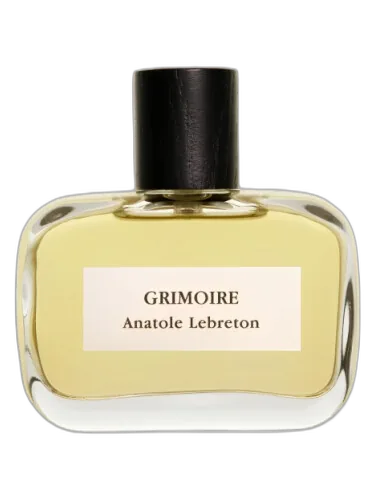

Grimoire Anatole Lebreton
At a glance
Is Grimoire Anatole Lebreton worth trying?
Grimoire by Anatole Lebreton is a fragrance for women and men.
- Best match
- Evening wear in Fall
- Performance feel
- Good longevity with Moderate sillage
- Signature profile
- fresh spicy, aromatic, amber with Olibanum, Cumin, elemi
The first impression
Grimoire by Anatole Lebreton is a fragrance for women and men. Grimoire was launched in 2017. The nose behind this fragrance is Anatole Lebreton.
What shapes the scent
The perfumer behind it

Anatole Lebreton
Anatole Lebreton is an independent French perfumer known for his artisanal approach and deep respect for raw materials. His olfactory style blends natural ingredients with bold, narrative-driven compositions that often evoke memory and place. Notable creations from our catalog include the luminous woody warmth of Bois Lumière, the gourmand comfort of Brioche, and the dark, resinous complexity of Grimoire.
Notes pyramid
All Notes
Complete scent profile
 Olibanum
 Cumin
elemi
Moss
Cumin
elemi
Moss
 Basil
Basil
 Lavender
 Patchouli
 Atlas Cedar
 Bergamot
 Musk
Musk
The mood it creates
The Sage Archetype: Portrait of Grimoire Anatole Lebreton
Essence
The person who cherishes Grimoire by Anatole Lebreton is most closely aligned with the Sage-an archetype defined by wisdom, introspection, and an unquenchable thirst for hidden knowledge. Like the fragrance itself-dark, resinous, and layered with secrets-they are drawn to the esoteric, the intellectual, and the mysterious. The Sage seeks truth beyond the surface, favoring depth over spectacle, contemplation over impulsivity. Yet, as with all archetypes, the Sage has a shadow: the risk of becoming lost in abstraction, detached from the visceral pulse of life.
Style & Aesthetic
Their appearance is deliberate but never ostentatious. They favor textures that suggest age and depth-worn leather, heavy wool, perhaps a hint of antique jewelry. Their wardrobe is a curated archive, each piece carrying a story. They might wear a long coat that seems plucked from another century, or a scarf dyed in deep, muted hues. Their aesthetic is not about fashion but about symbolism-every choice is a quiet manifesto.
Books are their sanctuary, preferably old ones with yellowed pages and marginalia left by previous readers. They are drawn to gothic literature, alchemical texts, and obscure poetry. Their music tastes lean toward the atmospheric-dark ambient, neoclassical, or post-punk with lyrical depth. They drink black coffee or bitter herbal infusions, savoring the astringency as if it were a metaphor for life’s necessary harshness.
They thrive in solitude, often retreating into their own mind for hours. Their home is a curated space-dim lighting, shelves lined with books, perhaps an altar-like arrangement of oddities: dried flowers, bones, old maps. They keep odd hours, finding the night more conducive to thought. Routine bores them unless it serves a ritualistic purpose-morning pages written in a leather-bound journal, evening walks under streetlights.
Philosophy & Values
Their mind is a labyrinth of ideas, a place where philosophy, mysticism, and art intersect. They are likely drawn to thinkers like Nietzsche, Jung, or Bataille-those who explore the darker corridors of human consciousness. Truth is not something they take lightly; they see it as a puzzle to be deciphered, a manuscript written in vanishing ink. They value authenticity above all, despising superficiality and pretense. Yet this very pursuit of truth can become a cage-they may grow suspicious of simplicity, dismissing joy as naivety, mistaking cynicism for wisdom.
Relationships
They do not collect acquaintances; their circle is small, composed of those who can endure long silences and deeper discussions. They are not unkind, but they are selective-friendship, to them, is an intellectual covenant. Romantic partners must be willing to navigate their inner world, which is both a fortress and a crypt. They are fiercely loyal but demand the same intensity in return. Their love is not effusive but profound, expressed in shared secrets rather than grand gestures.
Shadow
The Sage’s greatest danger is detachment. Their love of depth can become a refusal to engage with the mundane, leading to isolation. They may grow disdainful of those who do not share their intellectual pursuits, dismissing ordinary happiness as ignorance. Their skepticism, once a tool for truth, can harden into a worldview where nothing is sacred-only dissected. The challenge for them is to remember that wisdom without warmth is merely another kind of blindness.
Conclusion
This is a person who lives at the intersection of knowledge and mystery, whose very presence suggests untold stories. They are not for everyone-nor do they wish to be. Their life is an ongoing experiment in meaning, a grimoire written in invisible ink, waiting for the right reader. To know them is to be invited into a world where every scent, every word, every silence is deliberate. But one must be willing to step into the shadows-and stay awhile.
If you like this, try these
Fragrances with a comparable profile - shared accords, notes, and character.

Brera6 Perfumes
Hesperia Brera6 Perfumes
Shared top notes: bergamot, elemi, lavender

Balenciaga
Ho Hang Balenciaga
Shared top notes: basil, bergamot, lavender

Ffern
Autumn 19 Ffern
Shared top notes: bergamot, olibanum, patchouli
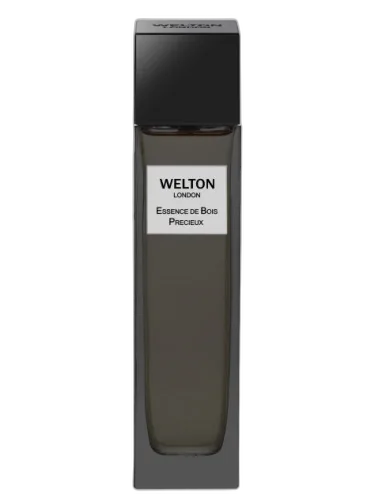
Welton London
Essence De Bois Précieux Eau De Parfum Welton London
Shared top notes: bergamot

Boucheron
Boucheron Pour Homme Boucheron
Shared top notes: basil, bergamot, lavender