
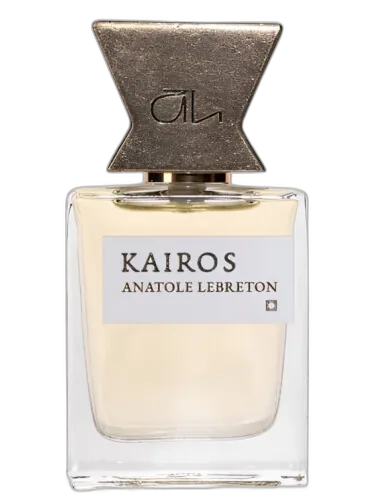

Kairos Anatole Lebreton
At a glance
Is Kairos Anatole Lebreton worth trying?
Kairos by Anatole Lebreton is a Oriental fragrance for women and men.
- Best match
- Evening wear in Fall
- Performance feel
- Good longevity with Moderate sillage
- Signature profile
- vanilla, almond, sweet with Bitter Almond, Vanilla, Orange Blossom
The first impression
Kairos by Anatole Lebreton is a Oriental fragrance for women and men. This is a new fragrance. Kairos was launched in 2024. The nose behind this fragrance is Anatole Lebreton.
What shapes the scent
The perfumer behind it

Anatole Lebreton
Anatole Lebreton is an independent French perfumer known for his artisanal approach and deep respect for raw materials. His olfactory style blends natural ingredients with bold, narrative-driven compositions that often evoke memory and place. Notable creations from our catalog include the luminous woody warmth of Bois Lumière, the gourmand comfort of Brioche, and the dark, resinous complexity of Grimoire.
Notes pyramid
All Notes
Complete scent profile
 Bitter Almond
 Vanilla
 Orange Blossom
 Peru Balsam
 Tonka Bean
 Bitter Orange
 Petitgrain
The mood it creates
The Sage Archetype: Portrait of Kairos Anatole Lebreton
Essence
The one who favors Kairos by Anatole Lebreton is, above all, a seeker-a mind drawn to the interplay of time, memory, and the ephemeral. They embody the Sage, the Jungian archetype of wisdom, contemplation, and the relentless pursuit of truth. This is not the rigid academic, nor the detached philosopher, but rather someone who understands knowledge as a living, breathing force-something to be inhaled, tasted, and worn like a fragrance.
Kairos-a scent built on the paradox of fleeting moments made eternal-mirrors their nature. It is a perfume of contrasts: incense and citrus, warmth and distance, the sacred and the transient. The Sage does not merely accumulate knowledge; they distill it into something personal, almost alchemical.
Style & Aesthetic
Their aesthetic is one of controlled decadence. They favor fabrics that age beautifully-linen, raw silk, well-worn leather. Their wardrobe is not trendy but archival, pieces chosen for texture and patina rather than fashion. They might wear an antique signet ring or a watch that no longer keeps time, valuing objects with stories over those with mere function.
In scent, they gravitate toward complexity-notes that evolve, that cannot be pinned down. Kairos, with its elusive balance of smoke and freshness, suits them perfectly. They disdain the obvious, the cloyingly sweet, the synthetic. Their taste in art, music, and literature follows the same principle: they prefer the haunting over the harmonious, the unresolved over the neatly concluded.
Their daily life is a ritual of contemplation. Mornings might begin with black coffee and a weathered journal, evenings with a single glass of something potent, sipped slowly. They are not ascetic-they enjoy fine things, but always with intention. Excess for its own sake disgusts them; indulgence must have meaning.
They thrive in cities with layers of history-places where past and present collide. A dimly lit café, an overgrown cemetery, a secondhand bookshop-these are their temples. They might keep odd hours, finding inspiration in the solitude of night.
Philosophy & Values
For this person, life is an experiment in perception. They are drawn to the liminal spaces-dawn and dusk, the threshold between seasons, the quiet before a storm. Their philosophy is not dogmatic but fluid, shaped by an awareness that truth is often found in the margins. They value depth over dogma, intuition over rigid logic.
Yet, their reverence for wisdom is not passive. They engage with ideas as one might engage with a lover-intensely, personally, sometimes destructively. They are prone to intellectual obsessions, falling into rabbit holes of mysticism, forgotten histories, or obscure arts. Their library is not organized but alive-books stacked in precarious towers, annotated furiously, abandoned and revisited like old friends.
Relationships
They are not a recluse, but neither are they a social creature by default. Their relationships are few but fervent, built on shared intellectual or spiritual kinship. Small talk exhausts them; they crave conversations that spiral into the metaphysical, the taboo, the sublime.
Romantically, they are drawn to those who mirror their own depth-but this can be a double-edged sword. They idealize partners as muses, only to resent them when reality fails to match the archetype. Their shadow emerges here: a tendency toward emotional detachment, a retreat into the mind when the heart becomes too messy.
Shadow
The Sage’s greatest strength is also their flaw: their mind can become a labyrinth from which they struggle to escape. Their pursuit of wisdom can turn into paralysis, an endless questioning that prevents action. They may disdain those who live unexamined lives, yet secretly envy their simplicity.
At their worst, they become the Hermit, retreating so deeply into their own thoughts that they lose touch with the visceral, the present, the human. Their relationships suffer; their insights grow brittle without the friction of reality. The very fragrance they love-Kairos, a meditation on time-can become a prison if they forget that some moments are meant to be lived, not merely pondered.
Conclusion
To wear Kairos is to embrace the tension between knowing and being. The Sage understands this instinctively. They are neither purely intellectual nor purely sensual, but a fusion of both-a thinker who remembers to breathe in the world, not just dissect it.
Their life is a work in progress, an unfinished manuscript. They are flawed, contradictory, sometimes insufferable-but never dull. And in the end, perhaps that is the point: to live deeply, to question relentlessly, and to leave behind not answers, but better questions.
If you like this, try these
Fragrances with a comparable profile - shared accords, notes, and character.
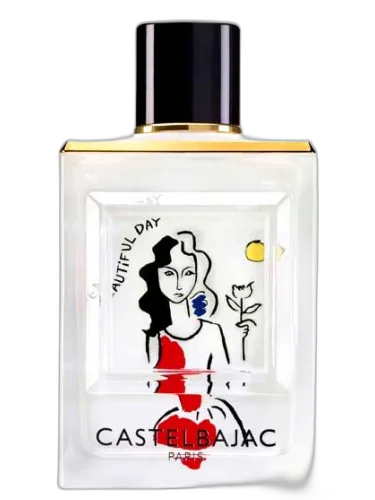
Castelbajac
Beautiful Day Castelbajac
Shared top notes: bitter orange, orange blossom, tonka bean

Strega Del Castello
Acqua Di Panna Strega Del Castello
Shared top notes: tonka bean, vanilla
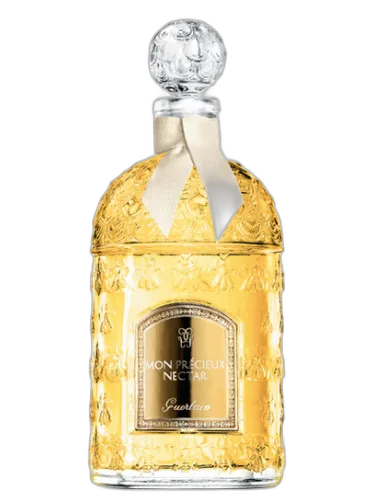
Guerlain
Mon Precieux Nectar Guerlain
Shared top notes: bitter almond, petitgrain

Sylvaine Delacourte
Vahina Sylvaine Delacourte
Shared top notes: orange blossom, tonka bean, vanilla

Jil Sander
Style Pastels Soft Yellow Jil Sander
Shared top notes: bitter orange, orange blossom, vanilla