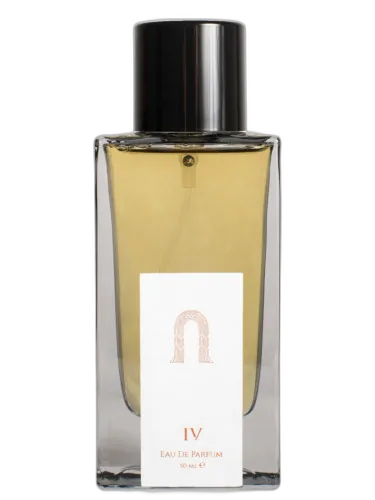

Dusara Anima Mundi
At a glance
Is Dusara Anima Mundi worth trying?
Dusara by Anima Mundi is a Woody fragrance for women and men.
- Best match
- Evening wear in Fall
- Performance feel
- Very Good longevity with Moderate sillage
- Signature profile
- woody, aromatic, earthy with Cypress, Bergamot, Cypriol Oil or Nagarmotha
The first impression
Dusara by Anima Mundi is a Woody fragrance for women and men. Dusara was launched in 2017. The nose behind this fragrance is Andrea (Thero) Casotti. Top notes are Cypress and Bergamot; middle notes are Cypriol Oil or Nagarmotha, Saffron and Agarwood (Oud); base notes are Woody Notes and Amber.
What shapes the scent
The perfumer behind it

Andrea (Thero) Casotti
Andrea Casotti, also known as Thero, is a perfumer whose work spans multiple niche brands. He has created fragrances for Anima Mundi including Ankh Sun Amon, Dusara, Isvara, Pompeii, and Tikal, as well as for Jovoy Paris and Moresque. His compositions often explore historical and cultural themes through complex, evocative scent profiles.
Notes pyramid
Top Notes
First impression · 15-30 min
 Cypress
 Bergamot
Heart Notes
Core character · 2-4 hours
 Cypriol Oil or Nagarmotha
 Saffron
 Agarwood (Oud)
Base Notes
Lasting impression · 4+ hours
 Woody Notes
 Amber
Amber
The mood it creates
The Lover Archetype: Portrait of Dusara Anima Mundi
Essence
The one who chooses Dusara Anima Mundi as their fragrance is most closely aligned with the Sage-the seeker of truth, the interpreter of hidden meanings, the one who listens to the whispers of the world. The Sage is not merely a scholar but a mystic, drawn to the liminal spaces where knowledge and intuition merge. They are the alchemist of perception, distilling wisdom from experience, yet always aware that the deepest truths remain just beyond grasp.
This archetype fits them because their essence is one of contemplation and synthesis. They do not merely observe life; they seek to understand it, to decode its symbols and patterns. The fragrance itself-earthy, ethereal, with hints of sacred resins and wild herbs-mirrors their nature: a bridge between the material and the transcendent.
Style & Aesthetic
Their appearance is deliberate but never contrived. They favor natural textures-linen, wool, unpolished wood-as if to remind themselves of the earth’s raw beauty. Their clothing is neither ostentatious nor ascetic, but balanced, like a carefully composed still life. They might wear a single piece of jewelry, something ancient or handcrafted, a talisman rather than an ornament.
Their living space is a sanctuary of quietude: books arranged not by genre but by the mood they evoke, a small altar with stones and dried botanicals, candles burned down to uneven stubs. They prefer dim light, not for melancholy, but because shadows invite depth.
They rise early, not out of obligation, but because dawn is when the world feels most alive to them. Their rituals are sacred in their simplicity: black coffee in a handmade mug, a few pages of an old journal, a walk where they notice the way light filters through leaves.
They are drawn to slow, deliberate crafts-pottery, calligraphy, foraging-anything that demands presence. They do not hurry, not because they are lazy, but because they know that meaning is found in the pauses.
Philosophy & Values
They are drawn to philosophies that embrace paradox, where opposites are not contradictions but complementary forces. Stoicism appeals to their discipline, while Taoism resonates with their sense of fluid harmony. They believe in the interconnectedness of all things, yet they do not naively romanticize it-they know that unity often hides conflict, and wisdom is born from tension.
Their values are rooted in authenticity. They despise pretense, not out of moral superiority, but because falsehood obscures understanding. They are wary of dogma, yet they respect tradition when it carries the weight of lived truth. They do not seek answers so much as they seek better questions.
Relationships
They are not gregarious, but neither are they hermits. Their friendships are few but profound, built on mutual recognition rather than convenience. They attract seekers, artists, and fellow wanderers-those who sense that beneath their calm exterior lies a mind always at work.
Romantically, they are drawn to intensity, but not chaos. They crave a partner who can match their depth without drowning in it. They are slow to trust, not out of fear, but because they know how easily intimacy can be mistaken for true connection. Their love is patient, but if betrayed, they withdraw without drama, as if closing a book they once cherished but can no longer read.
Shadow
Yet the Sage has a shadow, and theirs is the danger of detachment. Their pursuit of wisdom can become a retreat from life, a refusal to engage fully lest they be tainted by the messiness of existence. They may grow overly critical, seeing others’ simplicity as ignorance, their passion as naivety.
At their worst, they become the Hermit, not out of wisdom, but fear-fear of being misunderstood, of losing control, of discovering that some truths are not meant to be grasped. They may rationalize isolation as enlightenment, when in truth, it is a defense against vulnerability.
Conclusion
The true test of their archetype is whether they can descend from the tower of contemplation and walk among the living without disdain. The greatest Sages do not hoard wisdom; they share it, not as doctrine, but as an invitation.
When they wear Dusara Anima Mundi, they are reminded of this balance-the scent itself is both grounding and elusive, a paradox they must embody. To know the world, they must also let it know them.
If you like this, try these
Fragrances with a comparable profile - shared accords, notes, and character.