
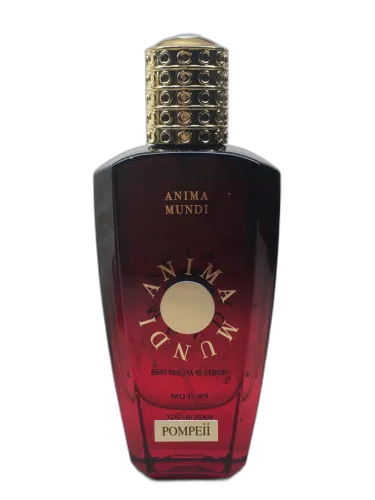

Pompeii Anima Mundi
At a glance
Is Pompeii Anima Mundi worth trying?
Pompeii by Anima Mundi is a Oriental Spicy fragrance for women and men.
- Best match
- Evening wear in Fall
- Performance feel
- Good longevity with Moderate sillage
- Signature profile
- aromatic, fresh spicy, woody with Rosemary, Lemon, Bergamot
The first impression
Pompeii by Anima Mundi is a Oriental Spicy fragrance for women and men. Pompeii was launched in 2017. The nose behind this fragrance is Andrea (Thero) Casotti. Top notes are Rosemary, Lemon and Bergamot; middle notes are Cedar, Coriander and Geranium; base notes are Sage and Sandalwood.
What shapes the scent
The perfumer behind it

Andrea (Thero) Casotti
Andrea Casotti, also known as Thero, is a perfumer whose work spans multiple niche brands. He has created fragrances for Anima Mundi including Ankh Sun Amon, Dusara, Isvara, Pompeii, and Tikal, as well as for Jovoy Paris and Moresque. His compositions often explore historical and cultural themes through complex, evocative scent profiles.
Notes pyramid
Top Notes
First impression · 15-30 min
 Rosemary
 Lemon
Lemon
 Bergamot
Heart Notes
Core character · 2-4 hours
 Cedar
Cedar
 Coriander
 Geranium
Base Notes
Lasting impression · 4+ hours
 Sage
Sage
 Sandalwood
The mood it creates
The Lover Archetype: Portrait of Pompeii Anima Mundi
Essence
This person is most closely defined by the Sage archetype, though not in the cold, detached sense of pure intellect. Their wisdom is sensual, steeped in the poetry of existence. They seek knowledge not merely to understand, but to feel-to dissolve into the mystery of life. Pompeii Anima Mundi, with its blend of smoky incense, ancient woods, and a whisper of Mediterranean warmth, mirrors their essence: a mind that wanders ruins, a heart that lingers in the sacred.
Yet, they are not merely a thinker. The fragrance’s name-Anima Mundi, the "Soul of the World"-betrays their deeper longing: to touch the divine in the mundane. They are the philosopher who weeps at sunsets, the scholar who pauses mid-argument to trace the curve of a lover’s wrist.
Style & Aesthetic
Their tastes are deliberate, almost ritualistic. They surround themselves with objects that carry history-antique books, weathered maps, a single Roman coin kept in a velvet pouch. They prefer dimly lit rooms where incense curls into the air, where time seems to slow. Music is not mere sound but an invocation: Gregorian chants, the deep hum of a cello, the distant echo of a Sufi flute.
Their philosophy is a tapestry of contradictions. They revere reason but distrust its arrogance. They believe in love but fear its fragility. Stoicism and romanticism war within them-they admire Marcus Aurelius yet secretly long to abandon themselves to passion like Sappho.
In relationships, they are both magnetic and elusive. They draw others in with their intensity, their ability to make even casual conversation feel like a confession. But they retreat just as quickly, fearing the loss of self in intimacy. Their love is a sacred fire-beautiful, but capable of burning those who come too close.
Shadow
Yet, for all their depth, they risk becoming prisoners of their own introspection. They can grow too enamored with the past, mistaking nostalgia for wisdom. Their reverence for beauty sometimes paralyzes them-why act when one can simply contemplate?
Their fear of superficiality can harden into disdain. They dismiss those who do not share their passions as hollow, forgetting that not everyone needs to drown in metaphysics to feel alive. At their worst, they become the solitary scholar in a tower of their own making, mistaking isolation for enlightenment.
And then there is their greatest contradiction: they long for transcendence but fear surrender. They worship love but hesitate to kneel before it. Their mind is a temple, but sometimes, the doors are locked.
Conclusion
Their greatest strength is their ability to see beyond surfaces. Where others see decay, they see patina; where others hear silence, they sense the murmurs of forgotten voices. They are the kind of person who can make a stranger feel understood with a single glance.
They live by a code of authenticity, though not in the modern, performative sense. For them, truth is not something shouted but whispered-an offering, not a weapon. They despise cheap sentimentality but will spend hours discussing the ache of a single line of Rilke.
Their curiosity is boundless. They might spend an afternoon studying the symbolism of medieval alchemy, then lose themselves in the scent of rain on stone, as if the world itself were a text to be deciphered.
If you like this, try these
Fragrances with a comparable profile - shared accords, notes, and character.

Rabanne
Xs (2018) Rabanne
Shared top notes: bergamot, lemon

Shu Uemura
Fleur De Rose Shu Uemura
Shared top notes: lemon
Wild Coast Perfumery
Whistler Wild Coast Perfumery
Shared top notes: bergamot

Roberto Cavalli
Roberto Cavalli Man Roberto Cavalli
Shared top notes: bergamot, lemon
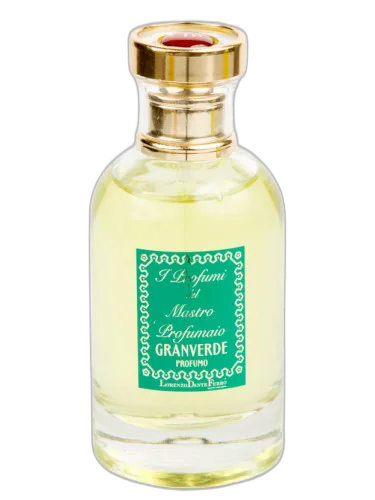
I Profumi del Mastro Profumaio
Granverde I Profumi Del Mastro Profumaio
Shared top notes: bergamot, lemon