


Los Vientos De Santa Ana Anka Kuş Parfüm
Fragrance Story
Los Vientos de Santa Ana by Anka Kuş Parfüm is a Woody Aquatic fragrance for women and men. Los Vientos de Santa Ana was launched in 2019. The nose behind this fragrance is Ali Erkekli. Top notes are Bitter Orange and Orange Blossom; middle notes are Sea Notes, Ambergris and Amber; base notes are Birch Tar, Cypress, Vetiver, Guaiac Wood and Woodsy Notes.
Composition Profile
About the Perfumer

Ali Erkekli
Ali Erkekli is a perfumer known for his work with Anka Kuş Parfüm, where he crafts fragrances that often blend historical and narrative themes. His olfactory style balances rich, complex compositions with a sense of storytelling, as seen in creations like A Moment In Manhattan and Ambre Destan. Notable works such as Ismail Efendi - The Rose Bandit and Jardin De Topkapi reflect his ability to weave cultural references into evocative scents.
Fragrance Notes
Top Notes
First impression · 15-30 min
 Bitter Orange
 Orange Blossom
Heart Notes
Core character · 2-4 hours
 Sea Notes
 Ambergris
 Amber
Amber
Base Notes
Lasting impression · 4+ hours
 Birch Tar
 Cypress
 Vetiver
 Guaiac Wood
Woodsy Notes
Guaiac Wood
Woodsy Notes
Los Vientos De Santa Ana Anka Kuş Parfüm by Anka Kuş Parfüm offers a distinctive olfactory experience that stands out from other fragrances in its category.
Crafted with the finest ingredients and a blend of traditional and modern perfumery techniques, this fragrance represents the pinnacle of the perfumer's art.
Los Vientos De Santa Ana Anka Kuş Parfüm embodies the distinctive style of Anka Kuş Parfüm while adding a unique chapter to their fragrance portfolio.
Character Profile
The Wanderer Archetype: Portrait of Los Vientos De Santa Ana Anka Kuş Parfüm
Essence
This person is, at their core, a Seeker-one who is perpetually drawn to the horizon, to the scent of distant lands carried on the wind. The fragrance Los Vientos De Santa Ana Anka Kuş is not merely a perfume to them; it is an invocation, a whispered promise of movement and transformation. The Seeker thrives on the unknown, on the tension between what is and what could be. They are not content with stagnation; their spirit demands exploration, whether through travel, ideas, or the depths of human connection.
Yet, the Seeker is not aimless. Their journey has purpose-though that purpose may shift like the winds of Santa Ana. They are not running from something, but toward something-even if they cannot always name it.
Style & Aesthetic
Their style is an effortless blend of the exotic and the understated. They favor fabrics that flow, textures that suggest movement-linen, silk, weathered leather. Their wardrobe is curated like a traveler’s journal, each piece holding a story: a scarf bought in Istanbul, boots broken in on a mountain trail, a silver ring from a market in Marrakech.
They are drawn to scents that evoke landscapes-spices, dry earth, sun-warmed wood. Anka Kuş speaks to them because it is both ephemeral and grounding, a paradox they find irresistible. In music, they prefer compositions that build and dissolve, like waves or shifting dunes-artists like Nils Frahm, Tinariwen, or Sigur Rós. Their bookshelf is a mosaic of philosophy, travelogues, and myth, with dog-eared copies of Rumi, Bruce Chatwin, and Rebecca Solnit.
They are not a perpetual tourist, collecting passport stamps like trophies. Their movement is more deliberate-a slow immersion in cultures, languages, and landscapes. They may live in a different city every few years, or they may stay in one place but constantly seek new perspectives within it.
Work is secondary to experience, though they often find ways to merge the two-freelance writing, photography, teaching, or any vocation that allows for fluidity. They are not afraid of hardship; discomfort is just another texture in the tapestry of their life.
Philosophy & Values
They believe in the sanctity of the journey over the destination. To them, life is not a series of checkpoints but a vast, unfolding terrain to be traversed with curiosity and reverence. They value freedom above security, experience above possession. Their mantra might be: "I would rather be a wanderer than a prisoner of certainty."
Yet, this philosophy is not without its tensions. They struggle with commitment-not out of fear, but because they are acutely aware of how quickly the self can ossify when bound to a single identity. They resist labels, roles, and expectations, sometimes to their own detriment.
Relationships
In love and friendship, they are magnetic but elusive. They draw people in with their warmth, their stories, their willingness to listen deeply-but they are just as likely to vanish for months, following some inner call. Their relationships thrive on mutual freedom; they cannot abide clinginess or demands for permanence.
Their shadow here is a reluctance to fully root. They may leave lovers and friends feeling like waystations rather than destinations. Yet, those who understand them know that their love is not diminished by distance-it simply exists in a different form, like the scent of a place carried on the wind.
Shadow
The Seeker’s greatest strength is also their flaw: the inability to be still. There are moments-often in the quiet before dawn-when they wonder if they are running from something unnamed within themselves. Is their wandering a pilgrimage, or an evasion?
They may struggle with a sense of belonging, feeling like an outsider even among those who love them. Their independence can curdle into isolation. And if they are not careful, their life may become a series of beautiful, fleeting encounters-never deepening, never fully landing.
Conclusion
The ideal state for this person is not to abandon their wandering, but to integrate it with moments of stillness. To learn that roots do not have to be chains-they can be grounding, nourishing. The scent of Anka Kuş reminds them that the wind always returns, but it also carries the memory of every place it has been.
They are at their best when they allow themselves to be both free and present, when they realize that the journey is not just outward, but inward. The true destination, perhaps, is the self-ever-changing, ever-unfolding, like the winds of Santa Ana.
Similar Fragrances
Fragrances with a comparable profile - shared accords, notes, and character.
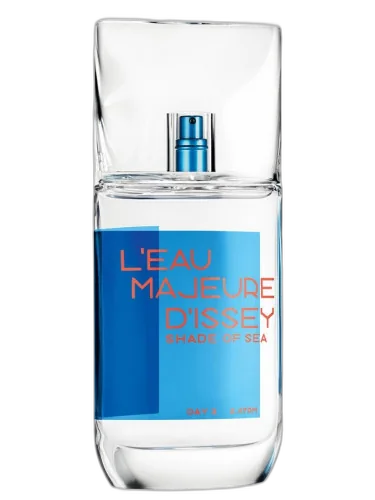
Issey Miyake
L'eau Majeure D'issey Shade Of Sea Issey Miyake
Shared accords: amber, animalic, aromatic
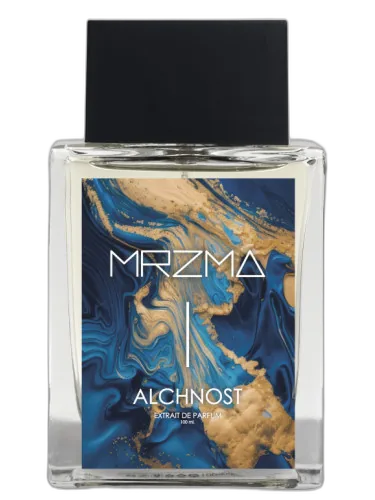
Shprss
Alchnost Shprss
Shared accords: amber, animalic, aromatic

Pierre Guillaume Paris
Les Racines Du Mâle Pierre Guillaume Paris
Shared accords: amber, animalic, aromatic

Thera Cosméticos
Naxos Thera Cosméticos
Shared accords: amber, animalic, aromatic

Jil Sander
Sun Bath Men Jil Sander
Shared accords: amber, animalic, aromatic