
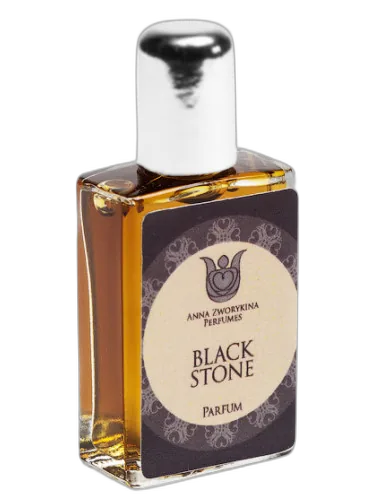
Black Stone Anna Zworykina Perfumes
At a glance
Is Black Stone Anna Zworykina Perfumes worth trying?
Black Stone by Anna Zworykina Perfumes is a Oriental Woody fragrance for women and men.
- Best match
- Evening wear in Fall
- Performance feel
- Excellent longevity with Strong sillage
- Signature profile
- woody, smoky, white floral with Castoreum, elemi, White Tobacco
The first impression
Black Stone by Anna Zworykina Perfumes is a Oriental Woody fragrance for women and men. Black Stone was launched in 2007. The nose behind this fragrance is Anna Zworykina.
What shapes the scent
The perfumer behind it

Anna Zworykina
Anna Zworykina is an independent Russian perfumer known for her conceptual, narrative-driven approach to fragrance. Her style often blends stark contrasts, pairing dark, smoky, or bitter notes with unexpected brightness, as seen in creations like Black Stone and Bitter Glass. She draws inspiration from literature, memory, and nature, crafting scents such as Apple Orchard and A Ghost House that evoke specific atmospheres and emotions.
Notes pyramid
All Notes
Complete scent profile
 Castoreum
 elemi
elemi
 White Tobacco
 Agarwood (Oud)
 Mimosa
 Incense
 Sandalwood
 Cedar
Cedar
 Artemisia
 Jasmine
 Ylang-Ylang
 Bergamot
 Rose
Rose
The mood it creates
The Alchemist Archetype: Portrait of Black Stone Anna Zworykina Perfumes
Essence
To wear Black Stone by Anna Zworykina is to embrace the paradox of fire and earth-smoldering resins, dark woods, and the faint metallic whisper of something ancient. This is not a fragrance for those who seek mere adornment; it is for those who wish to transform the air around them into an extension of their inner world. The person who chooses this scent is an Alchemist-not in the literal sense, but in the Jungian archetype of one who seeks to transmute the raw materials of existence into something richer, deeper, and more meaningful.
Their life is an experiment, a series of distillations. They are drawn to the obscure, the esoteric, the things that require patience to unravel. Their tastes reflect this: they prefer the weight of a well-worn leather-bound book over the ephemeral glow of a screen, the slow burn of aged whiskey over the immediacy of a cocktail. Their style is deliberate-dark, textured, with an undercurrent of something untamed. They might wear tailored coats lined with raw-edged silk, or jewelry that looks as though it was unearthed from an ancient tomb.
Philosophy is not an abstract exercise for them; it is lived. They believe in the hidden connections between things-the way scent can evoke memory, the way a symbol can contain multitudes. They are drawn to thinkers like Jung, Nietzsche, and the mystics, those who dared to look beneath the surface of things. Their values are rooted in authenticity, but not the shallow kind-they seek the kind of truth that is hard-won, often uncomfortable, and always transformative.
Shadow
But every alchemist risks becoming lost in their own labyrinth. Their pursuit of depth can tip into obsession, their love of mystery into obscurantism. They may grow impatient with those who cannot follow them into the depths, dismissing them as shallow when, in truth, they simply lack the language to articulate their own complexity.
Their relationships may suffer from their tendency to see people as projects-subjects to be decoded rather than souls to be met as equals. They can become so enamored with transformation that they forget to appreciate what already is. And when their experiments fail-when the elixir does not materialize, when the insight does not come-they may retreat into isolation, mistaking solitude for wisdom.
Conclusion
Their greatest strength is their ability to see potential where others see only raw material. They are the friend who listens not just to your words, but to the spaces between them, who offers not platitudes but insights that cut to the bone. In relationships, they are intense but not possessive; they understand that love, like alchemy, requires both heat and time. They do not fear darkness, either in themselves or others, because they know it is where the most valuable transformations occur.
Their lifestyle is a reflection of their inner work. They might keep odd hours, drawn to the quiet intensity of late nights when the world feels suspended between realities. Their home is a sanctuary of curiosities-antique scales, vials of rare oils, a collection of stones that seem to hum with silent energy. They are not materialistic, but they are deeply sensual; they understand that objects can be vessels for meaning.
If you like this, try these
Fragrances with a comparable profile - shared accords, notes, and character.
Frederic Malle
Une Fleur De Cassie Frederic Malle
Shared top notes: jasmine, mimosa, rose
Giorgio Armani
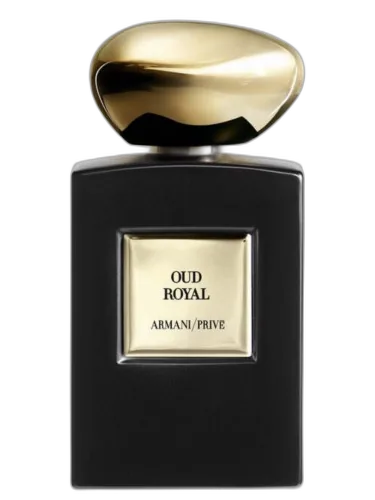
Armani Privé Oud Royal Giorgio Armani
Shared top notes: agarwood (oud), incense, rose
Helmut Lang
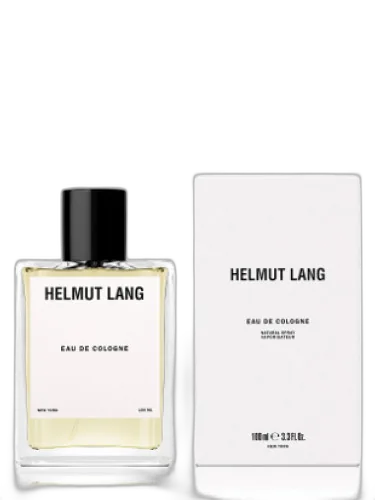
Eau De Cologne (2014) Helmut Lang
Shared top notes: artemisia, cedar, jasmine
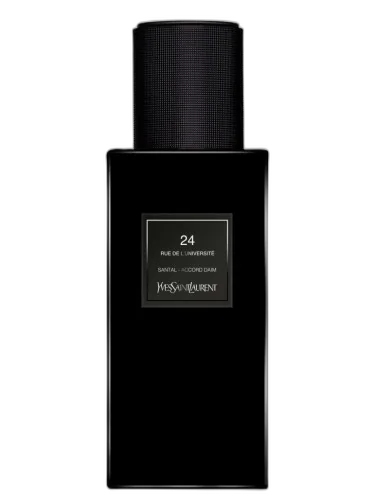
Yves Saint Laurent
24 Rue De L'université Yves Saint Laurent
Shared top notes: cedar, incense, sandalwood
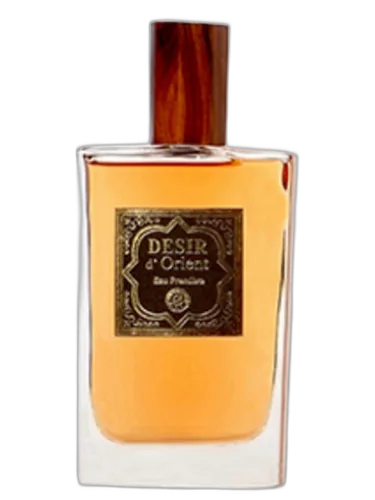
Les Parfums du Soleil
Desir D'orient Les Parfums Du Soleil
Shared top notes: agarwood (oud), cedar, incense