
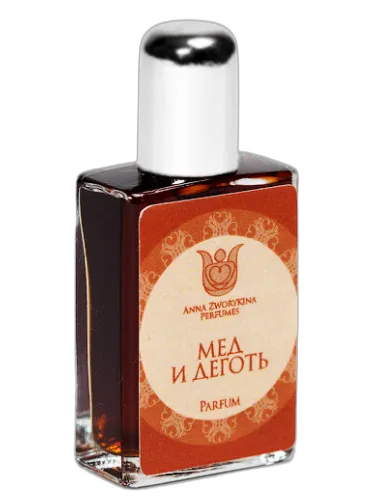

Honey And Tar Anna Zworykina Perfumes
At a glance
Is Honey And Tar Anna Zworykina Perfumes worth trying?
Honey and Tar by Anna Zworykina Perfumes is a Leather fragrance for women and men.
- Best match
- Evening wear in Fall
- Performance feel
- Excellent longevity with Strong sillage
- Signature profile
- woody, amber, honey with Honey, Benzoin, Castoreum
The first impression
Honey and Tar by Anna Zworykina Perfumes is a Leather fragrance for women and men. Honey and Tar was launched in 2008. The nose behind this fragrance is Anna Zworykina.
What shapes the scent
The perfumer behind it

Anna Zworykina
Anna Zworykina is an independent Russian perfumer known for her conceptual, narrative-driven approach to fragrance. Her style often blends stark contrasts, pairing dark, smoky, or bitter notes with unexpected brightness, as seen in creations like Black Stone and Bitter Glass. She draws inspiration from literature, memory, and nature, crafting scents such as Apple Orchard and A Ghost House that evoke specific atmospheres and emotions.
Notes pyramid
All Notes
Complete scent profile
 Honey
Honey
 Benzoin
 Castoreum
 Cedar
Cedar
 Vanilla
 Hops
Hops
 Patchouli
 Sandalwood
 Tonka Bean
 Cardamom
 Cinnamon
The mood it creates
The Alchemist Archetype: Portrait of Honey And Tar Anna Zworykina Perfumes
Essence
This person is most closely aligned with the Alchemist archetype-a seeker who transforms the raw and chaotic into the refined and meaningful. Like the alchemists of old, they are drawn to the interplay of opposites, finding beauty in the tension between sweetness and darkness, decay and rebirth. The fragrance Honey and Tar-a blend of golden warmth and smoky, medicinal bitterness-mirrors their essence. They are not content with superficial harmony; they crave depth, complexity, and the hidden truths beneath the surface.
Style & Aesthetic
Their style is an elegant paradox-structured yet organic, polished yet slightly wild. They favor textures that tell a story: well-worn leather, raw silk, or linen softened by time. Their home is a sanctuary of curated contrasts-antique books beside modern art, dried botanicals in sleek glass vessels. They are drawn to the patina of age, the way light filters through amber, the scent of old paper and damp earth.
Their tastes in art, music, and literature reflect this duality. They might adore the lush romanticism of Chopin but also the dissonant beauty of experimental jazz. In literature, they gravitate toward writers like Borges or Woolf-those who weave the mystical into the mundane. They see life as an ongoing experiment, a series of reactions and distillations, where even suffering has its alchemical purpose.
Philosophy & Values
They value authenticity above all-not the performative kind, but the raw, unfiltered truth. They despise platitudes and prefer conversations that cut to the marrow. Their relationships are intense but selective; they do not suffer fools, nor do they tolerate emotional dishonesty. Yet, for those they trust, they are fiercely loyal, offering wisdom that feels almost oracular.
Romantically, they are drawn to partners who are equally complex-someone who understands that love is not just honey, but also tar. They crave a bond that is transformative, one that forces both individuals to confront their shadows. Their love is not easy, but it is deep, like roots breaking through stone.
Shadow
Yet, their alchemical nature has its costs. They can become obsessed with transformation, never satisfied with the present moment. Their relentless pursuit of depth can make them dismissive of simplicity, seeing joy as frivolous if it lacks complexity.
They may also withdraw into isolation, mistaking solitude for wisdom. Their disdain for superficiality can harden into cynicism, making them impatient with those who do not share their intensity. At their worst, they romanticize suffering, believing that only through darkness can one truly grow-a dangerous myth that can trap them in cycles of self-imposed trials.
Conclusion
They possess an uncanny ability to see potential where others see ruin. Where most people recoil from bitterness or decay, they find fascination. This makes them extraordinary healers, artists, or mentors-those who guide others through their own dark transformations.
They are deeply introspective, always refining their understanding of themselves and the world. Their mind is a crucible, constantly distilling experience into wisdom. They do not fear the unknown; they court it, knowing that the most profound truths are often hidden in the margins.
If you like this, try these
Fragrances with a comparable profile - shared accords, notes, and character.

Oud Factory
Akai Kemuri Oud Factory
Shared top notes: sandalwood, tonka bean, vanilla
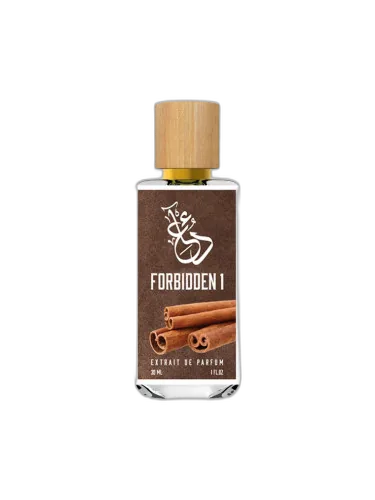
The Dua Brand
Forbidden 1 The Dua Brand
Shared top notes: castoreum, cedar, cinnamon

Sonoma Scent Studio
Pacific Forest Sonoma Scent Studio
Shared top notes: benzoin, patchouli, vanilla
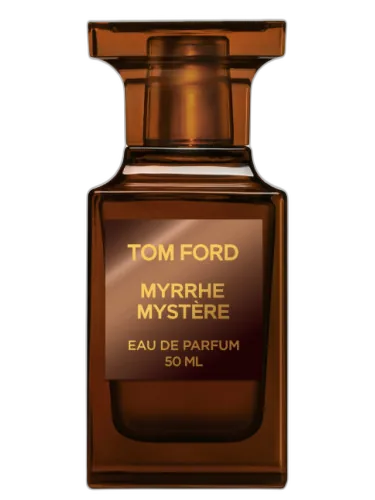
Tom Ford
Myrrhe Mystère Tom Ford
Shared top notes: sandalwood, vanilla

Hermès
Hermessence Ambre Narguile Hermès
Shared top notes: benzoin, cinnamon, honey