
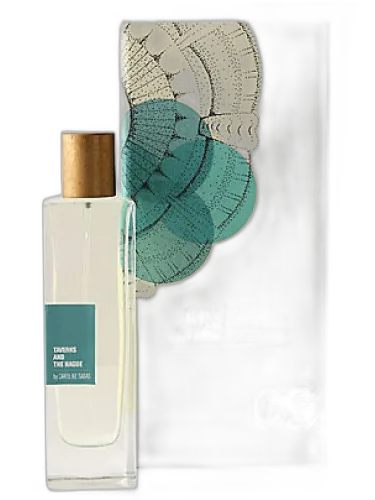

A Rather Novel Collection Taverns & The Hague By Caroline Sabas Anthropologie
At a glance
Is A Rather Novel Collection Taverns & The Hague By Caroline Sabas Anthropologie worth trying?
A Rather Novel Collection Taverns & The Hague by Caroline Sabas by Anthropologie is a Citrus Aromatic fragrance for women and men.
- Best match
- Casual wear in Spring
- Performance feel
- Moderate longevity with Moderate sillage
- Signature profile
- citrus, ozonic, green with Violet Leaf, Tea, Musk
The first impression
A Rather Novel Collection Taverns & The Hague by Caroline Sabas by Anthropologie is a Citrus Aromatic fragrance for women and men. A Rather Novel Collection Taverns & The Hague by Caroline Sabas was launched in 2009. The nose behind this fragrance is Caroline Sabas.
What shapes the scent
The perfumer behind it

Caroline Sabas
Caroline Sabas is a prolific perfumer with a portfolio that includes Animale Instinct Homme Animale, Avon Luck Eau So Free Avon, and Badgley Mischka Couture Badgley Mischka. She has created numerous scents for Avon, such as Far Away Dreams and Little Sequin Dress. Her work also extends to Anthropologie's A Rather Novel Collection.
Notes pyramid
All Notes
Complete scent profile
 Violet Leaf
 Tea
Tea
 Musk
Musk
 Amalfi Lemon
 Mandarin Orange
The mood it creates
The Wanderer Archetype: Portrait of A Rather Novel Collection Taverns & The Hague By Caroline Sabas Anthropologie
Essence
To choose a fragrance like Taverns & The Hague is to embrace the scent of old wood, distant shores, and whispered conversations in dimly lit rooms. This person is not merely drawn to the aroma-they are called by it, as if the fragrance itself were a map to some deeper, half-forgotten truth. Their soul is restless, their mind a vessel of curiosity, and their spirit most alive when wandering-whether through cities, ideas, or the hidden corridors of human experience.
At their core, they are the Explorer, the archetype of boundless curiosity and insatiable movement. They reject stagnation, both in place and in thought, always seeking the next horizon. The world is their library, their tavern, their harbor-and they are its student. Yet, like all archetypes, this one casts a shadow: the risk of never truly arriving, of mistaking motion for meaning.
Style & Aesthetic
Their style is an effortless blend of the timeless and the transient. They favor well-worn leather, linen that carries the creases of travel, and fabrics that whisper of distant lands. Their home-if they stay in one place long enough to call it that-is filled with curiosities: a Dutch ceramic jug, a stack of foreign newspapers, a bottle of something strong from a place they can’t quite pronounce.
They read voraciously but never systematically-philosophy one week, 19th-century naval histories the next. Music is an anchor in their wandering; perhaps jazz, with its improvisation, or the melancholy sway of a sea shanty. They drink whiskey not for the burn but for the stories it seems to carry.
They might work in a field that rewards curiosity-journalism, anthropology, the arts-or they might drift between jobs, treating each as a temporary experiment. Routine is their nemesis; even their daily rituals are designed to feel spontaneous.
They are at home in transit: airports, train compartments, the backseats of night buses. They collect experiences like others collect possessions, though their pockets are often full of ticket stubs and foreign coins.
Philosophy & Values
They believe in the journey, not the destination. Fixed ideologies feel stifling; they prefer questions to answers. Their morality is flexible but not unprincipled-they judge people by their depth, not their dogma. They value freedom above nearly all else, though this can make commitment difficult.
They are drawn to the romance of transience-train stations at dawn, last calls in unfamiliar bars, the way a city changes when most are asleep. But beneath this lies a quiet fear: that if they stop moving, they might disappear.
Relationships
They attract people effortlessly-their stories, their laughter, the way they make even a brief encounter feel significant. But they struggle with permanence. Love, for them, is often a series of intense, fleeting connections rather than a single enduring bond.
Their closest relationships are with fellow wanderers-those who understand that absence does not mean indifference. They are loyal in their way, but their loyalty is to the idea of people rather than the daily reality of them. Their shadow here is a reluctance to be truly known, to stay long enough for someone to map their contradictions.
Shadow
The Explorer’s greatest strength-their refusal to be confined-can become their prison. When movement is an escape rather than a choice, they risk becoming a ghost in their own life, always passing through but never staying. Their independence can curdle into isolation; their adaptability can mask a fear of being truly rooted.
There are nights, rare but piercing, when they wonder if they have mistaken motion for purpose. The scent of Taverns & The Hague lingers, and for a moment, they feel the weight of all the doors they’ve walked through without ever crossing a threshold.
Conclusion
They are neither lost nor found-they are in the act of seeking, and that is enough. The world is vast, and they intend to taste as much of it as they can. Their life is not a straight line but a spiral, returning to the same questions with deeper understanding each time.
And when they inhale the scent of aged wood and distant spices, they are reminded: the journey is the destination. Even if they never arrive, they will have lived.
If you like this, try these
Fragrances with a comparable profile - shared accords, notes, and character.
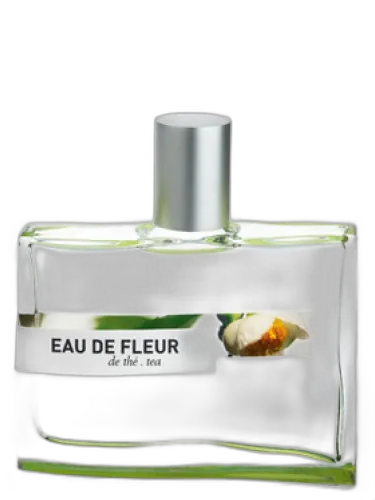
Kenzo
Eau De Fleur De Thé Kenzo
Shared top notes: musk, tea

A Dozen Roses
Electron A Dozen Roses
Shared top notes: musk, tea, violet leaf

Caron
Rose Croquante Caron
Shared top notes: mandarin orange, musk
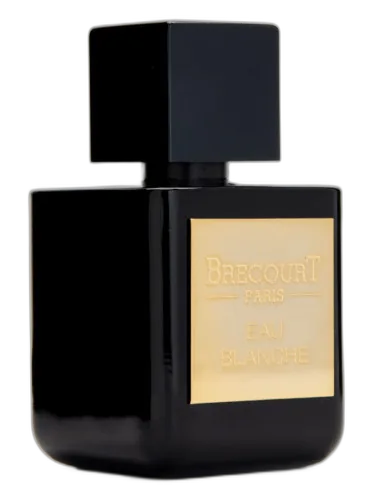
Brecourt
Eau Blanche Brecourt
Shared top notes: amalfi lemon, mandarin orange

Amyi
Amyi 2.14 Amyi
Shared top notes: mandarin orange