
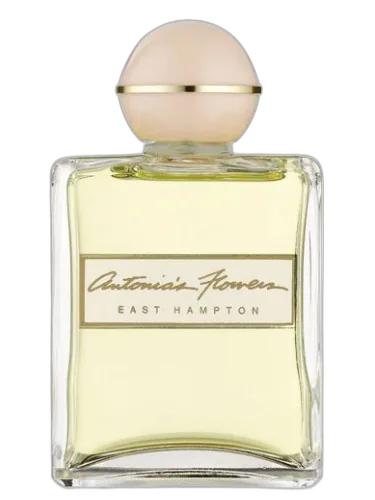

Antonia's Flowers Antonia's Flowers
At a glance
Is Antonia's Flowers Antonia's Flowers worth trying?
Antonia's Flowers by Antonia's Flowers is a Floral fragrance for women.
- Best match
- Casual wear in Spring
- Performance feel
- Moderate longevity with Moderate sillage
- Signature profile
- floral, white floral, fruity with Freesia, Magnolia, Jasmine
The first impression
Antonia's Flowers by Antonia's Flowers is a Floral fragrance for women. Antonia's Flowers was launched in 1985. The nose behind this fragrance is Bernard Chant.
What shapes the scent
The perfumer behind it

Bernard Chant
Bernard Chant is a renowned perfumer known for iconic creations such as Aramis, Devin, Gold, and Jhl for Aramis, as well as Aromatics Elixir for Clinique, Imprevu for Coty, and Aliage for Estée Lauder. His work also includes Antonia's Flowers for Antonia's Flowers. Chant's style is marked by bold, complex compositions that have become classics in modern perfumery.
Notes pyramid
All Notes
Complete scent profile
 Freesia
 Magnolia
 Jasmine
 Lily
Lily
 Fruity Notes
The mood it creates
The Innocent Archetype: Portrait of Antonia's Flowers Antonia's Flowers
Essence
Archetype: The Innocent
The person who cherishes Antonia’s Flowers is, at their core, an embodiment of The Innocent-a soul who seeks purity, simplicity, and an unspoiled connection to beauty. This fragrance, with its delicate bouquet of white flowers, fresh greenery, and a whisper of citrus, is not a statement of power or seduction, but an ode to nostalgia, lightness, and the quiet joy of being. The Innocent does not dominate; they enchant. They do not demand; they invite. Their presence is like sunlight filtering through petals-soft, warm, and uncomplicated.
Yet, like all archetypes, The Innocent has its shadow. Beneath the effortless grace lies a resistance to harsh realities, a tendency to idealize, and a fragility when faced with life’s inevitable thorns.
Style & Aesthetic
Their world is curated with an eye for harmony. They favor soft, flowing fabrics-linen, cotton, silk-in muted pastels or crisp whites, as if dressing in the very essence of their fragrance. Their home is airy, filled with natural light, fresh-cut flowers, and well-loved books with dog-eared pages. They appreciate craftsmanship but disdain excess; a single hand-thrown ceramic bowl pleases them more than a gilded set of china.
In art and music, they are drawn to the impressionists, to Debussy’s Clair de Lune, to poetry that speaks of meadows and dew-kissed mornings. Their taste is not naive, but it is deliberately gentle-a refuge from the cacophony of modern life.
Mornings are sacred-a slow ritual of tea, journaling, perhaps a walk through a garden or park. They thrive in routines that honor quietude: reading under a tree, sketching wildflowers, baking with seasonal ingredients. They are not lazy, but they resist the cult of productivity; their work, if they must have a career, is something creative, perhaps in floristry, writing, or holistic wellness.
Yet their idyllic rhythm can become escapism. When life grows demanding, they may retreat further into their sanctuary, avoiding necessary struggles. Their gentle nature, if unchecked, can drift into inertia.
Philosophy & Values
They believe in kindness as a radical act, in the restorative power of small joys: a perfectly ripe peach, a handwritten letter, the scent of rain on warm earth. Their philosophy is not one of grand theories but of lived tenderness. They distrust cynicism, seeing it as a surrender rather than wisdom.
Yet herein lies their shadow: their optimism can border on denial. They may turn away from uncomfortable truths, preferring the safety of their floral sanctuary to the messiness of conflict. Their idealism, while beautiful, can make them ill-equipped for life’s darker seasons.
Relationships
They are the friend who remembers birthdays, who brings homemade lavender shortbread to gatherings, who listens with unwavering patience. People are drawn to their warmth, their lack of pretense. Their love is nurturing but never possessive; they give freely, without expectation.
But their aversion to confrontation means they often absorb hurt rather than address it. They may stay too long in relationships that demand too much, mistaking endurance for virtue. Their need to preserve harmony can render them passive, allowing others to dictate the terms of their life.
Shadow
The Innocent’s greatest strength is their ability to find beauty in the ordinary, to remind others that joy need not be earned-it is there, like the scent of blossoms on a breeze. But their flaw is their reluctance to face the storms that shape deeper souls. To remain forever in spring is to never know the fortitude of winter.
Yet perhaps this is their quiet rebellion: in a world that prizes hardness, they choose softness. In a time of noise, they cultivate silence. And in their refusal to be hardened, they offer a different kind of strength-one that blooms, unbroken, against the weight of the world.
If you like this, try these
Fragrances with a comparable profile - shared accords, notes, and character.

Victorio & Lucchino
Carmen Victorio & Lucchino
Shared top notes: jasmine, magnolia
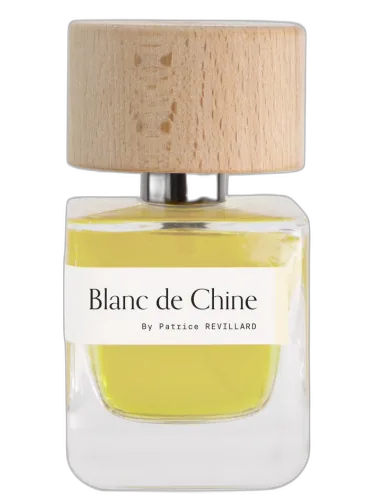
Parfumeurs du Monde
Blanc De Chine Parfumeurs Du Monde
Shared accords: floral, fruity, white floral

Korres
Mykonian Breeze Korres
Shared top notes: fruity notes, jasmine
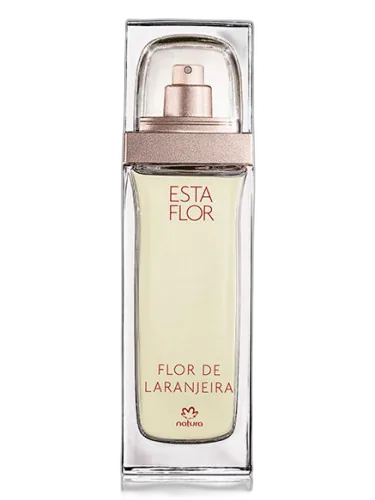
Natura
Esta Flor Flor De Laranjeira Natura
Shared top notes: freesia, jasmine

Nina Ricci
L'air Nina Ricci
Shared top notes: freesia, jasmine, magnolia