
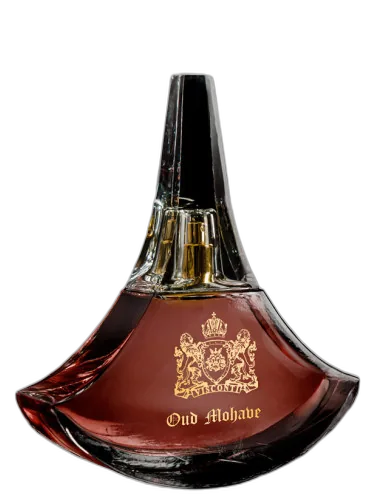

Oud Mohave Antonio Visconti
At a glance
Is Oud Mohave Antonio Visconti worth trying?
Oud Mohave by Antonio Visconti is a Oriental fragrance for women and men.
- Best match
- Evening wear in Fall, Winter
- Performance feel
- Very Good longevity with Strong sillage
- Signature profile
- leather, woody, smoky with Incense, Cardamom, Seaweed
The first impression
Oud Mohave by Antonio Visconti is a Oriental fragrance for women and men. The nose behind this fragrance is Antonio Visconti. Top notes are Incense, Cardamom, Seaweed and Thyme; middle notes are Leather, Black Orchid and Metallic notes; base notes are Birch, Agarwood (Oud), Cedar, Patchouli and Sandalwood.
What shapes the scent
The perfumer behind it

Antonio Visconti
Antonio Visconti is an Italian perfumer who creates fragrances under his own name. His collection includes Alhambra, Bal Masqué, Coeur De Vanille, Foliage, Glam Flower, Juicy Flower, La Divina Tubereuse, and Le Sens Du Plaisir. His style ranges from gourmand vanillas to floral and green compositions, often with a luxurious, romantic feel.
Notes pyramid
Top Notes
First impression · 15-30 min
 Incense
 Cardamom
 Seaweed
 Thyme
Thyme
Heart Notes
Core character · 2-4 hours
 Leather
 Black Orchid
Metallic notes
Black Orchid
Metallic notes
Base Notes
Lasting impression · 4+ hours
 Birch
Birch
 Agarwood (Oud)
 Cedar
Cedar
 Patchouli
 Sandalwood
The mood it creates
The Sage Archetype: Portrait of Oud Mohave Antonio Visconti
Essence
The person who gravitates toward Oud Mohave by Antonio Visconti is most closely aligned with the Sage archetype. This fragrance-dark, complex, and layered with smoky oud, dry woods, and a whisper of spice-reflects a mind that seeks depth, wisdom, and the hidden truths beneath surfaces. The Sage is a seeker of knowledge, not for mere accumulation but for transformation. They are drawn to the enigmatic, the rare, the things that require patience to understand.
Yet, like all archetypes, the Sage has its shadow. The relentless pursuit of wisdom can become detachment, the love of complexity can turn into obscurity, and the reverence for the profound may breed disdain for the mundane.
Style & Aesthetic
Their tastes are refined but never ostentatious. They prefer the understated luxury of aged leather, well-worn books, and dark, textured fabrics-materials that carry history. Their home is a curated space, where every object has meaning: a vintage globe, an antique inkwell, a Persian rug with faded patterns. They are drawn to art that demands interpretation-symbolist paintings, avant-garde cinema, music that lingers in minor keys.
They wear Oud Mohave not as a statement but as an extension of their inner world. The scent is not sweet, not immediately pleasing-it is an acquired taste, much like their philosophy.
They are not idle dreamers but disciplined thinkers. Their days are structured-morning coffee with a book, long walks to untangle ideas, evenings spent writing or sketching. They may work in academia, philosophy, or the arts, but even if their profession is conventional, their mind is not.
Their shadow is the risk of becoming too cerebral, of living in abstractions while life passes by in vivid, fleeting moments. The scent of Oud Mohave-earthy yet elusive-mirrors this tension: it is both grounding and mysterious, pulling them between the tangible and the ineffable.
Philosophy & Values
They believe that truth is rarely found in simplicity. Life, to them, is a labyrinth, and wisdom comes from wandering its corridors rather than rushing to the center. They value intellect but distrust dogma. Their moral code is self-fashioned, built from years of questioning, reading, and silent observation.
Yet this very independence can isolate them. They may dismiss others as superficial, not out of malice but from a quiet conviction that most people skim the surface of existence. Their shadow emerges when their love of depth becomes a refusal to engage with life’s simpler joys.
Relationships
They are not gregarious but form intense, lasting bonds with those who share their curiosity. Their love is deep but demanding-they expect their partners to match their intellectual fervor, to spar with them in late-night debates, to appreciate solitude as much as companionship.
Their flaw is that they sometimes mistake solitude for superiority. They may withdraw into their inner world, leaving others feeling shut out. Their challenge is to remember that wisdom without warmth is a cold fire.
Conclusion
They are at once enlightened and imprisoned by their own intellect. Their strength is their ability to see beyond illusions, to navigate the unseen currents of meaning. Their weakness is the temptation to believe that only the hidden is valuable.
But when balanced, they are the quiet guide, the one who speaks sparingly but with weight. Their presence, like their fragrance, lingers long after they have left the room.
If you like this, try these
Fragrances with a comparable profile - shared accords, notes, and character.
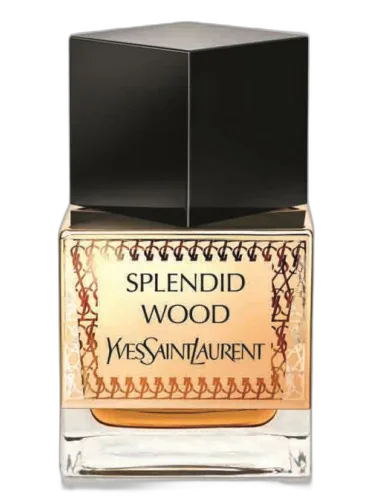
Yves Saint Laurent
Splendid Wood Yves Saint Laurent
Shared top notes: cardamom, incense
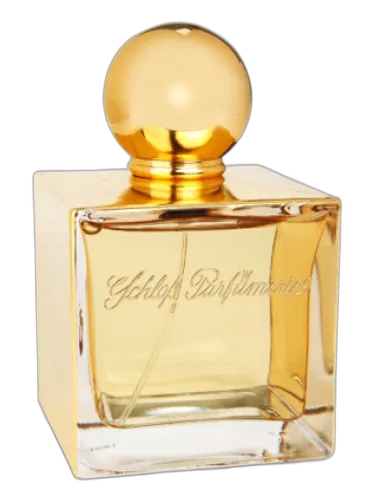
Schlossparfumerie
P - 100 Jubilee Schlossparfumerie
Shared top notes: incense
Nikkos-Oskol Fragrance
Ф (f) Nikkos-oskol Fragrance
Shared top notes: cardamom
Good Water Perfume
Wynwood Good Water Perfume
Shared top notes: cardamom
Cale Fragranze d’Autore
Preludio D'oriente Cale Fragranze D’autore
Shared heart notes: leather