

The History Of Indian Oud Areej Le Doré
Fragrance Story
The History of Indian Oud by Areej Le Doré is a Oriental Woody fragrance for women and men. This is a new fragrance. The History of Indian Oud was launched in 2023. The nose behind this fragrance is Russian Adam.
Composition Profile
About the Perfumer

Russian Adam
Russian Adam is the founder and perfumer of Areej Le Doré, known for luxurious, natural-based fragrances. His portfolio includes Agar De Noir, Al Ambar, and Atlantic Ambergris, which often feature rare ingredients like oud and ambergris. He is celebrated for his artisanal approach and rich, complex compositions.
Fragrance Notes
All Notes
Complete scent profile
 Indian Oud
The History Of Indian Oud Areej Le Doré by Areej Le Doré offers a distinctive olfactory experience that stands out from other fragrances in its category.
Crafted with the finest ingredients and a blend of traditional and modern perfumery techniques, this fragrance represents the pinnacle of the perfumer's art.
The History Of Indian Oud Areej Le Doré embodies the distinctive style of Areej Le Doré while adding a unique chapter to their fragrance portfolio.
Character Profile
The Sage Archetype: Portrait of The History Of Indian Oud Areej Le Doré
Essence
The person who cherishes The History of Indian Oud by Areej Le Doré is, at their core, a Sage-a seeker of wisdom, a collector of hidden truths, and a connoisseur of depth. The fragrance itself is dense, layered, and introspective, much like the mind of the one who wears it. Oud, with its smoky, resinous complexity, evokes ancient libraries, sacred rituals, and the slow passage of time. This is not a scent for the fleeting or the superficial; it is for those who dwell in thought, who value the weight of history, and who see life as a text to be deciphered rather than merely lived.
Relationships
In relationships, they seek conversation that lingers, connections that are more than transactional. Small talk exhausts them; they crave exchanges that spiral into the abstract, the metaphysical, the unresolved. Their closest bonds are with those who can match their intensity-not in passion, but in thought. They are not prone to outbursts of emotion, but their loyalty is unwavering once earned.
Yet, their shadow emerges here: they can be aloof, even cold. Their love of solitude sometimes hardens into detachment. They may unintentionally make others feel inadequate, as if their silence is a judgment. Their partners or friends might long for more warmth, more spontaneity-but the Sage, lost in contemplation, may not notice until it is too late.
Shadow
The Sage’s greatest flaw is the illusion of self-sufficiency. They believe they can understand life through study alone, forgetting that wisdom must sometimes be felt, not just dissected. Their obsession with depth can become a prison-they may dismiss joy as frivolity, laughter as distraction. In their quest for meaning, they risk missing the meaning right in front of them.
At their worst, they become the Recluse, a figure who hoards knowledge like a dragon hoards gold, never sharing it, never letting it breathe. They may grow bitter, resenting a world that seems too loud, too shallow. But if they learn to step out of their own mind, even briefly, they find that wisdom is not just in books-it is in the touch of a hand, the scent of rain, the unguarded moment.
Conclusion
Their tastes are refined but never ostentatious. They prefer the understated luxury of well-worn leather, aged paper, and dark woods-objects that carry the patina of time. Their wardrobe leans toward muted tones, favoring textures over trends, as if to say: I do not dress for others; I dress for the atmosphere of my own mind. They might collect rare books, antique maps, or fragments of forgotten philosophies, always searching for the next revelation hidden in the margins.
Their philosophy is one of measured curiosity. They do not rush to conclusions but let ideas steep, like tea leaves unfurling in hot water. They believe in the slow accumulation of knowledge, distrusting dogma yet never fully surrendering to skepticism. Their values are rooted in intellectual integrity-they despise intellectual laziness, half-truths, and the tyranny of popular opinion. Yet they are not hermits; they engage with the world, though always from a slight distance, as if observing through a pane of frosted glass.
Similar Fragrances
Fragrances with a comparable profile - shared accords, notes, and character.
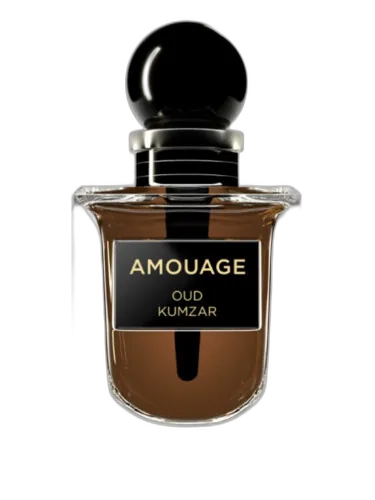
Amouage
Oud Kumzar Amouage
Shared accords: fresh spicy, oud

Ajmal
Dahn Al Oudh Amiri Ajmal
Shared accords: fresh spicy, oud

The Perfumist
Kalakas The Perfumist
Shared accords: fresh spicy, oud

Jinkoh Store
Royal Tripura Jinkoh Store
Shared accords: fresh spicy, oud

Jinkoh Store
Emperor Of Meghalaya Jinkoh Store
Shared accords: fresh spicy, oud