
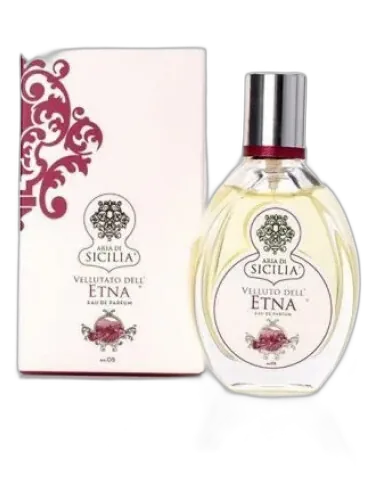
No. 5 Velluto Dell'etna Aria Di Sicilia
Fragrance Story
No. 5 Velluto dell'Etna by Aria di Sicilia is a Aromatic Fruity fragrance for women and men. No. 5 Velluto dell'Etna was launched during the 2010's. Top note is Pomegranate; middle notes are Grapes and Red Fruits; base note is Woody Notes.
Composition Profile
About the Perfumer

Unknown Perfumer
Fragrance Notes
Top Notes
First impression · 15-30 min
 Pomegranate
Heart Notes
Core character · 2-4 hours
 Grapes
 Red Fruits
Base Notes
Lasting impression · 4+ hours
 Woody Notes
No. 5 Velluto Dell'etna Aria Di Sicilia by Aria di Sicilia offers a distinctive olfactory experience that stands out from other fragrances in its category.
Crafted with the finest ingredients and a blend of traditional and modern perfumery techniques, this fragrance represents the pinnacle of the perfumer's art.
No. 5 Velluto Dell'etna Aria Di Sicilia embodies the distinctive style of Aria di Sicilia while adding a unique chapter to their fragrance portfolio.
Character Profile
The Lover Archetype: Portrait of No. 5 Velluto Dell'etna Aria Di Sicilia
Essence
This person is most closely aligned with the Enchantress, an archetype of the Lover family-sensual, magnetic, and deeply attuned to beauty. The Enchantress does not merely exist in the world; she shapes it through her presence, drawing others into her orbit with an effortless allure. The fragrance she chooses, No. 5 Velluto Dell’Etna Aria Di Sicilia, is a paradox-velvet and fire, softness and intensity-much like her own nature.
To wear No. 5 Velluto Dell’Etna is to embody its duality-the velvet touch and the volcanic heat. She is both the siren and the sage, the woman who intoxicates and the one who understands too much. Her life is a work of art, but one that demands constant tending. She is not for everyone, nor does she wish to be.
In the end, she is most alive in those rare moments when she allows herself to be unfinished-when the perfume fades, when the mask slips, when she stands bare before the mirror and smiles at the woman staring back.
Shadow
Yet, the Enchantress is not without her thorns. Her magnetism can curdle into manipulation when she feels threatened. She knows too well the power of a glance, a withheld word, a carefully timed silence. If wounded, she may retreat into coldness, punishing others with absence rather than confrontation.
There is also a melancholy beneath her poise. The very sensitivity that allows her to appreciate beauty also makes her vulnerable to its fleeting nature. She is haunted by impermanence-the wilt of a rose, the fading of a scent, the slow erosion of passion in long-term love. At times, she may cling too tightly to moments, trying to preserve what cannot be held.
Conclusion
Her tastes are refined but never ostentatious. She prefers the weight of silk against her skin, the patina of aged leather, the flicker of candlelight over harsh electric glare. She surrounds herself with objects that carry history-antique books, hand-blown glass, a single piece of amber holding a fossilized insect. These are not mere decorations but talismans, each whispering of time’s passage.
Her philosophy is one of aesthetic hedonism-not in the shallow pursuit of pleasure, but in the belief that beauty is a form of truth. She does not deny the world’s ugliness; she simply refuses to let it define her. There is a quiet defiance in the way she arranges a table for one, in the deliberate slowness with which she sips her espresso. She understands that elegance is resistance.
Similar Fragrances
Fragrances with a comparable profile - shared accords, notes, and character.
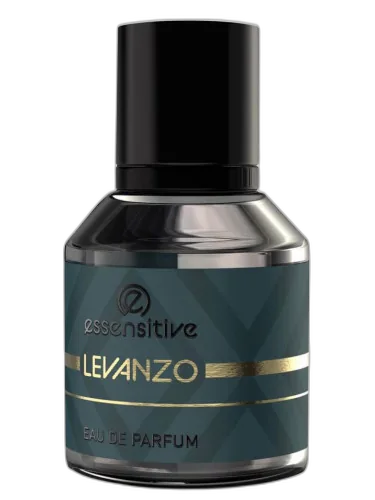
Essensitive
Levanzo Essensitive
Shared accords: fruity, sweet, woody
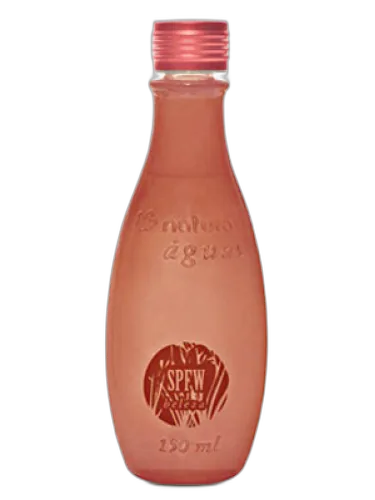
Natura
Spfw Beleza Natura
Shared accords: fruity, sweet, woody

O Boticário
Doce Tarde O Boticário
Shared accords: fruity, sweet, woody
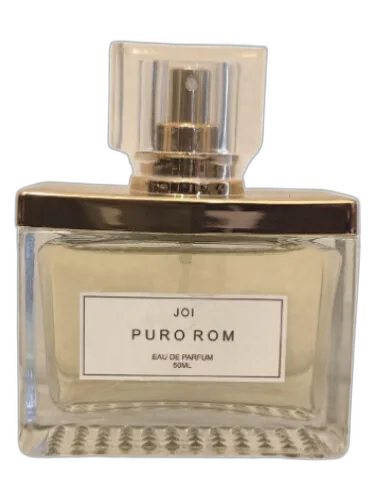
JOI
Puro Rom Joi
Shared accords: fruity, sweet, woody

Paris Corner
Cake Temptations Paris Corner
Shared accords: fruity, sweet