
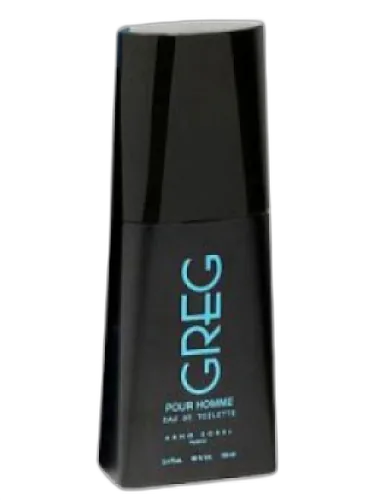

Greg Pour Homme Arno Sorel
At a glance
Is Greg Pour Homme Arno Sorel worth trying?
Greg pour Homme by Arno Sorel is a Oriental Woody fragrance for men.
- Best match
- Evening wear in Fall
- Performance feel
- Good longevity with Moderate sillage
- Signature profile
- woody, powdery, aromatic with Lemon, Plum, Coriander
The first impression
Greg pour Homme by Arno Sorel is a Oriental Woody fragrance for men. Top notes are Lemon, Plum, Coriander and Peach; middle notes are Rose, Vermouth, Ylang-Ylang, Jasmine and Cinnamon; base notes are Sandalwood, Cedar, Oakmoss, Musk and Amber.
What shapes the scent
The perfumer behind it

Unknown Perfumer
Notes pyramid
Top Notes
First impression · 15-30 min
 Lemon
Lemon
 Plum
Plum
 Coriander
 Peach
Peach
Heart Notes
Core character · 2-4 hours
 Rose
Rose
 Vermouth
 Ylang-Ylang
 Jasmine
 Cinnamon
Base Notes
Lasting impression · 4+ hours
 Sandalwood
 Cedar
Cedar
 Oakmoss
 Musk
Musk
 Amber
Amber
The mood it creates
The Sage Archetype: Portrait of Greg Pour Homme Arno Sorel
Essence
This man is a seeker, a thinker-one who values knowledge not as a mere accumulation of facts, but as a means of understanding the hidden structures of life. The Sage archetype dominates his psyche, for he is drawn to wisdom, reflection, and the quiet mastery of his craft. He does not chase fleeting pleasures but seeks depth in all things, whether in conversation, literature, or the subtle artistry of fragrance. Greg Pour Homme Arno Sorel, with its woody, spicy, and slightly mysterious composition, mirrors his essence: refined, contemplative, and layered.
Style & Aesthetic
His surroundings are curated with intention-not for show, but for resonance. His home is a sanctuary of muted tones, well-worn books, and objects that carry meaning rather than mere decoration. He prefers quality over quantity, whether in clothing (tailored but understated), music (jazz or classical, never disposable), or food (simple, expertly prepared). He is not a man of excess; his luxury is in restraint.
Philosophy is not an abstract exercise for him but a lens through which he navigates existence. He reads Nietzsche not to impress but because he recognizes the weight of eternal questions. He values solitude, not out of misanthropy, but because silence is where thought crystallizes. His humor is dry, his observations precise. He does not suffer fools, but he is patient with earnest seekers.
Relationships
He is not a man of many friends, but those he keeps are bound by mutual respect and intellectual kinship. He does not engage in small talk unless necessity demands it, preferring conversations that unearth ideas rather than exchange pleasantries. Romantic partners must meet him on his level-not in knowledge, but in curiosity. He is not cold, but he is guarded; vulnerability comes slowly, for he has learned that most people mistake intensity for intimacy.
His love is steadfast but not effusive. He shows care through acts, not grand declarations. If he commits, it is with quiet devotion, but he will not chase or plead. He expects autonomy in return, for he understands that true connection does not require possession.
Shadow
Yet, the Sage has his darkness. His pursuit of wisdom can become a retreat from life-a tendency to observe rather than participate. He may grow overly critical, dismissing what he deems "unworthy" of his time, whether people or experiences. His discernment risks becoming elitism; his patience for ignorance wears thin.
There is also a subtle arrogance, a belief that his understanding elevates him above the mundane. He may rationalize isolation as superiority rather than confronting his own fears of inadequacy or emotional exposure. If unchecked, his introspection turns inward to the point of stagnation-a mind so sharp it dissects everything but dares to feel little.
Conclusion
The ideal expression of his archetype is not the aloof scholar but the engaged mentor-one who uses his insight to illuminate, not to judge. When he balances his love of knowledge with humility, he becomes a rare guide: someone who sees deeply but does not scorn the surface. His fragrance, then, is not a mask but an extension-a hint of spice, a grounding woodiness, a warmth that invites rather than intimidates.
He is a man who knows that true wisdom is not in having answers but in asking better questions. And in that pursuit, he finds his purpose.
If you like this, try these
Fragrances with a comparable profile - shared accords, notes, and character.

Giorgio Armani
Emporio Armani Lui Giorgio Armani
Shared top notes: lemon
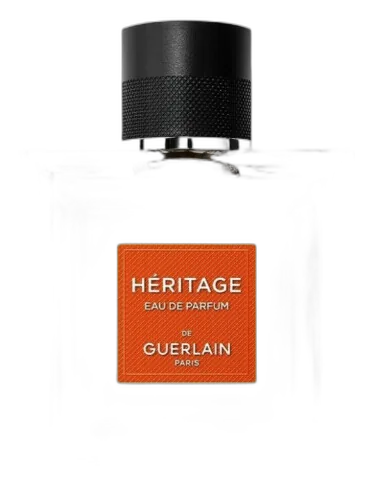
Guerlain
Heritage Eau De Parfum Guerlain
Shared top notes: lemon

Emanuel Ungaro
Ungaro Pour L'homme Iii Emanuel Ungaro
Shared top notes: coriander, lemon
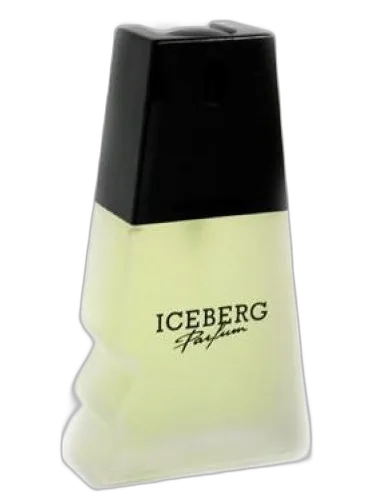
Iceberg
Iceberg Iceberg
Shared top notes: lemon, peach

Good Water Perfume
Boca Raton Good Water Perfume
Shared top notes: lemon