
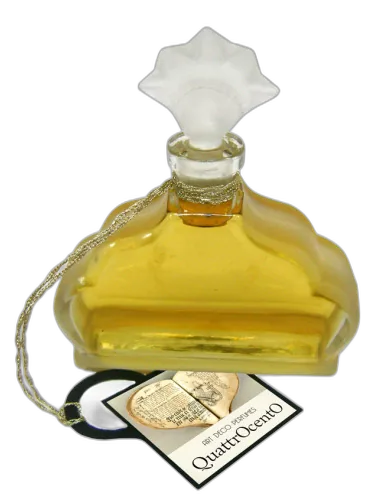

Quattrocento Art Deco Perfumes
At a glance
Is Quattrocento Art Deco Perfumes worth trying?
QuattrOcentO by Art Deco Perfumes is a Leather fragrance for women and men.
- Best match
- Evening wear in Fall
- Performance feel
- Very Good longevity with Strong sillage
- Signature profile
- amber, woody, warm spicy with Mandarin Orange, Neroli, Lemon
The first impression
QuattrOcentO by Art Deco Perfumes is a Leather fragrance for women and men. QuattrOcentO was launched in 2015. The nose behind this fragrance is Elina Arsenieva. Top notes are Mandarin Orange, Neroli and Lemon; middle notes are Cognac and Apple; base notes are Coal, Tolu Balsam, Benzoin and Cedar.
What shapes the scent
The perfumer behind it

Elina Arsenieva
Elina Arsenieva has created numerous fragrances for Art Deco Perfumes, including Airport Аэропорт, Ambra Амбра, Arkticheskiy Convoy, Ars Moriendi, Avada Kedavra, Aventure, Belaya Noch, and Belaya Siren 1947 Белая Cирень 1947. Her work spans a wide range of themes, from historical references to fantasy and nature. She is known for her imaginative and culturally inspired compositions.
Notes pyramid
Top Notes
First impression · 15-30 min
 Mandarin Orange
 Neroli
 Lemon
Lemon
Heart Notes
Core character · 2-4 hours
 Cognac
 Apple
Apple
Base Notes
Lasting impression · 4+ hours
 Coal
Coal
 Tolu Balsam
 Benzoin
 Cedar
Cedar
The mood it creates
The Quattrocento Art Deco Enth Archetype: Portrait of Quattrocento Art Deco Perfumes
Essence
To wear Quattrocento Art Deco Perfumes is to embrace an olfactory manifesto-a declaration of refined decadence, symmetry, and artistic rebellion. The person who gravitates toward this fragrance is not merely seeking a scent but an experience, a sensory bridge between past and present, between the classical and the avant-garde. They are, at their core, an Aesthetic Visionary, a modern incarnation of the Creator Archetype, but with the disciplined elegance of Art Deco and the intellectual depth of Renaissance humanism.
The Creator thrives on originality, beauty, and the act of shaping reality into something more meaningful. This individual does not merely consume culture-they curate it, refine it, and, in subtle ways, remake it in their image. Their love for Quattrocento Art Deco reflects a mind that finds harmony in contrasts: the geometric precision of Deco with the organic richness of quattrocento artistry. They are drawn to the tension between structure and flourish, between the mathematical and the sensual.
Philosophy & Values
They reject the notion that life should be purely functional. For them, existence must be designed, not endured. They believe in the transformative power of aesthetics-not as superficial indulgence, but as a means of elevating the soul. This is not escapism; it is a deliberate choice to live with intention, to surround oneself with objects, ideas, and people that inspire rather than merely occupy space.
Their values are rooted in intellectual curiosity and artistic integrity. They despise mediocrity, not out of snobbery, but because they see it as a betrayal of human potential. They are drawn to those who share their passion for depth-whether in literature, music, or conversation. Yet they are not dogmatic; they understand that beauty is subjective, and they relish the debate over its definitions.
Relationships
They do not collect acquaintances; they cultivate a salon-a gathering of minds where ideas are exchanged like rare wines. Their closest relationships are built on mutual appreciation for wit, creativity, and a shared disdain for the banal. Romantic partners must be both muse and equal, someone who challenges their perceptions and enriches their world.
Yet intimacy is not always easy for them. Their exacting standards can make them impatient with emotional clumsiness. They may retreat into their carefully constructed world when faced with chaos, preferring the controlled beauty of art over the messy unpredictability of raw human emotion.
Shadow
The Creator’s greatest strength is also their greatest flaw: their relentless pursuit of the ideal. When unbalanced, they become the Perfectionist, a figure trapped in their own gilded cage. They may grow frustrated when reality fails to match their vision, dismissing anything-or anyone-that falls short. Their disdain for the ordinary can curdle into elitism, isolating them in a self-made ivory tower.
There is also the danger of aesthetic paralysis-the inability to act for fear of imperfection. They may delay projects, relationships, or even personal growth, waiting for the "right" moment, the "perfect" expression. In this state, creation becomes inhibition, and their world, though beautiful, grows stagnant.
Conclusion
The lover of Quattrocento Art Deco Perfumes is neither purely nostalgic nor blindly modern. They are an alchemist of eras, blending the past’s grandeur with the present’s possibilities. Their life is an ongoing act of creation, a refusal to accept the world as it is without first reshaping it into something more luminous.
Yet true wisdom for them lies in embracing imperfection-recognizing that beauty is not only in the flawless line but sometimes in the unexpected flaw. Only then can their vision transcend mere aesthetics and become something truly alive.
If you like this, try these
Fragrances with a comparable profile - shared accords, notes, and character.
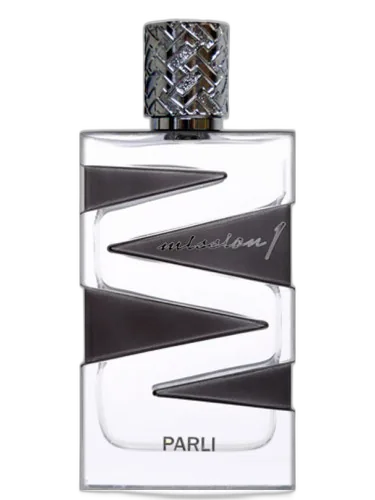
Parli Parfum
Mission 1 Parli Parfum
Shared top notes: lemon, mandarin orange, neroli

Rochas
Absolu Rochas
Shared top notes: mandarin orange
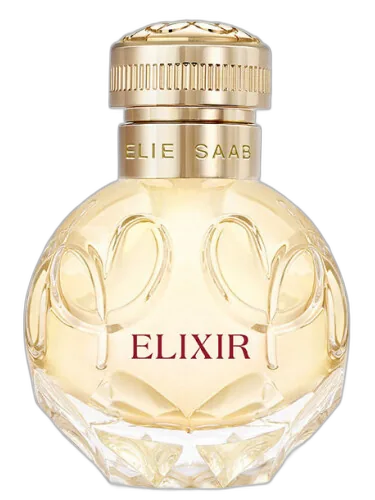
Elie Saab
Elixir Elie Saab
Shared top notes: mandarin orange, neroli
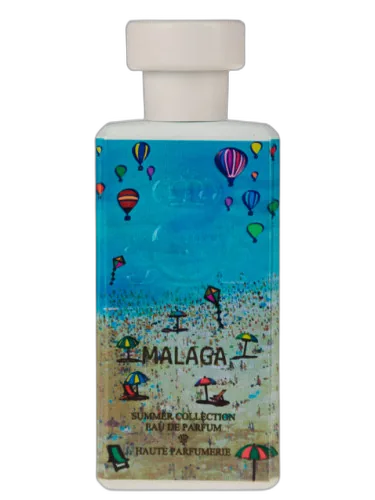
Al-Jazeera Perfumes
Malaga Al-jazeera Perfumes
Shared top notes: lemon, mandarin orange

Aaron Terence Hughes
Ath X Fm Smoulder Aaron Terence Hughes
Shared top notes: lemon, neroli