
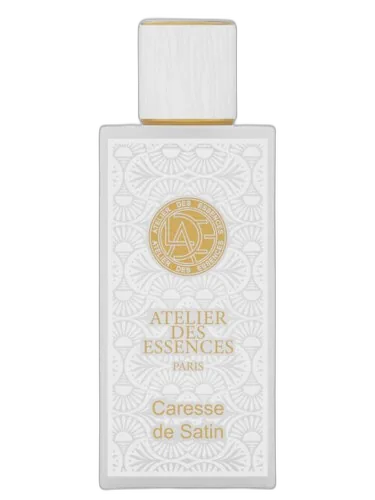

Caresse De Satin Atelier Des Essences
At a glance
Is Caresse De Satin Atelier Des Essences worth trying?
Caresse de Satin by Atelier des Essences is a Chypre Floral fragrance for women.
- Best match
- Evening wear in Fall
- Performance feel
- Good longevity with Moderate sillage
- Signature profile
- amber, vanilla, patchouli with Red Currant, Freesia, Patchouli
The first impression
Caresse de Satin by Atelier des Essences is a Chypre Floral fragrance for women. This is a new fragrance. Caresse de Satin was launched in 2024. Top notes are Red Currant and Freesia; middle notes are Patchouli and Rose; base notes are Amber, Vanilla and Blonde Woods.
What shapes the scent
The perfumer behind it

Atelier des Essences
Atelier des Essences crafts delicate, romantic perfumes with a focus on soft, powdery florals and creamy textures. Caresse De Satin embodies their signature style of tender, elegant compositions. Their fragrances evoke a sense of timeless femininity, often wrapped in velvety warmth.
Notes pyramid
Top Notes
First impression · 15-30 min
 Red Currant
 Freesia
Heart Notes
Core character · 2-4 hours
 Patchouli
 Rose
Rose
Base Notes
Lasting impression · 4+ hours
 Amber
Amber
 Vanilla
 Blonde Woods
The mood it creates
The Lover Archetype: Portrait of Caresse De Satin Atelier Des Essences
Essence
To wear Caresse De Satin is to embrace a fragrance that whispers of silk, softness, and quiet luxury-a scent that lingers like the memory of a lover’s touch. The person who chooses this fragrance is not one for bold declarations or brash sensuality; their allure is subtle, refined, almost poetic. They are governed by the Lover archetype, not in its most fiery or passionate form, but in its most delicate, aesthetic incarnation.
This is someone who lives for beauty-not merely as decoration, but as a philosophy. They believe in the transformative power of elegance, in the way a perfectly draped fabric, a carefully chosen phrase, or the right scent can elevate the mundane into something transcendent. Their life is an ongoing curation of sensory pleasures, each moment an opportunity to refine their surroundings into something harmonious.
Style & Aesthetic
Their taste is neither ostentatious nor minimalist-it exists in the liminal space where restraint meets indulgence. They favor textures that invite touch: cashmere, velvet, fine linen. Their wardrobe is a study in muted tones-soft ivories, dove grays, dusky roses-but never dull, always with a hint of something luminous beneath the surface.
They are drawn to objects with history-antique perfume bottles, well-worn books, handwritten letters-because they believe beauty deepens with time. Their home is not a showpiece but a sanctuary, where every object has been chosen with intention. They might collect porcelain teacups, rare first editions, or vintage lace, not for status, but because these things speak to them of a world where grace still matters.
Philosophy & Values
For them, life is not about conquest or accumulation, but about depth of feeling. They reject the vulgarity of excess, the crassness of haste. Instead, they seek the sublime in small moments-the way light filters through a sheer curtain, the first sip of perfectly steeped tea, the quiet intimacy of a shared glance.
Their values are rooted in sensibility over sentimentality. They do not weep at sunsets, but they might pause, just for a moment, to let the colors settle into memory. They believe in love, but not as a grand, all-consuming force-rather, as something that exists in the spaces between words, in the way a hand lingers on a shoulder, in the scent left on a pillow.
Relationships
They are not the type to love recklessly or loudly. Their affections are measured, deliberate, almost ritualistic. When they care for someone, it is with a quiet intensity-a gaze held a second too long, a gift chosen with impossible precision. They do not give themselves easily, but when they do, it is with a depth that lingers.
Yet, their relationships are not without shadows. Their devotion to beauty can make them fearful of messiness, of the raw, unpolished edges of human emotion. They may withdraw from conflict, preferring the safety of aesthetic harmony over the discomfort of confrontation. At worst, they can become detached, treating people as objects of admiration rather than as flawed, breathing beings.
Shadow
The Lover archetype, in its most exalted form, is life-affirming, but when unbalanced, it can turn into aesthetic escapism. They may become so enamored with the ideal that they reject anything imperfect, including themselves. Their pursuit of refinement can harden into snobbery, a quiet disdain for anything they deem coarse or vulgar.
There is also the danger of passivity-of waiting for life to be beautiful rather than engaging with its roughness. They might avoid necessary struggles, retreating into their curated world rather than facing the chaos of reality. In love, this can manifest as emotional withholding, an unwillingness to be vulnerable unless the conditions are perfect.
Conclusion
They are not conquerors, nor are they dreamers lost in abstraction. They are cultivators, shaping their existence into something worthy of admiration-not for others, but for themselves. They understand that beauty is not frivolous; it is a discipline, a way of resisting the entropy of the world.
Yet, the challenge for them is to remember that true elegance is not in perfection, but in the ability to embrace imperfection without despair. If they can learn this, they will not merely be admirers of beauty, but creators of it-not just in objects, but in the way they live, love, and endure.
In the end, the person who wears Caresse De Satin is not merely someone who enjoys a beautiful fragrance-they are someone who embodies it, in all its delicate, fleeting, intoxicating grace.
If you like this, try these
Fragrances with a comparable profile - shared accords, notes, and character.

Perfume Cult
Strong And Beautiful Perfume Cult
Shared heart notes: patchouli, rose

Andrea Maack
Pavilion Andrea Maack
Shared heart notes: patchouli, rose

Korloff Paris
Kn°iii Korloff Paris
Shared top notes: freesia
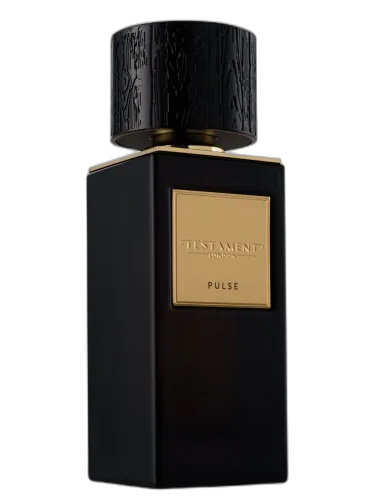
Testament London
Pulse Testament London
Shared heart notes: patchouli, rose
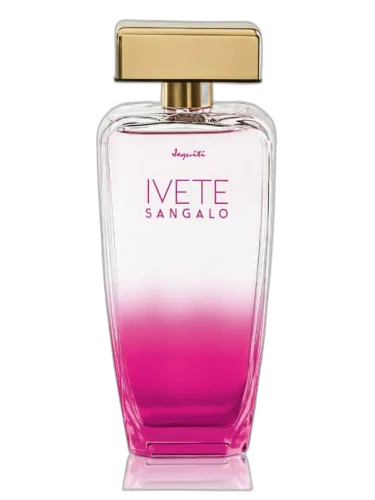
Jequiti
Ivete Sangalo Jequiti
Shared top notes: freesia