
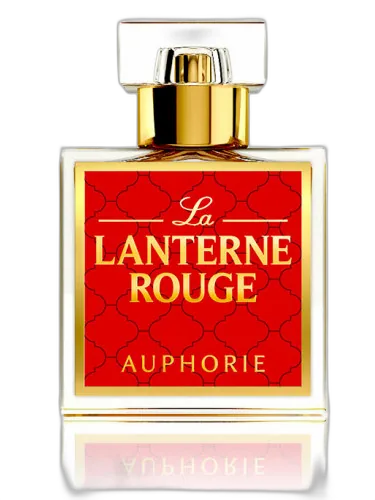

La Lanterne Rouge Auphorie
At a glance
Is La Lanterne Rouge Auphorie worth trying?
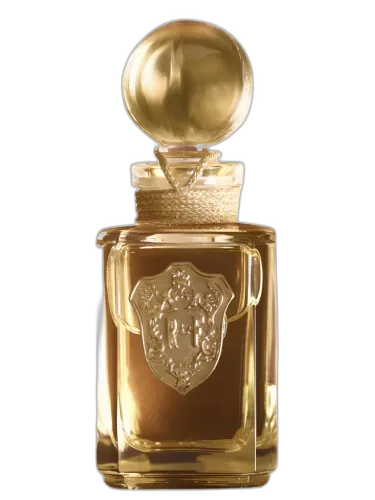
La Lanterne Rouge by Auphorie is a Oriental Floral fragrance for women and men.
- Best match
- Evening wear in Fall
- Performance feel
- Excellent longevity with Strong sillage
- Signature profile
- fruity, floral, sweet with Goji Berries, Dates, Saffron
The first impression
La Lanterne Rouge by Auphorie is a Oriental Floral fragrance for women and men. La Lanterne Rouge was launched in 2018. The nose behind this fragrance is Eugene Au. Top notes are Goji Berries, Dates, Saffron and Blood Mandarin; middle notes are Chinese Osmanthus, Apple Blossom and Red Peony; base notes are Ambergris and Oriental Woodsy notes.
What shapes the scent
The perfumer behind it

Eugene Au
Eugene Au is a perfumer and co-founder of the niche house Auphorie. He has created fragrances such as Archipelago, Dynasty, Elfen Spring, Golden Chersonese, La Lanterne Rouge, Miyako, Shambala, and Zen. His style is known for intricate, artisanal blends that often draw on Asian cultural and natural inspirations.
Notes pyramid
Top Notes
First impression · 15-30 min
 Goji Berries
 Dates
Dates
 Saffron
 Blood Mandarin
Heart Notes
Core character · 2-4 hours
Chinese Osmanthus
 Apple Blossom
Red Peony
Apple Blossom
Red Peony
Base Notes
Lasting impression · 4+ hours
 Ambergris
Oriental Woodsy notes
Ambergris
Oriental Woodsy notes
The mood it creates
The Wanderer Archetype: Portrait of La Lanterne Rouge Auphorie
Essence
This is a soul who moves through life with the quiet intensity of a pilgrim-one who is never fully at home in the mundane, always searching for the hidden, the poetic, the transcendent. The Wanderer Archetype defines them, for they are drawn to the edges of experience, where meaning is not given but uncovered. La Lanterne Rouge, with its darkly luminous blend of incense, leather, and spice, mirrors their inner landscape: a chiaroscuro of depth and mystery, where light flickers but never fully dispels the shadows.
Style & Aesthetic
Their preferences are deliberate, almost ritualistic. They are drawn to the archaic and the esoteric-antique books with foxed edges, vinyl records of obscure post-punk bands, the scent of old libraries and distant spices. Their wardrobe is a study in controlled contrast: tailored yet slightly undone, rich textures (wool, silk, aged leather) in muted, earthy tones. They appreciate craftsmanship, but not for its own sake-only when it carries the weight of history, of human hands shaping something beyond utility.
In art, they favor the surreal and the symbolic-Dali’s melting clocks, the haunting chiaroscuro of Caravaggio, the fragmented poetry of T.S. Eliot. They do not consume culture passively; they interrogate it, as if every painting, every novel, every scent is a cipher waiting to be decoded.
They move through the world like a flâneur of the soul-observant, unhurried, attuned to the undercurrents of life. Their home is a sanctuary, filled with carefully chosen objects that serve as talismans: a well-worn deck of tarot cards, a collection of dried botanicals, a notebook filled with aphorisms and half-formed thoughts.
They thrive in solitude but are not hermits. They enjoy cities at night, wandering dimly lit streets where the boundaries between past and present blur. They might frequent a dimly lit jazz bar or an antiquarian bookshop, places where time feels suspended. Routine bores them, but they are not reckless-their rebellions are quiet, internal.
Philosophy & Values
They reject the notion that life must be lived in broad daylight. For them, truth is found in the liminal spaces-the hour between dusk and night, the pause between words, the tension between what is said and what is meant. They are not nihilists, but they distrust easy answers. Their philosophy is one of perpetual questioning, a refusal to settle into dogma.
They value authenticity above all, though their definition of it is fluid. To them, authenticity is not mere sincerity but the courage to embrace contradiction-to be both fierce and tender, detached and passionate, cynical and hopeful. They despise performative virtue, preferring the quiet integrity of those who act without an audience.
Relationships
Their connections are few but profound. They do not collect acquaintances; they cultivate relationships like rare plants, tending to them with patience and discernment. They are drawn to those who share their love of depth-people who can discuss Jungian symbolism at midnight or sit in silence without discomfort.
Yet, intimacy is a double-edged sword for them. They crave it, but their instinct is to retreat when it becomes too familiar. Love, for them, must always contain an element of the unknown-a puzzle to unravel, a scent that lingers but never fully reveals itself. This can leave partners feeling perpetually at arm’s length, never quite sure if they are truly seen or merely admired as an enigma.
Shadow
For all their depth, they risk becoming prisoners of their own seeking. Their refusal to settle can curdle into restlessness, a chronic dissatisfaction with the present. They may romanticize the unknown to the point of dismissing the ordinary joys of life-a warm meal, a shared laugh, the comfort of routine.
Their love of mystery can also become a defense mechanism. By keeping others at a distance, they avoid the vulnerability of being fully known. They may mistake detachment for wisdom, isolation for independence. The greatest challenge for them is to learn that some truths are found not in the chase, but in stillness-in allowing the world to touch them without retreating into the safety of abstraction.
Conclusion
They are not meant for the well-trodden path. Like the fragrance they love, they are a paradox-smoke and spice, shadow and flame. The Seeker in them will always be drawn to the horizon, but wisdom lies in recognizing that the journey itself is the destination. To embrace both the light and the dark within, to let themselves be found as much as they seek-this is their becoming.
If you like this, try these
Fragrances with a comparable profile - shared accords, notes, and character.

Michael Malul London
Sangria+saffron Michael Malul London
Shared top notes: saffron
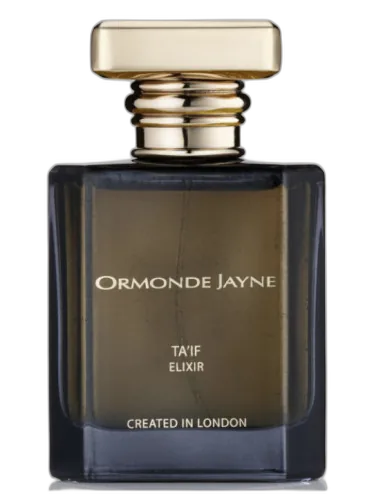
Ormonde Jayne
Ta'if Elixir Ormonde Jayne
Shared top notes: dates, saffron
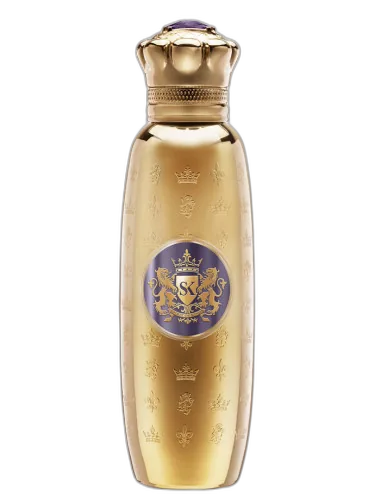
Spirit Of Kings
Tabana Spirit Of Kings
Shared top notes: saffron

Zimaya
Amber Is Great Zimaya
Shared top notes: saffron
Régime des Fleurs
Gold Smoke Régime Des Fleurs
Shared top notes: saffron