


7 As A Constant Aura Of Kazakhstan
At a glance
Is 7 As A Constant Aura Of Kazakhstan worth trying?
7 as a Constant by Aura of Kazakhstan is a Aromatic Fruity fragrance for women and men.
- Best match
- Evening wear in Fall
- Performance feel
- Very Good longevity with Strong sillage
- Signature profile
- fruity, floral, green with Apricot, Green Leaves, Davana
The first impression
7 as a Constant by Aura of Kazakhstan is a Aromatic Fruity fragrance for women and men. This is a new fragrance. 7 as a Constant was launched in 2023. The nose behind this fragrance is Angéline Leporini. Top notes are Apricot, Green Leaves, Davana, Watery Notes and Carrot; middle notes are Osmanthus, Amber and Orris Root; base notes are Gurjan balsam, Musk, Agarwood (Oud), Patchouli and Cashmere Wood.
What shapes the scent
The perfumer behind it

Angéline Leporini
Angéline Leporini is a French perfumer known for her work with major houses like Amouage and Ajmal. Her style balances fresh, citrusy accords with deeper woody and oriental notes, as seen in 4711 Acqua Colonia Yuzu & Cedarwood and Epic Woman. She also creates complex, opulent compositions such as Qasida Dahabia and the green, modern twist of 4711 Remix Green Oasis.
Notes pyramid
Top Notes
First impression · 15-30 min
 Apricot
 Green Leaves
 Davana
Watery Notes
Davana
Watery Notes
 Carrot
Heart Notes
Core character · 2-4 hours
 Osmanthus
 Amber
Amber
 Orris Root
Base Notes
Lasting impression · 4+ hours
Gurjan balsam
 Musk
Musk
 Agarwood (Oud)
 Patchouli
Cashmere Wood
Patchouli
Cashmere Wood
The mood it creates
The Archetype Archetype: Portrait of 7 As A Constant Aura Of Kazakhstan
Essence
To wear 7 As A Constant Aura Of Kazakhstan is to embrace an olfactory paradox-a scent that is at once earthy and ethereal, rooted in tradition yet untamed by convention. It speaks of vast steppes and whispered secrets, of a spirit that refuses to be confined. The person who chooses this fragrance is not merely selecting a perfume; they are declaring an allegiance to an inner world where boundaries blur and the self is both sovereign and seeker.
Above all, this individual embodies the Wanderer-the Jungian archetype of the restless soul, driven by curiosity and an insatiable hunger for experience. The Wanderer is not lost; they are deliberately unmoored, finding meaning in movement rather than permanence. They resist the pull of societal expectations, preferring the open road to the well-trodden path.
Yet, like all archetypes, the Wanderer has a shadow. Their independence can become isolation, their love of novelty a refusal to commit. They may struggle with deep relationships, always keeping one foot out the door, fearing that settling will dull their spirit.
Style & Aesthetic
Their aesthetic is a tapestry of contradictions-bohemian yet refined, rugged yet elegant. They favor clothing that suggests travel: worn leather, flowing fabrics, perhaps a single piece of jewelry with a story behind it. Their home, if they have one, is not a static space but a living museum of collected artifacts-books in multiple languages, a vintage map on the wall, a shelf of half-used notebooks filled with sketches and fragmented thoughts.
They are drawn to art that evokes movement-impressionist paintings, nomadic folk music, poetry that speaks of exile and return. Their taste in literature leans toward the existential: Nietzsche, Rumi, Pessoa-writers who question the very ground beneath their feet.
They attract people effortlessly-their magnetism lies in their mystery, their refusal to be fully known. Lovers and friends are drawn to their spontaneity, their willingness to disappear for months only to return with stories. But intimacy is a challenge. They fear being pinned down, and their partners often sense an invisible barrier, a part of them that remains just out of reach.
Professionally, they thrive in roles that allow movement-freelance work, travel writing, anthropology, or any field where curiosity is currency. Routine is their enemy; they would rather live precariously than submit to the slow death of predictability.
Philosophy & Values
For them, life is an experiment, not a doctrine. They reject dogma, preferring to test truths through experience rather than inherit them. Their morality is fluid, shaped by encounters rather than rigid principles. They believe in the sacredness of the journey itself, not the destination.
Yet this philosophy has its costs. Their reluctance to plant roots can leave them untethered, floating between worlds without fully belonging to any. They may struggle with the weight of their own freedom, occasionally envying those who find solace in tradition.
Shadow
The greatest danger for this individual is not stagnation but dispersion. Their refusal to commit can calcify into a fear of depth, leaving them a perpetual outsider. They may mistake restlessness for growth, confusing motion with progress. At their worst, they become ghosts in their own lives, always searching but never arriving.
Yet even in their flaws, there is beauty. Their refusal to settle is also a refusal to betray themselves. They would rather be incomplete than inauthentic. And perhaps, in the end, their wandering is not an escape but a pilgrimage-a lifelong search for the one place, or person, that makes them want to stay.
Conclusion
To know this person is to understand that they are not running from something but toward something-even if they cannot name it. Their fragrance, like their soul, is a blend of contradictions: wild yet contemplative, fleeting yet unforgettable. They are the embodiment of the question mark, the living proof that some answers can only be found in motion.
And so they wander-not because they are lost, but because the world is too vast to stand still.
If you like this, try these
Fragrances with a comparable profile - shared accords, notes, and character.
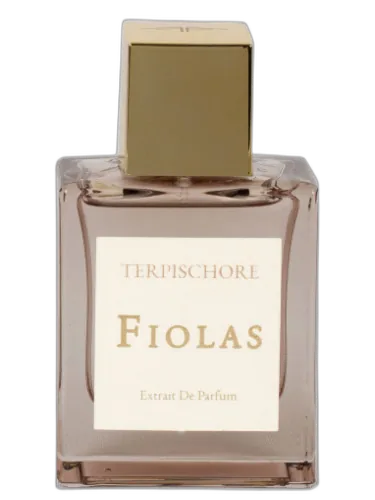
Fiolas
Terpischore Fiolas
Shared top notes: apricot, carrot, davana

Fratelli Diamanti
Ten Miles Fratelli Diamanti
Shared top notes: apricot
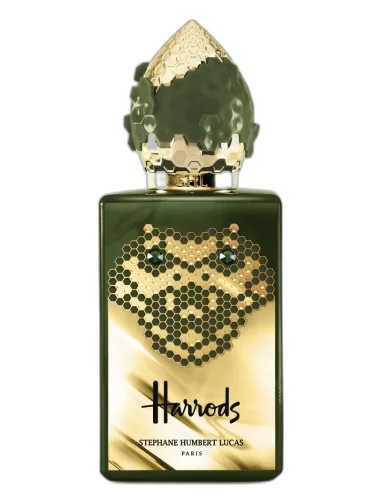
Stéphane Humbert Lucas 777
Harrods H Mamba Stéphane Humbert Lucas 777
Shared heart notes: amber, orris root

Lalique
Rose Royale Lalique
Shared top notes: apricot

Sospiro Perfumes
Grazioso Sospiro Perfumes
Shared heart notes: amber