


Avon Homem Ice Avon
At a glance
Is Avon Homem Ice Avon worth trying?
Avon Homem Ice by Avon is a Aromatic Aquatic fragrance for women and men.
- Best match
- Casual wear in Summer
- Performance feel
- Moderate longevity with Moderate sillage
- Signature profile
- fresh, aquatic, ozonic with Watery Notes, Ice, Mountain Air
The first impression
Avon Homem Ice by Avon is a Aromatic Aquatic fragrance for women and men. Avon Homem Ice was launched in 2013.
What shapes the scent
The perfumer behind it

Unknown Perfumer
Notes pyramid
All Notes
Complete scent profile
 Watery Notes
 Ice
Ice
 Mountain Air
The mood it creates
The Stoic Archetype: Portrait of Avon Homem Ice Avon
Essence
The man who chooses Avon Homem Ice as his signature scent is governed by the Stoic archetype. He is not one for extravagance or ostentation; his essence is distilled into something clean, sharp, and unwavering. The fragrance itself-cool, crisp, with a hint of metallic freshness-mirrors his temperament: controlled, unyielding, and resistant to the chaos of emotion. Like the ancient philosophers who bore the same name, he values discipline, rationality, and an almost Spartan simplicity.
Yet, the Stoic is not merely a man of stone. Beneath the composed exterior lies a quiet intensity, a mind that observes the world with detached precision. He does not indulge in sentimentality, but neither is he devoid of feeling-he simply believes that mastery over oneself is the highest virtue.
Style & Aesthetic
His wardrobe is a reflection of his ethos: functional, timeless, devoid of frivolity. Dark neutrals dominate-charcoal, navy, black-occasionally punctuated by the crisp white of a well-pressed shirt. He favors well-constructed leather shoes, a sturdy watch, and perhaps a single understated accessory, like a signet ring passed down through generations.
In music, he prefers the clarity of classical compositions or the raw, unfiltered honesty of blues. He has little patience for the manufactured emotions of pop culture. His reading leans toward history, philosophy, and the occasional well-crafted thriller-stories where logic prevails, where chaos is subdued by intellect.
Philosophy & Values
His life is structured, deliberate. He rises early, not out of obligation, but because he finds solace in the quiet hours before the world stirs. His home is orderly-minimalist, even-devoid of unnecessary clutter. He does not surround himself with objects that serve no purpose; everything has its place, just as every action has its reason.
Philosophically, he leans toward pragmatism. He does not waste time on abstract ideals unless they serve a tangible function. The universe, to him, is indifferent-a vast machine governed by cause and effect. His role is not to lament its indifference but to navigate it with precision. He admires the resilience of the Roman generals, the quiet endurance of the samurai, and the unshaken resolve of those who face adversity without complaint.
Relationships
He is not a man of many words, nor does he seek to be the center of attention. In conversation, he listens more than he speaks, weighing each response before offering it. His friendships are few but unshakable-built on mutual respect rather than fleeting camaraderie.
Romantically, he is not one for grand gestures. His love is expressed in acts of service, in quiet reliability. He does not drown in passion, but his loyalty is absolute. He expects the same in return-not out of possessiveness, but because he believes in the sanctity of commitment.
Yet, this very strength is also his flaw. His emotional restraint can be mistaken for coldness. Those who crave warmth, spontaneity, or vulnerability may find him distant, even impenetrable. He does not easily forgive weakness-not in others, and certainly not in himself.
Shadow
The Stoic’s greatest danger is rigidity. His refusal to yield can harden into dogma. When life demands flexibility, he may stubbornly resist, mistaking adaptation for surrender. His disdain for emotional display can isolate him, leaving him stranded in his own fortress of self-sufficiency.
There are moments-rare, fleeting-when he questions whether his discipline is merely a shield against fear. Does he avoid vulnerability because he fears chaos, or because he fears his own capacity for it? The scent of Ice Avon lingers, crisp and unyielding, a reminder of control-but also of the warmth he denies himself.
Conclusion
He is a man of contradictions-strong yet brittle, disciplined yet restrained, reliable yet distant. The fragrance he wears is not loud, but it lingers. It does not beg for attention, yet it cannot be ignored.
In a world that often rewards excess, he stands apart-a figure of quiet authority, a reminder that strength does not always roar. But the question remains: Is his stoicism wisdom, or is it a prison of his own making? Only he can decide whether to thaw-or remain forever encased in ice.
If you like this, try these
Fragrances with a comparable profile - shared accords, notes, and character.

Muriel Cosméticos
Acqua Essence Marine Muriel Cosméticos
Shared top notes: mountain air, watery notes

Bath & Body Works
Lakeside Citrus Bath & Body Works
Shared top notes: mountain air, watery notes
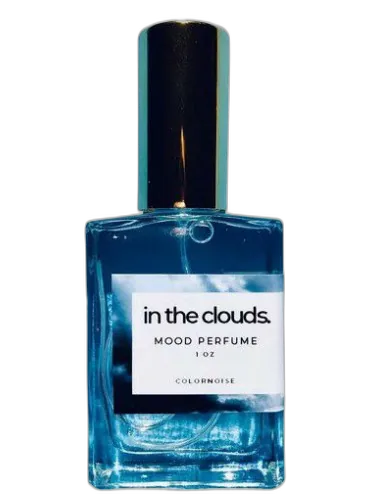
Colornoise
In The Clouds Colornoise
Shared top notes: watery notes

Victoria's Secret
Pink Fresh & Clean Chilled Victoria's Secret
Shared top notes: ice, mountain air
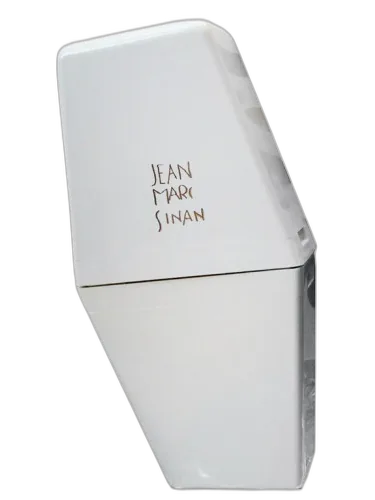
Jean-Marc Sinan
Air Jean-marc Sinan
Shared top notes: mountain air, watery notes