
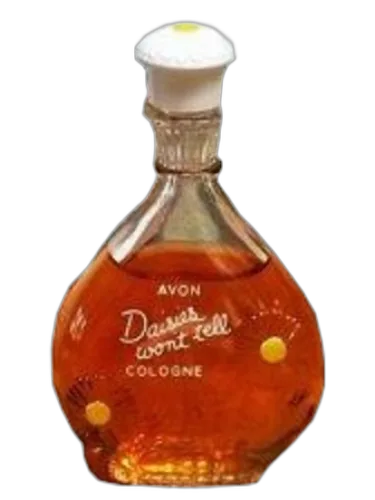

Daisies Won't Tell Avon
Fragrance Story
Daisies Won't Tell by Avon is a Floral Woody Musk fragrance for women. Daisies Won't Tell was launched in 1957. Top notes are Daisy and Yellow Water Lily; middle note is Talc; base note is Musk.
Composition Profile
About the Perfumer

Unknown Perfumer
Fragrance Notes
Top Notes
First impression · 15-30 min
 Daisy
Daisy
 Yellow Water Lily
Heart Notes
Core character · 2-4 hours
 Talc
Talc
Base Notes
Lasting impression · 4+ hours
 Musk
Musk
Character Profile
The Lover Archetype: Portrait of Daisies Won't Tell Avon
Essence
The person who cherishes Daisies Won’t Tell Avon is most closely aligned with The Innocent-a Jungian archetype embodying purity, optimism, and an enduring faith in simplicity. This fragrance, with its light, floral sweetness, suggests a soul who finds beauty in the uncomplicated, who resists cynicism, and who seeks harmony in both scent and spirit. The Innocent is not naive in the pejorative sense but rather possesses a deliberate, almost philosophical preference for gentleness over harshness, for softness over sharp edges.
Yet, like all archetypes, The Innocent has a shadow-a tendency toward escapism, an aversion to confronting deeper complexities, and at times, a fragility that resists the necessary darkness of growth.
Relationships
In love and friendship, they are tender-hearted, often the confidant, the listener, the one who remembers birthdays and brings soup when someone is ill. They attract others with their warmth, though they may struggle with boundaries, giving too much of themselves without asking for reciprocity. Their relationships thrive on mutual gentleness; they wither under cruelty or manipulation.
Romantically, they seek partners who share their idealism, who appreciate slow mornings and handwritten notes. Yet, their shadow may emerge here-they can be too trusting, too quick to forgive betrayals, mistaking endurance for virtue. Their greatest fear is disillusionment, the moment when the world proves harsher than they hoped.
Shadow
The fragility of The Innocent lies in their reluctance to engage with life’s inevitable thorns. When confronted with conflict, they may retreat into denial, smoothing over problems rather than facing them. Their optimism, if unchecked, can become a form of avoidance-a refusal to acknowledge that some wounds require more than sweetness to heal.
At their worst, they may grow passive, waiting for the world to be kind rather than asserting their own strength. They might cling to outdated ideals, resisting necessary change under the guise of preserving purity.
Conclusion
Their tastes are unpretentious but deliberate. They favor pastel colors, flowing fabrics, and natural textures-linen, cotton, the faintest touch of lace. Their home is filled with sunlight, fresh flowers, and well-loved books with dog-eared pages. They might collect teacups or pressed botanicals, finding joy in small, tactile pleasures. Music leans toward folk melodies, acoustic warmth, or the nostalgic crackle of vinyl records.
Philosophically, they believe in kindness as a guiding principle, in the goodness of people, in the idea that the world, though flawed, can be made softer through small acts of care. They are not blind to suffering, but they choose-sometimes stubbornly-to focus on what can be nurtured rather than what is broken.
Similar Fragrances
Fragrances with a comparable profile - shared accords, notes, and character.
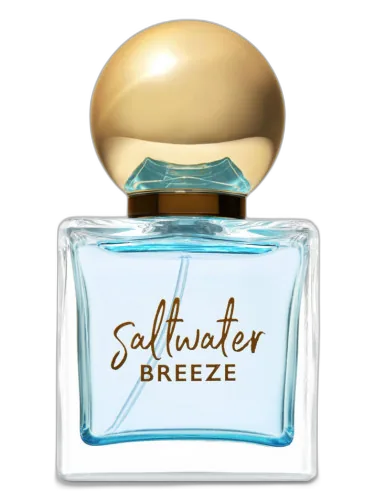
Bath & Body Works
Saltwater Breeze Bath & Body Works
Shared accords: aquatic, floral, fresh

Justin Bieber
The Key Justin Bieber
Shared accords: aquatic, floral, musky
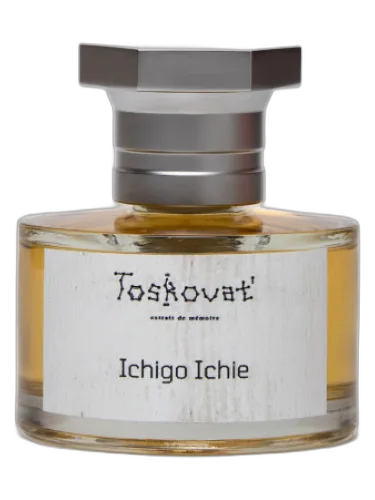
Toskovat'
Ichigo Ichie Toskovat'
Shared accords: aquatic, floral, fresh
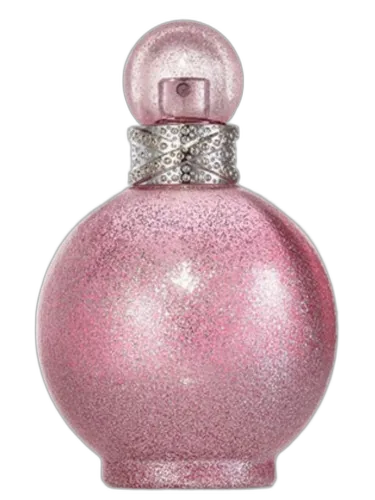
Britney Spears
Glitter Fantasy Britney Spears
Shared accords: floral, fresh, musky

L’Occitane Au Brésil
Brésil Brisa Reconfortante L’occitane Au Brésil
Shared accords: aquatic, floral, fresh