
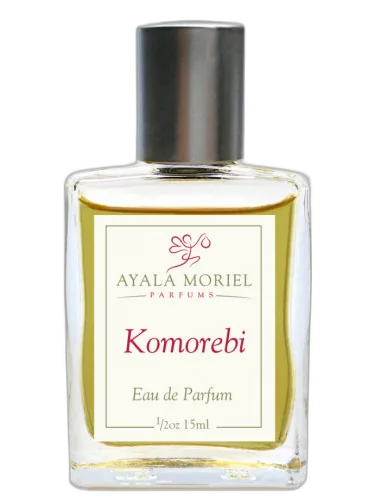

Komorebi Ayala Moriel
At a glance
Is Komorebi Ayala Moriel worth trying?
Komorebi by Ayala Moriel is a Woody Chypre fragrance for women and men.
- Best match
- Casual wear in Fall
- Performance feel
- Good longevity with Moderate sillage
- Signature profile
- aromatic, woody with Cottonwood (Poplar), Red Cedar, Fir
The first impression
Komorebi by Ayala Moriel is a Woody Chypre fragrance for women and men. Komorebi was launched in 2015. The nose behind this fragrance is Ayala Moriel.
What shapes the scent
The perfumer behind it

Ayala Moriel
Ayala Moriel is an independent perfumer and natural fragrance specialist based in Vancouver, Canada. Her olfactory style emphasizes botanical ingredients and complex, evocative compositions that often draw from nature, art, and cultural traditions. Notable creations from her catalog include the resinous and woody <3, the dark and licorice-forward Black Licorice, and the seasonal, earthy Autumn. Her work has helped define the modern natural perfumery movement, inspiring a deeper appreciation for plant-based scent artistry.
Notes pyramid
All Notes
Complete scent profile
 Cottonwood (Poplar)
 Red Cedar
 Fir
Fir
 Oakmoss
The mood it creates
The Sage Archetype: Portrait of Komorebi Ayala Moriel
Essence
To love Komorebi-Ayala Moriel’s fragrance-is to worship the quiet moments when sunlight filters through leaves, when time slows, and the world reveals itself in fragments of gold and shadow. The person who cherishes this scent is not one for clamor or spectacle. They are drawn to the liminal, the spaces between things, where meaning lingers like mist after dawn. Their archetype is the Sage, the seeker of wisdom, the observer who finds truth in stillness.
The Sage is a figure of contemplation, a mind attuned to the subtle harmonies of existence. They are not merely intelligent but perceptive, seeing patterns where others see chaos. Their philosophy is one of quiet reverence-they believe in the sacredness of the unseen, the slow unfurling of understanding.
Their tastes are refined but never ostentatious. They prefer the texture of handmade paper to glossy magazines, the depth of a single well-aged tea over the frenzy of a crowded café. Their style is understated-linen, wool, muted earth tones-clothing that moves with them rather than announcing their presence. They are drawn to minimalism not as an aesthetic trend but as a necessity, a way to strip away distraction and hear the whisper of their own thoughts.
In relationships, they are neither aloof nor overly sentimental. They value depth over breadth, preferring a few lifelong bonds to many fleeting ones. Conversations with them are slow, deliberate, often laced with silence. They do not rush to fill the air with words, and when they speak, it is with precision. Their love is steady, like the growth of roots beneath the soil-unseen but unshakable.
Shadow
Yet the Sage is not without their flaws. Their love of solitude can harden into isolation. Their habit of observation can become detachment, a reluctance to engage with life’s messier, more visceral aspects. They may fall into the trap of overthinking, mistaking contemplation for action, analysis for living.
At times, their stillness can be mistaken for coldness. They may struggle with spontaneity, with the raw, unfiltered emotions that others express freely. Their pursuit of wisdom can become a form of evasion-a way to avoid the vulnerability of being truly present in the moment.
Conclusion
Their greatest strength is their ability to see. Where others react, they observe. Where others judge, they question. They are the friend who listens without interruption, the thinker who weighs every angle before speaking. Their mind is a sanctuary of order, a refuge from the noise of the world.
They are drawn to disciplines that require patience-botany, calligraphy, meditation, the study of ancient texts. They find solace in rituals: the brewing of tea, the turning of pages, the slow walk through a forest where every leaf tells a story. Their wisdom is not the kind that shouts from podiums but the kind that settles into bones, shaping them over decades.
If you like this, try these
Fragrances with a comparable profile - shared accords, notes, and character.
M. Micallef
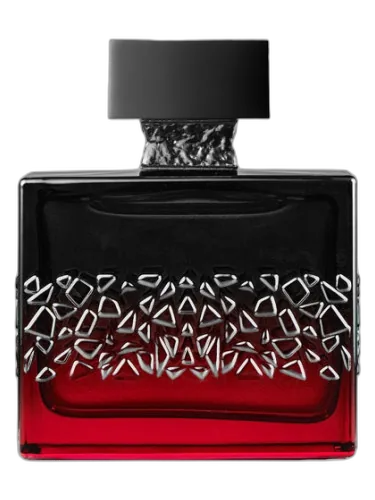
Redcolorado M. Micallef
Shared top notes: fir

Hermetica
Cedarise Hermetica
Shared accords: aromatic, woody

BORNTOSTANDOUT®
Hinoki Shower Borntostandout®
Shared accords: aromatic, woody
Pierre Guillaume Paris
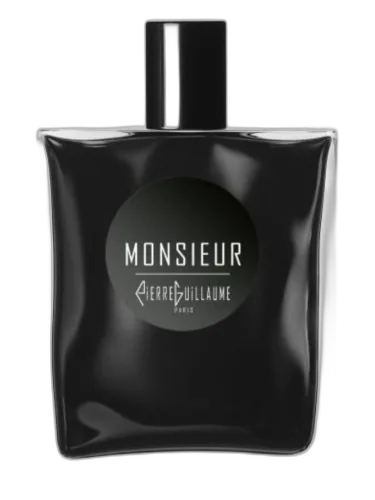
Monsieur Pierre Guillaume Paris
Shared top notes: oakmoss

Filigree & Shadow
Tell Me About The Forest (you Once Called Home) Filigree & Shadow
Shared accords: aromatic, woody