
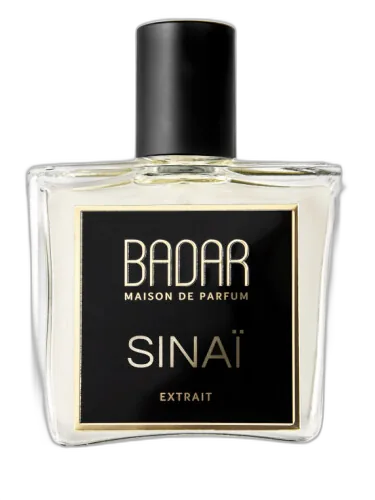

Sinaï Badar
Fragrance Story
Sinaï by Badar is a Oriental Woody fragrance for women and men. This is a new fragrance. Sinaï was launched in 2024. The nose behind this fragrance is Amelie Bourgeois. Top notes are elemi and Pink Pepper; middle notes are Saffron, Rose and Immortelle; base notes are Vanilla, Benzoin, Incense, Amber, Musk and Oud.
Composition Profile
About the Perfumer

Amelie Bourgeois
Amelie Bourgeois is a French perfumer known for her work with the niche houses Aether and Alexandre.J. Her style blends experimental, synthetic accords with natural elements, often exploring contrasts like citrus and musk or rose and alkanes. She created the Aether Oxyde and Carboneum compositions, as well as Alexandre.J’s Mandarine Sultane and Passion Bliss.
Fragrance Notes
Top Notes
First impression · 15-30 min
 elemi
elemi
 Pink Pepper
Heart Notes
Core character · 2-4 hours
 Saffron
 Rose
Rose
 Immortelle
Base Notes
Lasting impression · 4+ hours
 Vanilla
 Benzoin
 Incense
 Amber
Amber
 Musk
Oud
Musk
Oud
Sinaï Badar by Badar offers a distinctive olfactory experience that stands out from other fragrances in its category.
Crafted with the finest ingredients and a blend of traditional and modern perfumery techniques, this fragrance represents the pinnacle of the perfumer's art.
Sinaï Badar embodies the distinctive style of Badar while adding a unique chapter to their fragrance portfolio.
Character Profile
The Wanderer Archetype: Portrait of Sinaï Badar
Essence
To wear Sinaï Badar is to embrace the paradox of fire and stone-a fragrance that smolders with incense yet remains anchored in the austerity of desert winds. The person who chooses this scent is not one for fleeting pleasures or superficial adornments; they seek the weight of meaning, the slow burn of wisdom, and the solitude of the seeker. Their soul is most at home in the liminal spaces-between shadow and light, between the sacred and the profane.
Above all, they are defined by the Sage archetype-the relentless pursuer of truth, the one who listens to the whispers of history, philosophy, and the unseen. Like the desert from which their fragrance draws its name, they are both barren and fertile: barren in their rejection of hollow distractions, fertile in their capacity for deep thought and revelation. They do not merely consume knowledge; they distill it, turning raw experience into something potent and enduring.
Yet the Sage is not without their shadow. The same intellect that illuminates can also isolate. Their pursuit of understanding may harden into dogma, their love of solitude into misanthropy. They risk becoming the hermit who mistakes withdrawal for wisdom, forgetting that the deepest truths are often found in the friction of human connection.
Relationships
They are not an easy companion. Their friendships are few but unshakable, built over years of shared silence as much as conversation. They do not offer empty reassurances, but when they speak, their words carry the weight of genuine understanding. Romantic partners must accept that love, for them, is not a merging of selves but a mutual recognition of solitude-two travelers pausing at the same fire before continuing their separate journeys.
Their shadow emerges in intimacy. They may withhold vulnerability, rationalizing detachment as strength. They can be critical, mistaking their own perspective for objective truth. Yet when they soften-when they allow themselves to be flawed, uncertain-they reveal a tenderness that is all the more profound for its rarity.
Shadow
The greatest danger for them is the belief that wisdom is a possession rather than a process. They may grow rigid, dismissing new ideas as frivolous, retreating into the fortress of their own intellect. Their disdain for superficiality can curdle into contempt for those who do not meet their standards. The desert, after all, is a place of purification-but also of starvation.
To balance their nature, they must remember that the Sage’s true task is not to hoard knowledge but to share it-not from a pedestal, but from the shared ground of human frailty. The incense of Sinaï Badar does not rise for itself; it is an offering.
Conclusion
They are the one who walks the razor’s edge between enlightenment and isolation, between the fire that illuminates and the fire that consumes. Their life is not one of comfort but of meaning-a pilgrimage without a fixed destination. Sinaï Badar is their emblem: a scent that lingers, that demands attention, that cannot be ignored.
And perhaps, in the end, that is all they truly want-to be remembered not for their brilliance, but for their depth.
Similar Fragrances
Fragrances with a comparable profile - shared accords, notes, and character.

Santa Eulalia
Crocus Limited Edition Santa Eulalia
Shared accords: amber, aromatic, balsamic

Pocket Parfum
Travis Pocket Parfum
Shared accords: amber, balsamic, musky
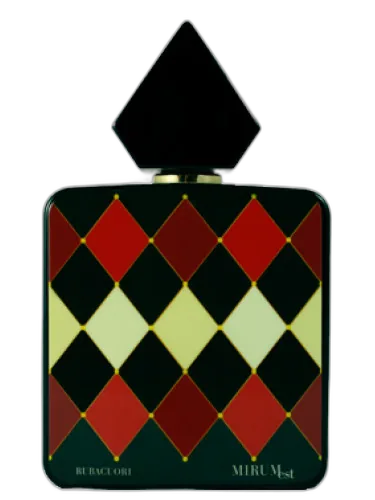
Mirum
Rubacuori Mirum
Shared accords: amber, aromatic, balsamic

WIDIAN
Gold Ii Widian
Shared accords: amber, aromatic, balsamic

WIDIAN
Gold Ii Sahara Widian
Shared accords: amber, aromatic, balsamic