


Amber & Argan Bath & Body Works
At a glance
Is Amber & Argan Bath & Body Works worth trying?
Amber & Argan by Bath & Body Works is a Oriental fragrance for women.
- Best match
- Evening wear in Fall
- Performance feel
- Good longevity with Moderate sillage
- Signature profile
- amber, aromatic, leather with Amber, Argan, Suede
The first impression
Amber & Argan by Bath & Body Works is a Oriental fragrance for women. Amber & Argan was launched in 2017.
What shapes the scent
The perfumer behind it

Unknown Perfumer
Notes pyramid
All Notes
Complete scent profile
 Amber
Amber
 Argan
Argan
 Suede
Suede
 Quince
The mood it creates
The Innocent Archetype: Portrait of Amber & Argan Bath & Body Works
Essence
At the heart of this person’s essence lies the Caregiver archetype, a figure defined by warmth, generosity, and an instinct to nurture. Amber & Argan-a fragrance rich, enveloping, and subtly sweet-mirrors their nature: comforting yet grounded, inviting yet self-assured. They are the kind of person who draws others in, not through force or spectacle, but through an effortless magnetism of presence. Their scent lingers like a memory of safety, a reminder of home.
Style & Aesthetic
Their world is one of tactile pleasures and quiet rituals. They prefer environments that feel lived-in-soft blankets draped over well-worn couches, shelves lined with books whose spines have been cracked open many times, kitchens where spices simmer in oils. They are drawn to textures: the roughness of hand-thrown pottery, the weight of linen, the warmth of wood grain beneath fingertips.
They move through life with an unhurried grace, finding satisfaction in the act of sustaining-whether that means cooking a meal for friends, tending to houseplants, or simply listening with undivided attention. Their home is not a showpiece but a sanctuary, where every object serves a purpose beyond aesthetics.
Their aesthetic is earthy and unpretentious, favoring neutral tones, natural fabrics, and pieces that age well. They might wear a well-loved leather jacket, a chunky knit sweater, or a simple gold ring passed down through generations. Their wardrobe is built for comfort, not trends, yet there is always an undercurrent of quiet elegance-a scarf draped just so, a pair of boots polished but not stiff.
In food, they prefer depth over novelty-slow-cooked stews, dark chocolate with sea salt, spiced teas. They appreciate the alchemy of time, the way flavors deepen when allowed to meld. Music, too, leans toward the soulful and resonant: folk ballads, jazz standards, the kind of voice that sounds like it has known both sorrow and joy.
Philosophy & Values
To them, kindness is not a passive virtue but an active practice. They believe in the small, daily acts of love-the remembered birthday, the offered cup of tea, the willingness to sit with someone in silence when words fail. Their morality is not dogmatic but relational; they judge actions by their impact, not by abstract rules.
Yet beneath this generosity lies a quiet strength, a refusal to be taken for granted. They understand that care must be reciprocal, and when pushed too far, they will retreat rather than martyr themselves. Their boundaries are soft but firm, like the edges of a well-trodden path.
Relationships
In love and friendship, they are steadfast but not possessive. They do not demand center stage but instead create spaces where others feel seen. Romantic partners are drawn to their grounded sensuality-the way they touch with intention, the way their laughter feels like sunlight through a window.
Yet their very warmth can attract those who seek to take without giving. Their shadow emerges when their nurturing becomes compulsive, when they mistake self-sacrifice for virtue. Resentment may simmer beneath the surface, unspoken but corrosive. They must learn that to care for others fully, they must first care for themselves.
Shadow
The danger of the Caregiver is the slow erosion of self in service to others. When unbalanced, they may become passive-aggressive, swallowing their needs until they erupt in unexpected ways-a sharp remark, a sudden withdrawal. They may cling to relationships out of habit rather than genuine connection, fearing solitude more than stagnation.
Their greatest challenge is to embrace their own desires without guilt, to recognize that self-care is not selfishness but sustainability. Only then can their warmth remain a gift, not a burden.
Conclusion
This person is not defined by grand gestures but by the quiet accumulation of moments-the way they remember how you take your coffee, the way their scent lingers on a borrowed sweater. They are proof that strength can be soft, that care can be fierce. In a world that often mistakes loudness for substance, they are a reminder that the deepest bonds are forged in the steady glow of attention.
Yet they must never forget: to nurture others, they must also nurture themselves. For even the warmest fire must be fed to keep burning.
If you like this, try these
Fragrances with a comparable profile - shared accords, notes, and character.

Les Nez
L'antimatiere Les Nez
Shared top notes: amber

Abbott New York City
Telluride Abbott New York City
Shared top notes: amber, suede

TRNP
Lyonesse Trnp
Shared top notes: amber
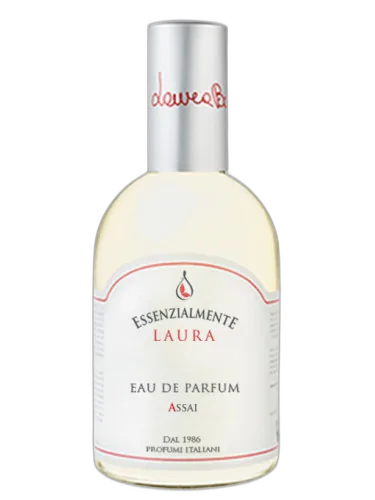
Essenzialmente Laura
Assai Essenzialmente Laura
Shared top notes: amber

Scent Trunk
Stroopwafel Scent Trunk
Shared top notes: amber