
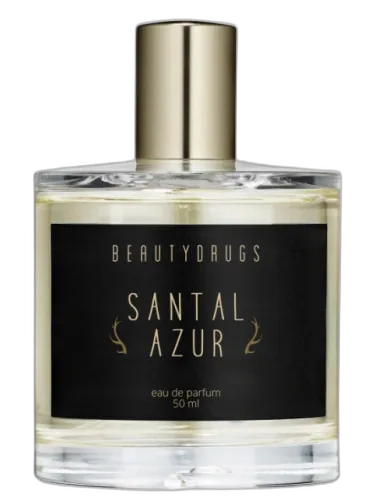

Santal Azur Beautydrugs
At a glance
Is Santal Azur Beautydrugs worth trying?
Santal Azur by Beautydrugs is a Woody Aquatic fragrance for women and men.
- Best match
- Evening wear in Fall
- Performance feel
- Good longevity with Moderate sillage
- Signature profile
- woody, fresh spicy, musky with Pink Pepper, Black Pepper, Coriander
The first impression
Santal Azur by Beautydrugs is a Woody Aquatic fragrance for women and men. Santal Azur was launched in 2020. The nose behind this fragrance is Hélène Prévot. Top notes are Pink Pepper, Black Pepper, Coriander, Nutmeg and Elemi resin; middle notes are Lavender and Cedar; base notes are Dry Wood, Cashmere Musk, Sandalwood, Moss, Amber and Labdanum.
What shapes the scent
The perfumer behind it

Hélène Prévot
Hélène Prévot is a French perfumer who has created fragrances for multiple brands including Artist'o, Beautydrugs, and ETIKK Fragrances. Her portfolio includes Ciel, Nue, and Été for Artist'o, as well as Broadway, Cassis Fig, and Santal Azur for Beautydrugs. She also composed Pepper Wood and Tea Garden for ETIKK Fragrances.
Notes pyramid
Top Notes
First impression · 15-30 min
 Pink Pepper
 Black Pepper
 Coriander
 Nutmeg
Elemi resin
Nutmeg
Elemi resin
Heart Notes
Core character · 2-4 hours
 Lavender
 Cedar
Cedar
Base Notes
Lasting impression · 4+ hours
 Dry Wood
Cashmere Musk
Dry Wood
Cashmere Musk
 Sandalwood
Moss
Sandalwood
Moss
 Amber
Amber
 Labdanum
The mood it creates
The Sage Archetype: Portrait of Santal Azur Beautydrugs
Essence
A person drawn to Santal Azur Beautydrugs is not merely seeking a scent-they are curating an aura. The fragrance, with its blend of creamy sandalwood, crisp citrus, and a whisper of spice, speaks to a soul who values depth, refinement, and a quiet magnetism. This is not the perfume of someone who clamors for attention, but of one who commands it effortlessly through presence alone.
They are, at their core, a Sage-the Jungian archetype of wisdom, introspection, and the pursuit of truth. The Sage thrives on knowledge, not for vanity, but for the sheer pleasure of understanding the world in all its complexity. They are the observer, the thinker, the one who listens more than they speak, yet when they do, their words carry weight.
Style & Aesthetic
Their tastes are deliberate, never accidental. They favor minimalist elegance-linen shirts that drape just so, a well-worn leather journal, a single piece of statement jewelry that carries personal meaning. Their home is an extension of their mind: shelves lined with philosophy, art books, and rare first editions; a single orchid in a ceramic pot; a record player spinning jazz or ambient compositions. They appreciate craftsmanship, the kind that reveals itself slowly, like the layers of their beloved fragrance.
Philosophically, they are drawn to existentialism and Stoicism-not as rigid doctrines, but as frameworks for navigating life’s uncertainties. They believe in the power of self-reflection, in questioning assumptions, in the idea that meaning is not given but forged. Their values are rooted in authenticity; they despise pretense, though they are not immune to its occasional lure.
Relationships
They do not collect friends; they cultivate them. Their inner circle is small, composed of those who can match their intellectual curiosity or challenge their perspectives. Romantic partners must be more than lovers-they must be interlocutors, capable of sparring in conversation as much as melting into shared silence.
Yet, intimacy does not come easily to them. The Sage’s shadow is detachment, a tendency to retreat into the mind when emotions grow too turbulent. They may rationalize their way out of vulnerability, mistaking analysis for connection. Their partners sometimes accuse them of being emotionally elusive, and they, in turn, resent being misunderstood.
Shadow
The Sage’s greatest strength-their intellect-can also be their downfall. There is a fine line between wisdom and condescension, and they occasionally cross it. In moments of frustration, they may dismiss others as "unthinking" or "superficial," forgetting that not all truths must be dissected to be felt. Their pursuit of knowledge can become a form of escapism, a way to avoid the messiness of raw, unfiltered experience.
They are not unaware of this flaw. In fact, it gnaws at them in quiet hours. But self-awareness does not always translate to change-sometimes, it merely deepens the irony of their own contradictions.
Conclusion
Their lifestyle is one of measured indulgence. They savor slow mornings with black coffee and a book, long walks through cities or forests (both offer textures for their mind to unravel), and the occasional late-night debate with a kindred spirit. They are not ascetics, but neither are they hedonists-pleasure, for them, must be earned, or at least understood.
Work is either a vocation or a necessary evil. If they are lucky, they have found a career that allows them to think deeply-writing, academia, design, psychology. If not, they carve out intellectual pursuits in their private hours, treating them as sacred.
If you like this, try these
Fragrances with a comparable profile - shared accords, notes, and character.
Perry Ellis
Perry Ellis Eau De Toilette Perry Ellis
Shared top notes: coriander
Ormonde Jayne
Xian Ormonde Jayne
Shared top notes: black pepper, nutmeg

Luxor Fragrances
Gratitude Luxor Fragrances
Shared heart notes: cedar, lavender
Adam Powell
Vicious Adam Powell
Shared heart notes: cedar, lavender
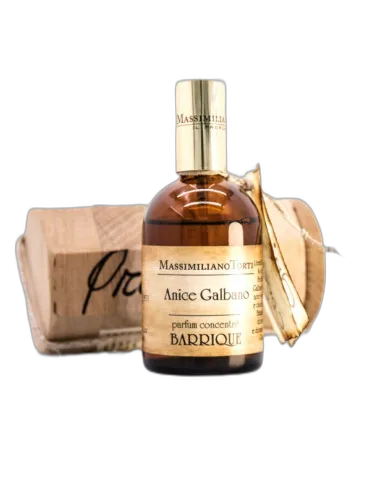
Il Profumiere
Anice Galbano Il Profumiere
Shared top notes: nutmeg