
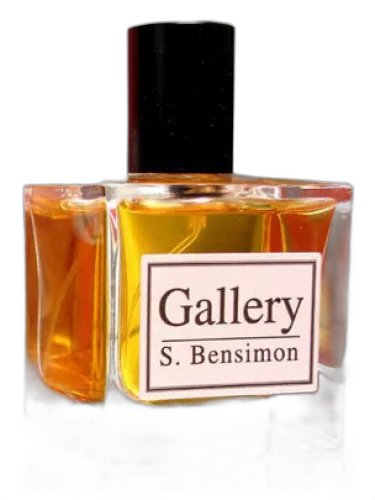

Gallery S. Bensimon Bensimon
At a glance
Is Gallery S. Bensimon Bensimon worth trying?
Gallery S.
- Best match
- Evening, Special Occasion wear in Fall, Winter
- Performance feel
- Very Good longevity with Strong sillage
- Signature profile
- vanilla, citrus, amber with Lavender, Amalfi Lemon, Bergamot
The first impression
Gallery S. Bensimon by Bensimon is a Oriental Woody fragrance for women. Gallery S. Bensimon was launched in 2011. The nose behind this fragrance is Benoist Lapouza. Top notes are Lavender, Amalfi Lemon, Bergamot and Orange; middle notes are Iris and Opoponax; base notes are Vanille, Amber, Vetiver, Patchouli, Virginia Cedar and Benzoin.
What shapes the scent
The perfumer behind it

Benoist Lapouza
Benoist Lapouza has contributed to the ALYSONOLDOINI collection, crafting fragrances such as Black Violet, Crystal Oud, Cuir D'encens, Marine Vodka, Marsiglia Musk, Oranger Moi, Rhum D'hiver, and Rose Profond. His work spans a variety of olfactory families, from rich leathers and ouds to fresh marine and citrus notes. Lapouza's style is characterized by a refined balance of traditional and contemporary influences.
Notes pyramid
Top Notes
First impression · 15-30 min
 Lavender
 Amalfi Lemon
 Bergamot
 Orange
Heart Notes
Core character · 2-4 hours
 Iris
Iris
 Opoponax
Base Notes
Lasting impression · 4+ hours
 Vanille
 Amber
Amber
 Vetiver
 Patchouli
Virginia Cedar
Patchouli
Virginia Cedar
 Benzoin
The mood it creates
The Lover Archetype: Portrait of Gallery S. Bensimon Bensimon
Essence
To wear Gallery S. Bensimon Bensimon is to embrace a fragrance that is warm, woody, and subtly sensual-a scent that does not shout but lingers, inviting closeness. The person who chooses this fragrance is drawn to the quiet poetry of life, to the textures of experience rather than its loud declarations. They embody the Lover archetype, not in the trivial sense of mere romance, but in the Jungian sense of one who seeks deep connection-to people, to beauty, to the essence of things.
This individual is attuned to the aesthetics of existence. They are not merely a spectator but a participant in the art of living. Their tastes are refined but never ostentatious; they prefer the understated elegance of natural materials-linen, aged leather, unpolished wood. Their home is a sanctuary, filled with objects that carry meaning: a well-worn book, a hand-thrown ceramic bowl, a single stem in a slender vase. They are drawn to the tactile, the sensory, the intimate.
They move through the world with a quiet magnetism, not because they demand attention, but because they possess an intrinsic allure. Their relationships are deep rather than numerous. They do not collect acquaintances; they cultivate bonds. Their love is not possessive but nourishing-they understand that to love is to witness, not to own.
Style & Aesthetic
They are not driven by ambition in the traditional sense. Their work, if it aligns with their values, is an extension of their being-perhaps they are an artist, a curator, a writer, or simply someone who brings grace to whatever they do. They do not chase success; they seek meaning.
Their presence is calming, almost meditative. They listen more than they speak, and when they do speak, their words are measured, weighted with thought. They are not impulsive, but neither are they rigid-they flow like water, adapting without losing their essence.
Philosophy & Values
For them, life is not a problem to be solved but a mystery to be savored. They reject the cold utilitarianism of modern existence, favoring instead a philosophy of presence. They believe in the sacredness of small moments: the way light falls across a table in late afternoon, the weight of a lover’s hand in theirs, the silence between notes in a piece of music.
They value authenticity above all else. Pretense repels them; they have little patience for social posturing. Yet they are not naive-they know the world is often harsh, but they choose, consciously, to seek the beautiful anyway. Their resilience lies in their refusal to let cynicism harden them.
Shadow
But the Lover, like all archetypes, has its shadow. Their pursuit of beauty can tip into escapism-a retreat into the sensual as a way to avoid life’s harsher demands. They may struggle with commitment, not out of fear of intimacy, but because they fear the mundane will suffocate the magic. At their worst, they become passive, waiting for life to happen to them rather than shaping it.
There is also a quiet pride in their discernment. They may dismiss what is popular or mass-produced as vulgar, not always recognizing that their own tastes are, in their way, another form of elitism. Their aversion to the ordinary can make them impatient with those who do not share their sensibilities.
Conclusion
To love deeply is to risk vulnerability, and this person knows that risk well. They are both strong and fragile, grounded yet dreamlike. Their flaw is their strength taken to excess: their sensitivity can become a shield, their idealism a refusal to engage with the imperfect.
Yet in their best moments, they remind us that life is not merely functional-it is also to be felt, tasted, cherished. They are the quiet flame in a world that often forgets to pause, to touch, to truly see. And in that, they are indispensable.
If you like this, try these
Fragrances with a comparable profile - shared accords, notes, and character.

Toni Cabal
Imsmart Toni Cabal
Shared top notes: bergamot, lavender
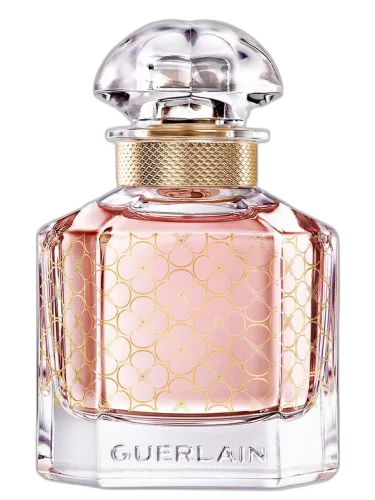
Guerlain
Mon Guerlain Limited Edition 2019 Guerlain
Shared top notes: bergamot, lavender
DSH Perfumes
Un Soir D'ete Provencal Dsh Perfumes
Shared top notes: amalfi lemon, bergamot, lavender

Linari
Eleganza Luminosa Linari
Shared top notes: amalfi lemon, bergamot, orange
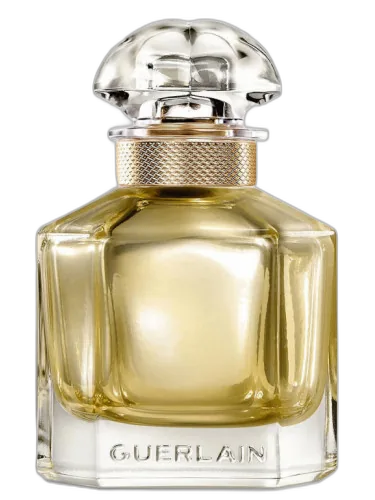
Guerlain
Mon Guerlain Gold Collector Edition Guerlain
Shared top notes: bergamot, lavender