


La Léthé Black Phoenix Alchemy Lab
At a glance
Is La Léthé Black Phoenix Alchemy Lab worth trying?
La Léthé by Black Phoenix Alchemy Lab is a Oriental fragrance for women and men.
- Best match
- Evening wear in Fall
- Performance feel
- Excellent longevity with Strong sillage
- Signature profile
- musky, floral, sweet with Musk, Tobacco, Nutmeg
The first impression
La Léthé by Black Phoenix Alchemy Lab is a Oriental fragrance for women and men.
What shapes the scent
The perfumer behind it

Elizabeth Barrial
Elizabeth Barrial is a perfumer associated with Black Phoenix Alchemy Lab, where she creates evocative, atmospheric fragrances. Her work on La Léthé demonstrates a talent for blending dark, mysterious notes with poetic sensibility. She excels at crafting scents that tell a story through bold yet balanced compositions. Her style resonates with those who seek depth and artistry in niche perfumery.
Notes pyramid
All Notes
Complete scent profile
 Musk
Musk
 Tobacco
 Nutmeg
 Black Orchid
 Hemlock
 Labdanum
 Amber
Amber
The mood it creates
The Lover Archetype: Portrait of La Léthé Black Phoenix Alchemy Lab
Essence
The person who is drawn to La Léthé by Black Phoenix Alchemy Lab embodies the Seeker-an archetype defined by an insatiable thirst for transformation, mystery, and the dissolution of boundaries. The fragrance itself, named after the river of forgetfulness in Greek myth, suggests a desire to shed the past, to immerse in the unknown, and to be reborn through sensory and existential exploration. The Seeker is not content with surface truths; they crave depth, even if it means wandering through darkness to find it.
Style & Aesthetic
Their aesthetic is a blend of elegance and decay-a gothic romanticism that embraces both beauty and transience. They might favor dark, flowing fabrics, antique jewelry, or subtle, weathered textures that suggest age and mystery. Their wardrobe is not about trends but about evoking a mood, a narrative. They appreciate the patina of time, the way leather softens with wear or silver tarnishes with neglect.
In scent, they gravitate toward the hypnotic and enigmatic: incense, opium, myrrh, and absinthe-notes that blur the line between intoxication and revelation. La Léthé, with its narcotic blend of opium and oblivion, is their olfactory manifesto: a fragrance that does not merely adorn but transforms.
They thrive in environments that mirror their inner complexity-dimly lit bookshops, midnight cafés, overgrown gardens. Their home is a sanctuary of curiosities: old books, dried flowers, tarot decks, and handwritten notes tucked between pages. They may keep odd hours, finding inspiration in the quiet of 3 AM, when the world feels thin and permeable.
Creativity is their lifeline, whether through writing, music, or visual art. But they must guard against the Seeker’s curse: the paralysis of endless searching. They may flit from one passion to another, never fully committing, always fearing that the next revelation lies just beyond their grasp.
Philosophy & Values
This individual views life as an alchemical process-a series of trials and revelations meant to refine the soul. They are drawn to the liminal, the spaces between waking and dreaming, memory and oblivion. Their philosophy is fluid, shaped by paradox: they believe in both fate and free will, in the necessity of suffering and the ecstasy of transcendence.
They value authenticity above all, despising pretense or forced conformity. Yet, their pursuit of truth is not dogmatic; it is intuitive, guided by sensations, symbols, and the whispers of the unconscious. They may be drawn to esoteric traditions-alchemy, mysticism, or depth psychology-but they resist rigid systems, preferring a personal, experiential gnosis.
Relationships
They are magnetic but elusive, drawing others in with their intensity yet maintaining an aura of solitude. Their relationships are deep but few, for they cannot tolerate superficial connections. They seek partners and friends who are unafraid of shadows, who understand that love is not always light but sometimes a shared descent into the abyss.
Yet, their very depth can become a barrier. They may struggle with emotional availability, retreating into their inner world when vulnerability feels too dangerous. Their shadow emerges when their quest for transcendence becomes escapism-when they use mystery as a shield against real intimacy.
Shadow
The Seeker’s brilliance is also their peril. When unbalanced, their hunger for transformation becomes a refusal to engage with the present. They may romanticize suffering, mistaking melancholy for wisdom. Their disdain for the mundane can make them impatient with life’s necessary banalities-paying bills, maintaining routines, tending to the body as well as the soul.
At worst, they become the Wanderer who never arrives, the mystic who mistakes obscurity for profundity. They must learn that forgetting (Léthé) is only half the journey; one must also return, bearing the gifts of the depths.
Conclusion
The lover of La Léthé is neither purely light nor shadow, but a shifting interplay of both. They are the philosopher in the dark, the poet of thresholds, the one who drinks from the river of forgetting not to erase the self, but to remember what lies beneath. Their challenge-and their power-is to weave their visions into the fabric of the everyday, to be both wanderer and rooted, seeker and found.
If you like this, try these
Fragrances with a comparable profile - shared accords, notes, and character.

Etat Libre d'Orange
Jasmin Et Cigarette Etat Libre D'orange
Shared top notes: amber, musk, tobacco
Gallagher Fragrances
Tobacco Silk Gallagher Fragrances
Shared top notes: musk, tobacco
Soivohle
Tobacco & Tulle Soivohle
Shared top notes: amber, musk, tobacco

Anna Borisova Parfum
Contradiction Anna Borisova Parfum
Shared top notes: amber, labdanum, musk
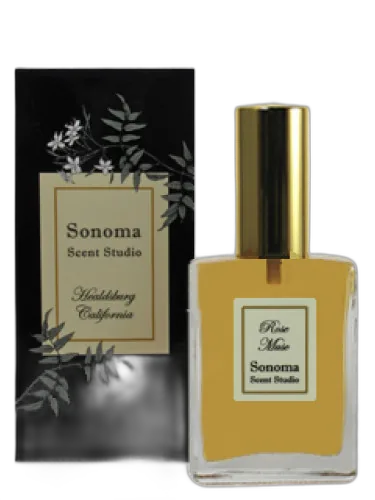
Sonoma Scent Studio
Rose Musc Sonoma Scent Studio
Shared top notes: amber, musk