

Libertine Black Phoenix Alchemy Lab
At a glance
Is Libertine Black Phoenix Alchemy Lab worth trying?
Libertine by Black Phoenix Alchemy Lab is a Floral Woody Musk fragrance for women and men.
- Best match
- Evening wear in Fall
- Performance feel
- Good longevity with Moderate sillage
- Signature profile
- woody, powdery, citrus with Palisander Rosewood, Bergamot, Red Sandalwood
The first impression
Libertine by Black Phoenix Alchemy Lab is a Floral Woody Musk fragrance for women and men.
What shapes the scent
The perfumer behind it

Notes pyramid
All Notes
Complete scent profile
 Palisander Rosewood
 Bergamot
 Red Sandalwood
 Musk
Musk
 Chamomile
 Violet
 Primrose
The mood it creates
The Sage Archetype: Portrait of Libertine Black Phoenix Alchemy Lab
Essence
To wear Libertine by Black Phoenix Alchemy Lab is to embrace a scent that defies convention-dark, intoxicating, and layered with contradictions. It is the fragrance of someone who refuses to be easily defined, who finds beauty in the interplay of shadow and light. The dominant archetype here is the Rebel, but not in its purely destructive form; rather, this is a Rebel who has evolved into a Sage, one who challenges norms not for chaos’ sake, but in pursuit of deeper truths.
This person is drawn to the unconventional, the obscure, the intellectually and sensually rich. They are not content with surface-level pleasures; they crave experiences that provoke thought, that unsettle and exhilarate in equal measure. Their tastes are eclectic-perhaps they collect rare books, favor avant-garde cinema, or immerse themselves in esoteric philosophies. Their style reflects this: a mix of gothic romanticism and modern minimalism, favoring deep blacks, rich textures, and subtle, deliberate details.
They are not a mere contrarian. Their rebellion is purposeful. They reject dogma not out of spite, but because they have seen how rigid structures suffocate individuality and truth. They value freedom above all else-freedom of thought, of expression, of being. Yet, they are not anarchic; they understand that true liberty requires discipline, that one must master oneself before defying the world.
Philosophy & Values
Their philosophy is a blend of existentialism and mysticism. They believe in self-creation, the idea that identity is not fixed but forged through choices. Yet, they also sense something numinous beneath the surface of life-an unseen order, a hidden pattern. They may be drawn to alchemy, not as superstition, but as metaphor: the transformation of base experience into wisdom.
They despise hypocrisy and performative virtue. Authenticity is their creed. If they are cruel, it is with brutal honesty; if they are kind, it is with no expectation of reward. They have little patience for small talk, for social niceties that mask emptiness. Their relationships are intense, often few in number but profound in depth. They attract those who are equally unafraid of darkness, who understand that love is not always gentle-sometimes it is a fire that refines.
Shadow
Yet, every strength has its shadow. Their relentless pursuit of authenticity can tip into dogmatism of their own-a refusal to accept that others may find meaning in conventions they disdain. Their sharp intellect can become a weapon, cutting down those who think differently rather than engaging with them.
They may struggle with isolation, not just as a choice but as a consequence of their own intensity. Few can match their depth, and so they often withdraw, mistaking solitude for strength when, at times, it is merely fear-fear of being misunderstood, of vulnerability.
Their greatest flaw, perhaps, is the temptation of excess. They walk the edge of experience, drawn to the forbidden, the extreme. What begins as exploration can become self-destruction-a dive into hedonism or cynicism that erodes their higher ideals.
Conclusion
They are a paradox: fiercely independent yet deeply connected to the hidden threads of existence. They challenge the world not to tear it down, but to reveal what lies beneath. Their flaw is their strength taken too far-their brilliance can blind, their honesty can wound, their freedom can become a cage of their own making.
But when balanced, they are a force-a beacon for those who dare to think, to feel, to live beyond the ordinary. They are the Libertine in the truest sense: free, not from morality, but from illusion.
If you like this, try these
Fragrances with a comparable profile - shared accords, notes, and character.
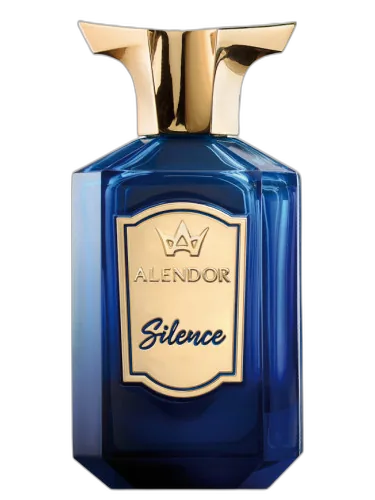
Alendor Perfumes
Silence Alendor Perfumes
Shared top notes: bergamot, musk

Zara
Linen Musk Zara
Shared top notes: bergamot, musk

Christian Provenzano Parfums
Santal Indien Christian Provenzano Parfums
Shared top notes: bergamot
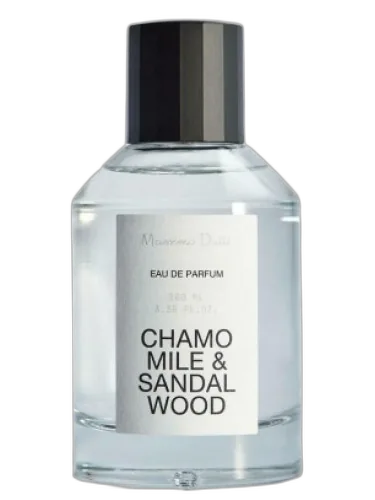
Massimo Dutti
Chamomile & Sandalwood Massimo Dutti
Shared top notes: bergamot, chamomile

Brocard
Nordway Polar Brocard
Shared top notes: bergamot, musk, palisander rosewood