

Eau D’e Bogue
Fragrance Story
Eau d’E by Bogue is a Aromatic Spicy fragrance for women and men. Eau d’E was launched in 2012. The nose behind this fragrance is Antonio Gardoni.
Composition Profile
About the Perfumer

Antonio Gardoni
Antonio Gardoni is an Italian perfumer known for his bold, avant-garde creations. He has worked with niche houses such as Azman, Berceuse Parfum, and Bogue, where he crafted complex scents like Risk, Allegretto 7.2, and Douleur. His fragrances often feature unconventional materials and dense, evolving structures.
Fragrance Notes
All Notes
Complete scent profile
 Cypress
 Lavender
 Spicy Notes
 Green Notes
 Cloves
 Castoreum
 Woody Notes
Eau D’e Bogue by Bogue offers a distinctive olfactory experience that stands out from other fragrances in its category.
Crafted with the finest ingredients and a blend of traditional and modern perfumery techniques, this fragrance represents the pinnacle of the perfumer's art.
Eau D’e Bogue embodies the distinctive style of Bogue while adding a unique chapter to their fragrance portfolio.
Character Profile
The Alchemist Archetype: Portrait of Eau D’e Bogue
Essence
The person who cherishes Eau D’e Bogue is an embodiment of the Alchemist-a seeker who transforms the mundane into the extraordinary. Like the perfumer who blends disparate notes into a singular, complex fragrance, this individual thrives on synthesis, experimentation, and the pursuit of hidden truths. They are not content with surface impressions; they dig, dissect, and reconstruct reality in their own image. The Alchemist is both scientist and mystic, drawn to the liminal spaces where contradictions coexist.
Style & Aesthetic
Their home is a temple of sensory exploration. A vintage alembic might sit beside a stack of poetry collections; the kitchen is stocked with obscure spices and single-origin coffee. They cook not just to eat but to experiment-pairing unexpected flavors, testing textures, always in search of the sublime.
They thrive in cities where history and modernity collide-Lisbon, Berlin, Kyoto-places where decay and innovation exist in dialogue. They might work in a creative field-perfumery, design, philosophy-or they might reject traditional careers entirely, preferring freelance projects that allow for reinvention.
Relationships
In relationships, they are magnetic but demanding. They seek partners who can match their intellectual and emotional depth, who are unafraid of ambiguity. Their love language is debate, shared obsessions, and the silent understanding that comes from mutual curiosity. They are fiercely loyal but will not tolerate stagnation-boredom is their greatest enemy.
Yet, their intensity can be overwhelming. They expect others to keep up with their ever-shifting interests, and when they feel misunderstood, they retreat into solitude. Their shadow emerges in moments of elitism-a subtle disdain for those who lack their depth of perception. They may dismiss conventional pleasures as "banal," forgetting that not everyone seeks transcendence in every sip of wine or whiff of perfume.
Shadow
The Alchemist’s greatest flaw is their occasional descent into Hermit-like arrogance. When their experiments fail or their insights go unappreciated, they may withdraw into intellectual superiority, convinced that the world is not ready for their vision. This isolation can calcify into cynicism, a belief that only they truly "see" while others remain blind.
Yet, even this flaw is a twisted reflection of their strength. Their refusal to conform is what makes them extraordinary, but it also risks alienating them from the very connections they crave. The challenge for the Alchemist is to temper their idealism with patience-to recognize that transformation is a slow, collaborative process, not a solitary revelation.
Conclusion
The lover of Eau D’e Bogue is never satisfied, and that is both their curse and their gift. They are always distilling, refining, searching for the next layer of meaning. Their life is a work in progress, an unfinished symphony of scents, ideas, and experiences.
To meet them is to be challenged-to question your own assumptions, to see the world through a sharper lens. But to know them deeply is to understand that their restlessness is not a flaw but a form of devotion. They are the modern alchemists, turning the lead of ordinary existence into the gold of a life fully lived.
Similar Fragrances
Fragrances with a comparable profile - shared accords, notes, and character.

Maiora Parfum
Shady Maiora Parfum
Shared accords: aromatic, fresh spicy, green
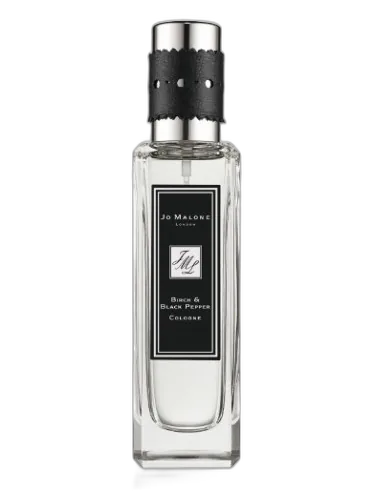
Jo Malone London
Rock The Ages Birch & Black Pepper Jo Malone London
Shared accords: aromatic, fresh spicy, leather

Step Aboard
Transitions Gate Clipper Limited Edition Step Aboard
Shared accords: aromatic, fresh spicy, lavender

Carven
Carven L'eau Intense Carven
Shared accords: aromatic, fresh spicy, green

One Day
011 Treewalk One Day
Shared accords: aromatic, fresh spicy, green