


Zelen Boka
At a glance
Is Zelen Boka worth trying?
Zelen by Boka is a fragrance for women and men.
- Best match
- Casual wear in Summer
- Performance feel
- Good longevity with Moderate sillage
- Signature profile
- citrus, woody, aromatic with Lime, Yuzu, Bergamot
The first impression
Zelen by Boka is a fragrance for women and men. This is a new fragrance. Zelen was launched in 2023. The nose behind this fragrance is Boris Zrnic. Top notes are Lime, Yuzu and Bergamot; middle notes are Pink Pepper, Beeswax and Cardamom; base notes are Haitian Vetiver, Mysore Sandalwood and Virginia Cedar.
What shapes the scent
The perfumer behind it

Boris Zrnic
Boris Zrnic is a Croatian perfumer who created Suze and Zelen for the brand Boka. These fragrances reflect his interest in Mediterranean and herbal accords, often blending fresh green notes with deeper, resinous undertones. Zrnic’s style is minimalist yet evocative, rooted in natural simplicity.
Notes pyramid
Top Notes
First impression · 15-30 min
 Lime
Lime
 Yuzu
Yuzu
 Bergamot
Heart Notes
Core character · 2-4 hours
 Pink Pepper
 Beeswax
 Cardamom
Base Notes
Lasting impression · 4+ hours
Haitian Vetiver
 Mysore Sandalwood
Virginia Cedar
Mysore Sandalwood
Virginia Cedar
The mood it creates
The Lover Archetype: Portrait of Zelen Boka
Essence
Zelen Boka is a fragrance that evokes the untamed-crushed green leaves, salt-kissed air, the mineral tang of stone. It is neither sweet nor comforting, but alive with the sharpness of wilderness. The person who chooses this scent does not seek to seduce or charm; they seek to awaken. Their presence is not warm, but invigorating-like stepping into a wind that clears the mind.
Style & Aesthetic
Their clothing is simple, functional, often in muted tones that do not distract from the world around them. They favor natural fabrics-linen, wool, cotton-things that age well, that bear the marks of use without losing integrity.
Their surroundings reflect the same ethos: uncluttered spaces, objects chosen for utility and quiet beauty. A well-worn book, a piece of driftwood, a single candle. They do not collect things for the sake of possession; everything must serve a purpose, even if that purpose is only to remind them of something true.
They thrive in environments where the boundary between indoors and outdoors is thin-a cabin by the sea, a loft with tall windows, a city apartment filled with plants. Their routines are deliberate: morning walks, black coffee, hours spent reading or writing. They are not ascetic, but they disdain excess. Pleasure, to them, is in the quality of experience, not its quantity.
Work is a means to sustain their autonomy. They may be a researcher, a writer, a gardener, a sailor-anything that allows them to engage deeply with the world without being consumed by it. They are not ambitious in the conventional sense, but they are relentless in their pursuit of mastery over their chosen craft.
Philosophy & Values
They believe in the discipline of perception. To them, life is not a story to be interpreted, but a phenomenon to be witnessed. They distrust grand narratives, preferring instead the honesty of small, undeniable truths-the way light fractures on water, the scent of rain before it falls.
They value independence above all, not as rebellion, but as necessity. To rely too much on others is to dull one’s senses, to accept borrowed perceptions instead of seeing for oneself. They are not cynical, but they are wary of sentimentality. Love, to them, is not a surrender but a choice-one made with clear eyes.
Relationships
They are not easy to know. Their friendships are few but deep, built on mutual respect rather than need. They do not offer empty reassurances, but neither do they withhold kindness. When they speak, their words carry weight-not because they are harsh, but because they are considered.
Romantically, they are drawn to those who match their intensity, who do not fear solitude but choose companionship anyway. They do not love lightly, but when they do, it is with a quiet ferocity. Their shadow here is a reluctance to surrender-to admit that love, at times, requires trust beyond reason.
Shadow
The Sage’s greatest weakness is the illusion of objectivity. They may come to believe that because they see clearly, they see wholly-forgetting that some truths are felt, not analyzed. Their detachment, once a strength, can become a barrier. They may dismiss emotion as weakness, mistaking vulnerability for frailty.
At their worst, they become the Hermit, not just independent but isolated, convinced that others have nothing to teach them. The cure for this is not to abandon reason, but to remember that wisdom also lives in the body, in the heart, in the messy, ungovernable realm of human connection.
Conclusion
This individual is most closely aligned with the Sage, the seeker of truth, the one who values knowledge not for power but for its own sake. The Sage is drawn to the raw, the unrefined, the essence of things before they are softened by human hands. They are not a mystic lost in dreams, but a thinker who finds wisdom in the natural world, in the precise observation of reality.
Yet, like all archetypes, the Sage has a shadow. Their pursuit of clarity can harden into detachment; their love of truth can become disdain for those who prefer illusions. They may forget that not all wisdom is found in solitude-some must be learned in the friction of human connection.
If you like this, try these
Fragrances with a comparable profile - shared accords, notes, and character.

Kenzo
L'eau Kenzo Aquadisiac Pour Homme Kenzo
Shared top notes: lime, yuzu
Ormonde Jayne
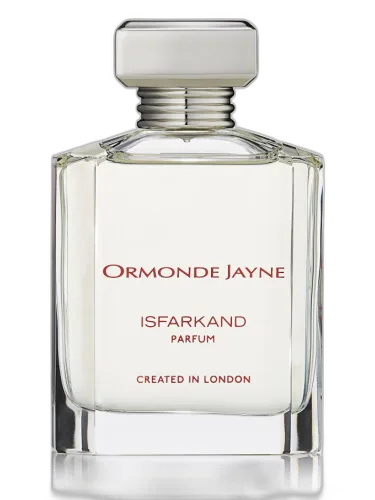
Isfarkand Ormonde Jayne
Shared top notes: bergamot, lime
Giorgio Armani
Vétiver D'hiver (vetiver Babylone) Giorgio Armani
Shared top notes: bergamot

Guerlain
Arsene Lupin Dandy Guerlain
Shared top notes: bergamot

Miraj
Brizant Miraj
Shared top notes: bergamot, lime