
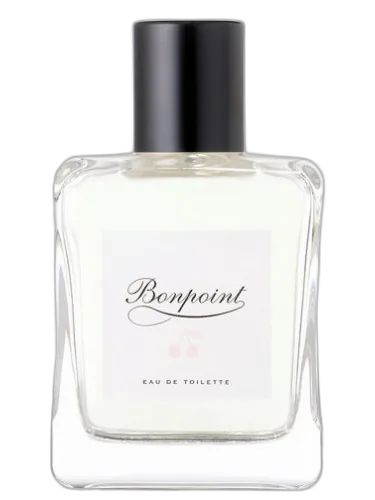

Eau De Bonpoint Bonpoint
At a glance
Is Eau De Bonpoint Bonpoint worth trying?
Eau de Bonpoint by Bonpoint is a Citrus Aromatic fragrance for women.
- Best match
- Casual wear in Spring
- Performance feel
- Moderate longevity with Moderate sillage
- Signature profile
- citrus, fresh spicy, white floral with Mandarin Orange, Bergamot, Orange Blossom
The first impression
Eau de Bonpoint by Bonpoint is a Citrus Aromatic fragrance for women. Eau de Bonpoint was launched in 1986. The nose behind this fragrance is Annick Goutal.
What shapes the scent
The perfumer behind it

Annick Goutal
Annick Goutal began her career as a pianist and model before founding her eponymous perfume house in 1981, where she worked closely with her daughter Camille Goutal. Known for a natural, luminous style, her compositions often highlight a single note, as seen in the citrusy Eau d'Hadrien and the fresh, floral Eau de Camille. Her creations, including the romantic Ce Soir Ou Jamais and the gentle Eau de Charlotte, are celebrated for their elegant simplicity and emotional resonance, establishing a legacy of intimate, artisanal perfumery.
Notes pyramid
All Notes
Complete scent profile
 Mandarin Orange
 Bergamot
 Orange Blossom
 Basil
Basil
 Moss
Moss
The mood it creates
The Lover Archetype: Portrait of Eau De Bonpoint Bonpoint
Essence
The person who cherishes Eau de Bonpoint by Bonpoint dwells in the realm of the Innocent-an archetype that embodies purity, nostalgia, and an unshaken belief in simplicity. This is not naivety in the pejorative sense, but rather a deliberate choice to embrace wonder, tenderness, and the beauty of the unspoiled. The fragrance itself-a delicate blend of citrus, floral, and powdery warmth-mirrors this spirit: light, comforting, and untouched by cynicism.
Their life is an ode to the small, sacred moments-the scent of clean linen, the laughter of children, the quiet joy of a well-tended garden. They are drawn to things that evoke nostalgia, whether it’s vintage lace, hand-written letters, or the soft pastels of a spring morning. Their aesthetic is refined yet unpretentious, favoring natural fabrics, muted tones, and objects that carry a sense of history.
Style & Aesthetic
Their home is their sanctuary-a place where time moves gently. Perhaps they collect antique teacups, press flowers between the pages of books, or keep a journal filled with small, daily wonders. They may work in a field that nurtures others-teaching, gardening, or the arts-where their sensitivity is an asset rather than a liability.
They are not ascetics; they appreciate comfort, but of a particular kind-soft textures, natural light, the scent of lavender in the air. Their rebellion is subtle: in a world that glorifies excess, they choose moderation; where others chase novelty, they find depth in tradition.
Philosophy & Values
For them, life is not a battle to be won but a garden to be tended. They reject the modern obsession with relentless ambition, instead valuing harmony, kindness, and the slow unfolding of time. Their philosophy leans toward the pastoral-a belief that goodness is found in sincerity, not spectacle. They may quietly resist the frenetic pace of contemporary life, preferring solitude, tradition, and the rituals of domestic warmth.
Yet, this is not mere passivity. Their strength lies in their ability to preserve beauty in a world that often disregards it. They are the keepers of forgotten courtesies, the ones who remember birthdays, who leave wildflowers on a friend’s doorstep, who believe-despite everything-in the fundamental decency of people.
Relationships
In love and friendship, they are deeply loyal, though not always expansive. Their circle is small, carefully chosen, and nurtured with quiet devotion. They do not seek the spotlight in relationships but rather the quiet glow of mutual understanding. Romantic partners may find in them a gentle, unwavering presence-someone who cherishes the ordinary as sacred.
Yet, their shadow emerges here: a reluctance to confront harsh truths. They may idealize others, refusing to see flaws until they can no longer be ignored. Conflict unsettles them, and they may withdraw rather than engage in necessary strife. Their greatest fear is the corruption of their inner sanctuary-the moment when the world’s harshness forces them to abandon their innocence.
Shadow
The Innocent’s weakness is not in their gentleness, but in their resistance to the darker currents of existence. When life inevitably wounds them, they may retreat further into nostalgia, clinging to an idealized past rather than adapting. Their optimism, once a strength, can become a form of evasion-a refusal to acknowledge that some things cannot be mended with sweetness alone.
At their worst, they risk becoming passive, allowing others to dictate their fate rather than asserting their own will. They may struggle with resentment when their kindness is exploited, yet lack the assertiveness to defend themselves. The challenge for them is to temper their idealism with wisdom-to remain open-hearted without being defenseless.
Conclusion
To love Eau de Bonpoint is to embrace a way of being that many dismiss as fragile. But fragility is not weakness-it is the quiet strength of a wildflower that bends but does not break. The Innocent persists not because they are blind to darkness, but because they choose, again and again, to kindle light.
Their challenge-and their triumph-is to remain soft in a hardened world, without losing themselves in the process. For in their refusal to become jaded, they offer something rare: the reminder that beauty, though delicate, is indestructible.
If you like this, try these
Fragrances with a comparable profile - shared accords, notes, and character.
Atelier Oblique
White Light Atelier Oblique
Shared top notes: bergamot, mandarin orange
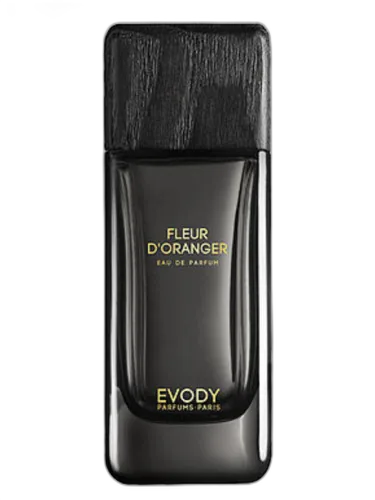
Evody Parfums
Fleur D'oranger Evody Parfums
Shared top notes: bergamot, mandarin orange
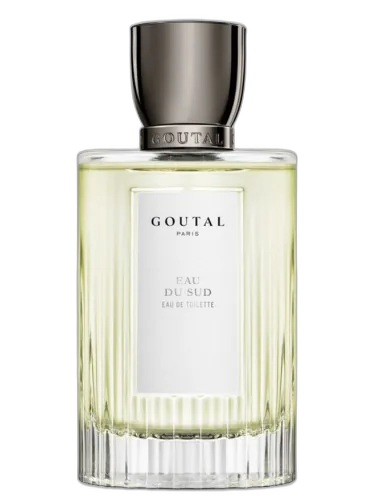
Goutal
Eau Du Sud Goutal
Shared top notes: basil, bergamot, mandarin orange

Isabella Rossellini
Manifesto Isabella Rossellini
Shared top notes: basil, bergamot
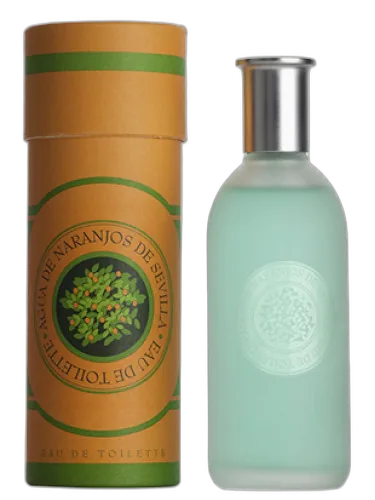
Agua de Sevilla
Agua De Naranjos Agua De Sevilla
Shared top notes: basil, bergamot, mandarin orange