
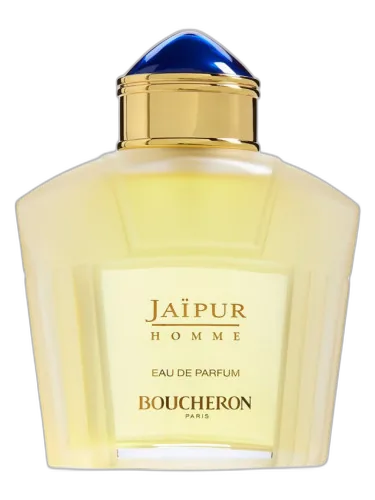

Jaipur Homme Eau De Parfum Boucheron
At a glance
Is Jaipur Homme Eau De Parfum Boucheron worth trying?
Jaipur Homme Eau de Parfum by Boucheron is a Oriental Spicy fragrance for men.
- Best match
- Evening wear in Fall
- Performance feel
- Very Good longevity with Strong sillage
- Signature profile
- citrus, cinnamon, vanilla with Lemon, Lemon Verbena, Cinnamon
The first impression
Jaipur Homme Eau de Parfum by Boucheron is a Oriental Spicy fragrance for men. Jaipur Homme Eau de Parfum was launched in 1997. The nose behind this fragrance is Annick Menardo. Top notes are Lemon and Lemon Verbena; middle notes are Cinnamon and Nutmeg; base notes are Vanilla and Woodsy Notes.
What shapes the scent
The perfumer behind it

Annick Menardo
Annick Menardo is a French perfumer known for her work at Firmenich and her bold, modern compositions. She often blends gourmand, woody, and leathery accords, creating fragrances that are both striking and wearable. Her portfolio includes the rich, smoky Figment Man for Amouage and the sophisticated, floral-amber Portrayal Woman, as well as the iconic Azzaro Visit.
Notes pyramid
Top Notes
First impression · 15-30 min
 Lemon
Lemon
 Lemon Verbena
Heart Notes
Core character · 2-4 hours
 Cinnamon
 Nutmeg
Base Notes
Lasting impression · 4+ hours
 Vanilla
 Woodsy Notes
The mood it creates
The Sovereign Archetype: Portrait of Jaipur Homme Eau De Parfum Boucheron
Essence
This man is ruled by the Sovereign archetype-a figure of quiet authority, refined taste, and measured power. Like the fragrance itself-opulent yet restrained, blending warm spices with smooth vanilla and powdery florals-he carries himself with a dignity that is neither ostentatious nor meek. He does not demand respect; he assumes it effortlessly. The King is not merely a ruler by title but by presence, and this man embodies that essence in his bearing, choices, and interactions.
Yet, as with all archetypes, the Sovereign has a shadow. His natural gravitas can slip into aloofness, his self-assurance into arrogance. He is not immune to the corruptions of power-indifference, entitlement, or a reluctance to bend. But when balanced, he is a stabilizing force, a man who commands without tyranny and leads without ego.
Style & Aesthetic
His tastes are deliberate, never accidental. He prefers the understated luxury of well-tailored suits in deep, muted tones-charcoal, navy, perhaps a discreet burgundy. His accessories are few but meaningful: a vintage watch, a signet ring, leather shoes polished to a quiet luster. He does not chase trends; he selects what endures.
In art, he favors the classical-Caravaggio’s chiaroscuro, the stoic elegance of Roman busts, the structured beauty of Baroque music. Yet he is not a mere traditionalist; he appreciates modernism when it is disciplined, when it respects form even as it breaks it. His home is a sanctuary of order-dark wood, soft lighting, shelves lined with philosophy, history, and the occasional volume of poetry.
His days are structured, not out of rigidity, but efficiency. He rises early, exercises with purpose, and approaches work with the focus of a strategist. He enjoys fine dining but does not indulge excessively; he savors whiskey but does not drown in it. Travel, for him, is about immersion, not escape-he prefers cities with history, where he can walk through centuries in an afternoon.
Yet this discipline can curdle into severity. He may forget to laugh, to pause, to let chaos in occasionally. The shadow Sovereign is a man who mistakes control for strength, forgetting that true mastery sometimes requires surrender.
Philosophy & Values
He believes in hierarchy-not as oppression, but as natural order. Life, to him, is a series of duties: to oneself, to one’s name, to those who depend on him. He does not romanticize struggle, nor does he fear it; he accepts it as the price of excellence. His moral code is neither rigid nor flexible-it is considered. He values loyalty but does not mistake blind allegiance for virtue.
His greatest fear is irrelevance-not in the eyes of others, but in his own. He must matter, not through noise, but through impact. This is why he despises frivolity, why he scorns those who mistake recklessness for freedom. Yet this very disdain can harden into cynicism, making him dismissive of those who lack his discipline.
Relationships
He is not a man of many friends, but those he keeps are bound by mutual respect. He does not confide easily; vulnerability, to him, is a luxury he cannot always afford. Romantic partners are drawn to his assurance, his ability to make decisions without hesitation-but some find his emotional reserve frustrating. He loves deeply, but quietly, expressing devotion through acts rather than words.
His greatest challenge in relationships is patience. He expects competence, and when others fall short, his disappointment is palpable. He must learn that not everyone moves at his pace, that leadership sometimes means stooping to lift another up.
Conclusion
Jaipur Homme is his essence in scent: warm yet reserved, opulent but never gaudy. The cardamom and cinnamon speak of his spice, his depth; the vanilla and amber reveal his hidden warmth. The powderiness is his polish, his ability to move through the world without leaving rough edges.
He wears it not to be noticed, but to be. And in that, he succeeds.
If you like this, try these
Fragrances with a comparable profile - shared accords, notes, and character.
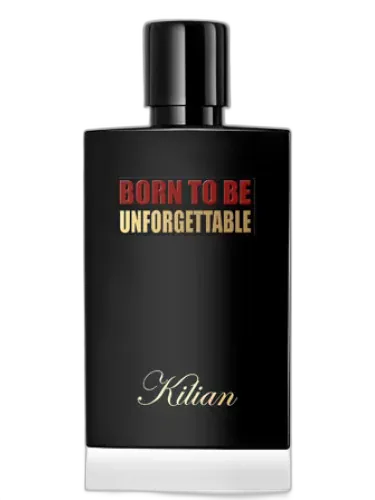
By Kilian
Born To Be Unforgettable By Kilian
Shared heart notes: cinnamon, nutmeg
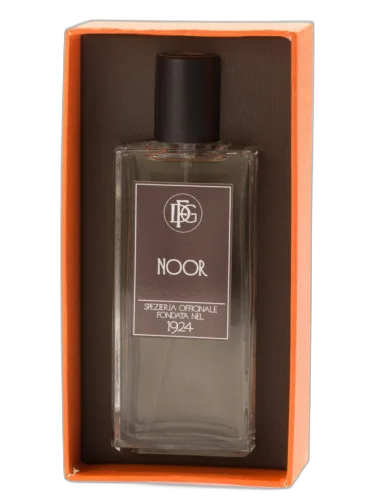
DFG1924
Noor Dfg1924
Shared heart notes: cinnamon, nutmeg
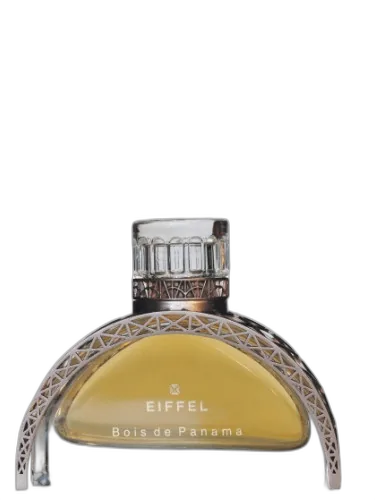
Gustave Eiffel
Bois De Panama Gustave Eiffel
Shared heart notes: cinnamon, nutmeg
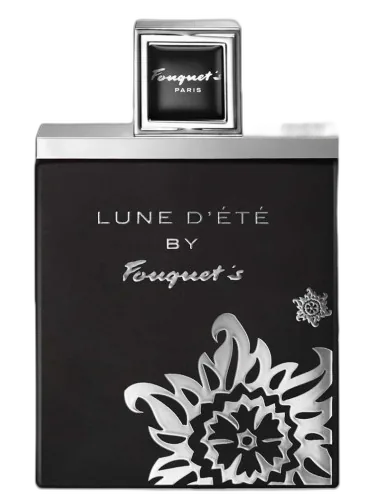
Fouquet's
Lune D'été Fouquet's
Shared top notes: lemon
Viking
Âmbar 38 Viking
Shared top notes: lemon