
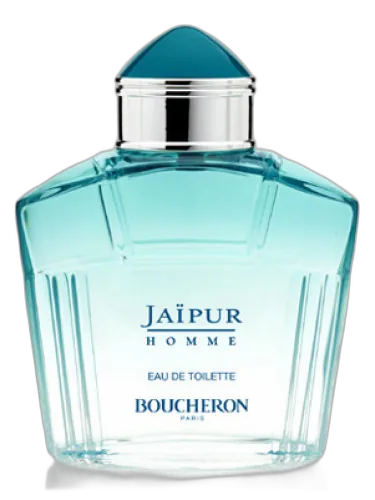

Jaipur Homme Limited Edition Boucheron
At a glance
Is Jaipur Homme Limited Edition Boucheron worth trying?
Jaipur Homme Limited Edition by Boucheron is a Woody Aquatic fragrance for men.
- Best match
- Evening wear in Fall
- Performance feel
- Very Good longevity with Strong sillage
- Signature profile
- aquatic, warm spicy, fresh with Watery Notes, Melon, Cloves
The first impression
Jaipur Homme Limited Edition by Boucheron is a Woody Aquatic fragrance for men. Jaipur Homme Limited Edition was launched in 2013. The nose behind this fragrance is Annick Menardo. Top notes are Watery Notes, Melon and Cloves; middle notes are Nutmeg and Cinnamon; base notes are Vanilla, Woody Notes and Amber.
What shapes the scent
The perfumer behind it

Annick Menardo
Annick Menardo is a French perfumer known for her work at Firmenich and her bold, modern compositions. She often blends gourmand, woody, and leathery accords, creating fragrances that are both striking and wearable. Her portfolio includes the rich, smoky Figment Man for Amouage and the sophisticated, floral-amber Portrayal Woman, as well as the iconic Azzaro Visit.
Notes pyramid
Top Notes
First impression · 15-30 min
 Watery Notes
 Melon
Melon
 Cloves
Heart Notes
Core character · 2-4 hours
 Nutmeg
 Cinnamon
Base Notes
Lasting impression · 4+ hours
 Vanilla
 Woody Notes
 Amber
Amber
The mood it creates
The Alchemist Archetype: Portrait of Jaipur Homme Limited Edition Boucheron
Essence
The man who wears Jaipur Homme Limited Edition Boucheron is, above all, a ruler-not necessarily of others, but of his own domain. The fragrance itself, with its opulent blend of spices, vanilla, and amber, speaks of regality without ostentation, of power refined by wisdom. This is not the brash conqueror but the philosopher-king, one who understands that true authority comes from mastery of self before dominion over circumstance.
Jung’s King archetype manifests here not as tyranny, but as a natural gravitas-an unspoken expectation of excellence, both in himself and in the world around him. He does not demand respect; he commands it effortlessly, through presence alone. Yet, like all archetypes, the King has his shadow-the potential for arrogance, for detachment, for the belief that his vision is the only one worth following.
Style & Aesthetic
His tastes are deliberate, never accidental. He prefers the weight of a well-tailored wool coat over fleeting trends, the depth of a single-malt Scotch over the clamor of cheap intoxication. His home is not cluttered but curated-dark woods, leather-bound books, perhaps a Persian rug underfoot, each object chosen for its timelessness rather than its novelty.
Even his fragrance, Jaipur Homme, is a statement of discernment. It is not loud but lingers, a whisper of cinnamon and sandalwood that suggests hidden depths. He does not seek to overwhelm but to intrigue, to draw others into his orbit through quiet magnetism rather than force.
His life is not one of excess but of sufficiency. He exercises not for vanity but for vitality; he reads not to impress but to understand. His career, whatever it may be, is built on competence rather than charisma. He may be a lawyer, a financier, a surgeon-any field where precision and authority are rewarded.
But the shadow lurks here too. If he is not careful, his pursuit of excellence can become cold pragmatism. The King who forgets his humanity becomes a tyrant, even if only to himself.
Philosophy & Values
He believes in order-not the stifling kind, but the kind that allows beauty to flourish. Chaos, to him, is not freedom but waste. His values are classical: honor, discipline, the slow accumulation of wisdom over the reckless pursuit of sensation. He admires Marcus Aurelius, not for his power, but for his restraint.
Yet this very devotion to order can become his undoing. The shadow of the King is the fear of losing control, of admitting vulnerability. He may mistake rigidity for strength, silence for wisdom. There is a danger here-that his throne becomes a cage, that his subjects (whether family, friends, or colleagues) feel more like subjects than equals.
Relationships
He does not have many friends, but those he keeps are bound to him by something deeper than convenience. He is not the life of the party, but the man in the corner who, when he speaks, makes the room lean in. Romantic partners are drawn to his assurance, his ability to make decisions without hesitation-but they may also chafe under his expectation of perfection.
His greatest challenge in love is allowing himself to be truly known. The King must sometimes remove his crown, must admit that he, too, bleeds. If he cannot, he risks ruling over an empty court.
Conclusion
In his light, he is a beacon-steady, wise, a man who makes others feel safe in his presence. In his shadow, he is distant, unyielding, a statue rather than a man. Jaipur Homme suits him because it, too, is a paradox-warm yet reserved, bold yet subtle.
To wear this fragrance is to accept the burden of kingship: the knowledge that one’s choices shape not only oneself but the world around them. The question is whether he will rule with compassion or with cold certainty. The answer determines whether he becomes a true sovereign-or merely a man who smells like one.
If you like this, try these
Fragrances with a comparable profile - shared accords, notes, and character.

Gustave Eiffel
Bois De Panama Gustave Eiffel
Shared heart notes: cinnamon, nutmeg
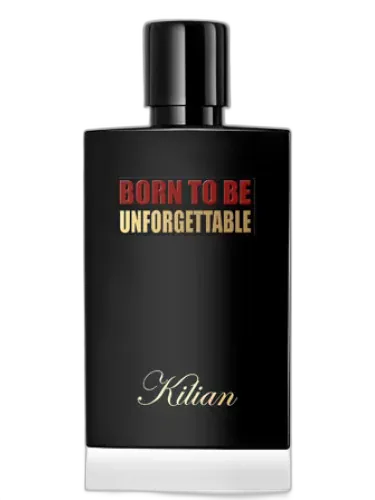
By Kilian
Born To Be Unforgettable By Kilian
Shared heart notes: cinnamon, nutmeg
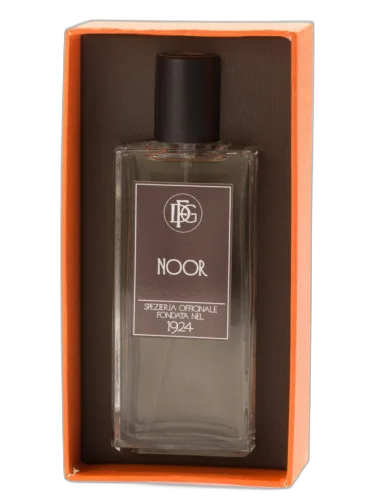
DFG1924
Noor Dfg1924
Shared heart notes: cinnamon, nutmeg
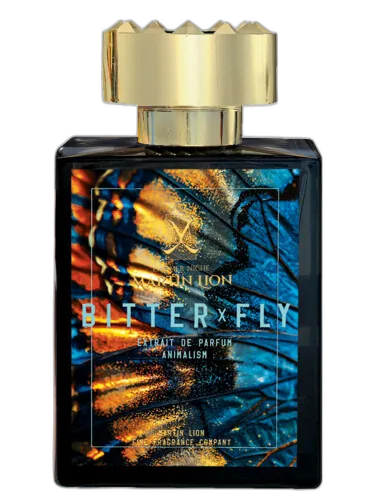
Martin Lion
Bitter X Fly Martin Lion
Shared heart notes: cinnamon
Adopt Parfums
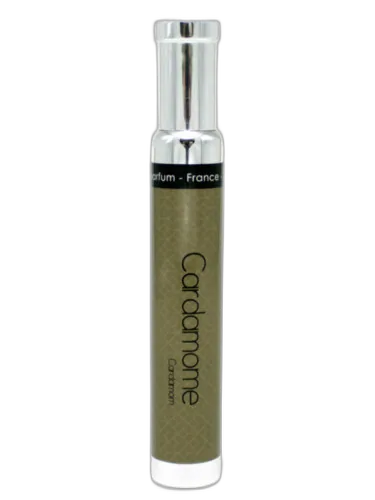
Cardamome Adopt Parfums
Shared heart notes: cinnamon, nutmeg