


Santal / Japonais Brand No More
At a glance
Is Santal / Japonais Brand No More worth trying?
Santal / Japonais by Brand No More is a fragrance for women and men.
- Best match
- Evening wear in Fall, Winter
- Performance feel
- Good longevity with Moderate sillage
- Signature profile
- woody, warm spicy, cinnamon with Cardamom, Neroli, Bergamot
The first impression
Santal / Japonais by Brand No More is a fragrance for women and men. Santal / Japonais was launched in 2021. The nose behind this fragrance is Bertrand Duchaufour. Top notes are Cardamom, Neroli and Bergamot; middle notes are Cinnamon and Peach Blossom; base notes are Sandalwood, Woody Notes and Vanilla.
What shapes the scent
The perfumer behind it

Bertrand Duchaufour
Bertrand Duchaufour is a renowned French perfumer with a prolific career spanning many brands. He has created fragrances for Acqua di Parma, including Blu Mediterraneo - Cipresso Di Toscana and Colonia Assoluta, as well as for Aedes de Venustas, such as Café Tabac and Copal Azur. His style is known for its complexity and use of natural ingredients.
Notes pyramid
Top Notes
First impression · 15-30 min
 Cardamom
 Neroli
 Bergamot
Heart Notes
Core character · 2-4 hours
 Cinnamon
 Peach Blossom
Base Notes
Lasting impression · 4+ hours
 Sandalwood
 Woody Notes
 Vanilla
The mood it creates
The Sage Archetype: Portrait of Santal / Japonais Brand No More
Essence
The one who wears Santal / Japonais Brand No More is drawn to the quietude of ancient temples, the slow burn of incense, and the weight of unwritten wisdom. Their fragrance is not loud but lingers-like a thought half-remembered, a whisper in a crowded room. Sandalwood, with its meditative warmth, speaks of depth, restraint, and a soul that seeks meaning beyond the surface. This is not a person who chases trends but one who retreats inward, finding solace in the timeless.
They are, at their core, a Hermit-the Jungian archetype of introspection, solitude, and the search for truth. The Hermit does not fear isolation; they court it, for in silence, they hear the echoes of their own mind most clearly. Their life is a pilgrimage, not to a physical destination, but to an understanding of self and the unseen threads that bind existence.
Shadow
Yet, the Hermit’s strength is also their weakness. Their love of solitude can harden into isolation, their introspection into self-absorption. They may grow so accustomed to their own company that they forget how to truly connect with others, mistaking their detachment for wisdom when, at times, it is merely fear-fear of vulnerability, of being misunderstood, of the messy unpredictability of human bonds.
Their disdain for superficiality can curdle into contempt. They may dismiss those who do not share their depth as fools, forgetting that wisdom is not the sole property of the solitary. Their silence, once a sign of thoughtfulness, can become a wall, leaving others feeling shut out. And when they do speak, their words can carry an unintended sharpness, a quiet judgment that wounds more deeply than anger.
Conclusion
Their tastes are refined but never ostentatious. They prefer the understated elegance of raw linen, unpolished wood, and the muted tones of nature-colors that do not demand attention but reward it. Their home is a sanctuary: sparse but deliberate, with books that have been read more than once, a single well-worn armchair by the window, and perhaps a single piece of art that holds a secret meaning only they understand.
Philosophy is not an abstract interest for them; it is a way of life. They might be drawn to Zen Buddhism, Stoicism, or the writings of mystics-systems of thought that prize inner stillness over external validation. They value authenticity above all else, and their relationships are few but profound. They do not suffer fools, but when they choose to speak, their words carry weight.
Their lifestyle is one of deliberate simplicity. They may live in a city but walk its streets as if observing from a distance. They rise early, savor the ritual of tea, and find beauty in the mundane-the way light falls across a table, the sound of rain against glass. They are not ascetics, but they understand the power of restraint. Pleasure, for them, is not in excess but in the perfect moment: a single sip of whiskey, the scent of old paper, the silence between two people who need not fill it with words.
If you like this, try these
Fragrances with a comparable profile - shared accords, notes, and character.
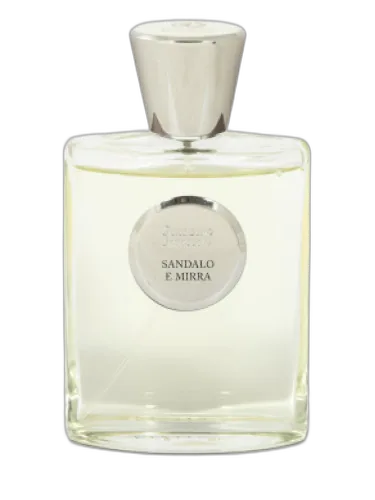
Giardino Benessere
Sandalo E Mirra Giardino Benessere
Shared top notes: bergamot, cardamom

Thera Cosméticos
Agatha Thera Cosméticos
Shared top notes: bergamot, neroli

Place des Lices
Feuille De Tabac Place Des Lices
Shared top notes: bergamot

Gaia Parfums
Whispers Of Serenity Gaia Parfums
Shared top notes: bergamot, cardamom

Simone Cosac Profumi
Peccato Simone Cosac Profumi
Shared top notes: bergamot, cardamom, neroli