
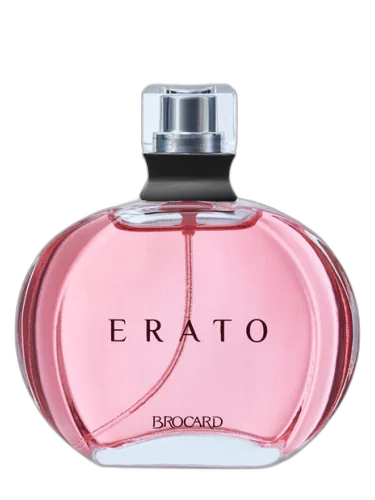

Erato Brocard
At a glance
Is Erato Brocard worth trying?
Erato by Brocard is a Floral Fruity Gourmand fragrance for women.
- Best match
- Casual wear in Spring
- Performance feel
- Good longevity with Moderate sillage
- Signature profile
- sweet, powdery, fruity with Coriander, Lemon, Orange
The first impression
Erato by Brocard is a Floral Fruity Gourmand fragrance for women. Erato was launched in 2017. The nose behind this fragrance is Bertrand Duchaufour. Top notes are Coriander, Lemon and Orange; middle notes are Strawberry, Violet, Spun Sugar and Raspberry; base notes are Vanilla, Musk, Sandalwood, Palisander Rosewood, Tolu Balsam and Amber.
What shapes the scent
The perfumer behind it

Bertrand Duchaufour
Bertrand Duchaufour is a renowned French perfumer with a prolific career spanning many brands. He has created fragrances for Acqua di Parma, including Blu Mediterraneo - Cipresso Di Toscana and Colonia Assoluta, as well as for Aedes de Venustas, such as Café Tabac and Copal Azur. His style is known for its complexity and use of natural ingredients.
Notes pyramid
Top Notes
First impression · 15-30 min
 Coriander
 Lemon
Lemon
 Orange
Heart Notes
Core character · 2-4 hours
 Strawberry
 Violet
 Spun Sugar
 Raspberry
Base Notes
Lasting impression · 4+ hours
 Vanilla
 Musk
Musk
 Sandalwood
 Palisander Rosewood
 Tolu Balsam
 Amber
Amber
The mood it creates
The Lover Archetype: Portrait of Erato Brocard
Essence
The person who gravitates toward Erato Brocard is one who seeks beauty in all things-not merely as an aesthetic preference, but as a fundamental necessity of existence. Their soul is attuned to the sensual, the poetic, the intoxicating dance of life’s fleeting pleasures. They are the embodiment of The Lover archetype, a figure who thrives on passion, connection, and the pursuit of ecstasy in both the material and the metaphysical.
This is not a person who merely wears a fragrance; they inhabit it. Erato Brocard, with its lush florals and warm, enveloping sweetness, becomes an extension of their aura-an invisible yet palpable declaration of their devotion to life’s richness. They are drawn to the scent because it mirrors their own complexity: delicate yet bold, romantic yet commanding, ephemeral yet unforgettable.
Style & Aesthetic
Their world is curated with intention, for they believe that beauty is not accidental but cultivated. Their wardrobe is an ode to elegance-flowing fabrics, rich textures, colors that whisper rather than shout. They favor garments that move with them, that catch the light and the eye, as if to remind the world that presence is an art.
In their home, every object tells a story: a well-worn book of poetry, a vase of fresh flowers, a collection of vintage perfume bottles. They are drawn to the tactile-velvet cushions, silk drapes, the weight of a crystal glass in their hand. Music is never background noise but an experience-Chopin for melancholy evenings, jazz for languid afternoons, something with a pulse for nights when the air itself feels alive.
They do not merely exist; they perform existence. Their days are not measured in hours but in moods-mornings spent sipping coffee in sunlit cafes, afternoons lost in galleries, evenings that stretch into dawn with wine and whispered confessions. They are travelers, not of geography alone, but of emotion, always seeking the next place or person that will make them feel alive.
Work, for them, must be an extension of their passion. They thrive in creative fields-art, fashion, writing-where their sensuality can be channeled into something tangible. Routine is their enemy; they wither under monotony.
Philosophy & Values
They do not believe in asceticism, for they see no virtue in denying the flesh what it craves. To them, pleasure is not indulgence but a form of wisdom-a way of honoring the divine spark within. They are not hedonists in the reckless sense, but rather connoisseurs of the sublime.
Yet beneath this pursuit of beauty lies a deeper philosophy: that love-in all its forms-is the highest truth. They are romantics in the truest sense, not because they believe in fairy tales, but because they understand that passion is the force that binds the universe. They value intimacy, vulnerability, the unspoken language of touch and gaze.
Relationships
They do not merely fall in love; they compose love, as one might compose a symphony. Every glance, every word, every lingering touch is deliberate, yet never calculated-their magnetism is innate. They are drawn to those who can match their intensity, who understand that love is not a passive state but an active, consuming fire.
Yet their relationships are not without peril. Their devotion to beauty can make them fickle, always searching for the next thrill, the next intoxication. They may leave a trail of broken hearts, not out of malice, but because their hunger for the sublime is insatiable. Their shadow is the fear of stagnation-the terror of waking one day to find that the magic has faded.
Shadow
For all their radiance, they are not without darkness. Their obsession with beauty can blind them to the mundane necessities of life-bills, responsibilities, the slow erosion of time. They may struggle with commitment, not because they are cruel, but because they fear that settling will dull their fire.
Their greatest flaw is their capacity for self-deception. They may convince themselves that a fleeting infatuation is eternal love, or that a momentary ecstasy is enough to sustain them. When disillusionment comes, it is crushing.
Conclusion
The lover of Erato Brocard is a creature of contradictions-both fragile and fierce, transient yet eternal in their pursuit of the beautiful. They are not for everyone, nor do they wish to be. Their life is a work of art, and like all art, it is meant to provoke, to seduce, to leave an imprint long after they have passed through.
They are the embodiment of Nietzsche’s dictum: "One must still have chaos in oneself to be able to give birth to a dancing star." Their chaos is their passion; their fragrance, the star they leave burning in their wake.
If you like this, try these
Fragrances with a comparable profile - shared accords, notes, and character.
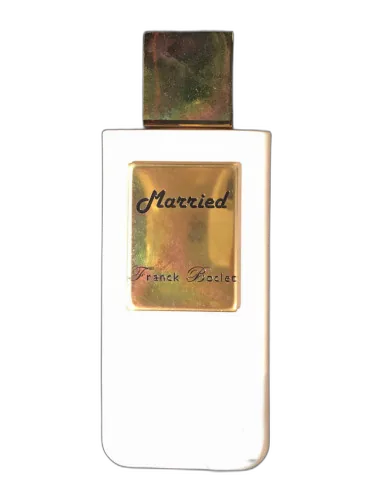
Franck Boclet
Married Franck Boclet
Shared top notes: lemon, orange
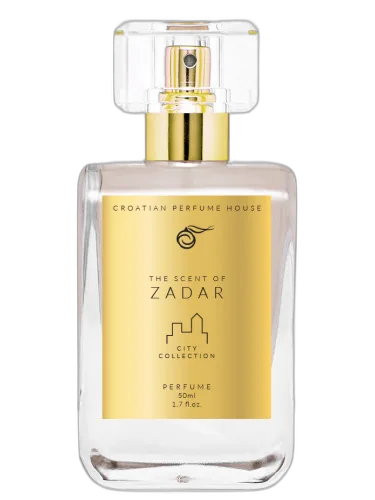
Croatian Perfume House
The Scent Of Zadar Croatian Perfume House
Shared top notes: lemon, orange

Martin Lion
Candy Martin Lion
Shared top notes: lemon, orange
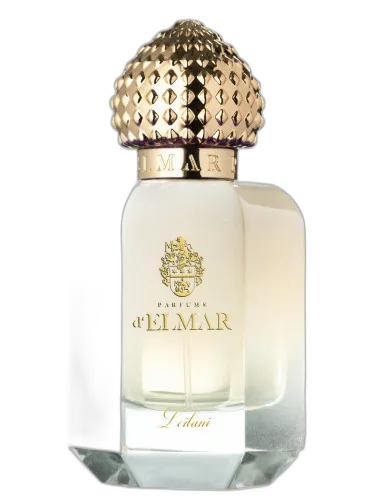
Parfums d'Elmar
Leilani Parfums D'elmar
Shared top notes: lemon, orange

Historiae
Violette Imperiale Historiae
Shared top notes: orange